How far you can drive on a spare tire depends on the type of spare. On a temporary “donut” spare, most manufacturers recommend driving no more than about 50–70 miles at a maximum of 50 mph. A full-size spare can usually be driven like a regular tire, and run-flat tires typically allow about 50 miles at up to 50 mph after a puncture. Always check the limits printed on the spare’s sidewall or in your owner’s manual.
Quick Answer by Spare Type
- Temporary spare (donut): about 50–70 miles, max 50 mph
- Full-size matching spare: normal driving, like any other tire
- Full-size non-matching spare: okay for normal driving, but replace or match it soon
- Run-flat tire (after a puncture): about 50 miles at up to 50 mph (varies by manufacturer)
- Tire repair kit (sealant): only to get you to a tire shop; follow the kit’s instructions
Why Donut Spares Have Limits
Temporary spares are built to save space and weight, not to last. Compared to a regular tire, they have:
- Thinner tread that wears out quickly
- A smaller size, so that wheel spins faster than the others
- Less grip, which means longer braking distances and weaker cornering
- A different size, which can affect ABS, traction control, and stability control
On all-wheel-drive vehicles, driving too long on a smaller spare can also strain the drivetrain, because the system tries to make up for the difference in wheel size. Check your owner’s manual for specific AWD guidance.
How to Drive Safely on a Donut Spare
- Check the pressure right away. Temporary spares usually need much higher pressure than regular tires, often 60 psi. The correct number is printed on the spare’s sidewall.
- Stay under 50 mph, or the speed printed on the tire.
- Avoid highways if you can.
- Leave extra braking distance and take corners gently.
- Drive straight to a tire shop. Treat the spare as a way to get there, not a replacement.
Full-Size Spares
If your car has a full-size spare that matches your other tires, you can drive on it normally and simply rotate it into your regular set.
If it’s a full-size but different spare (for example, a steel wheel or an older tire), it’s safe to drive on, but replace or match it soon, especially on AWD vehicles, where different tread depths can cause problems.
Run-Flat Tires
Run-flat tires have reinforced sidewalls that support the car even with little or no air. Most can be driven about 50 miles at up to 50 mph after losing pressure, but limits vary by brand, so check your owner’s manual. Many run-flats can’t be repaired after being driven flat and must be replaced.
Tire Repair Kits (No Spare)
Many newer cars come with a sealant and compressor kit instead of a spare. These can seal small punctures in the tread, but they’re meant to get you to a tire shop, not to last. Follow the kit’s speed and distance limits, and tell the shop you used sealant, because it needs to be cleaned out of the tire and wheel.
Sealant usually won’t fix sidewall damage, large cuts, or a tire that’s come off the rim.
What Happens If You Drive Too Long on a Spare?
- The spare can wear through or fail, leaving you stranded again.
- Handling and braking get worse, especially in rain.
- On AWD vehicles, you risk drivetrain damage.
- A spare that’s already old or underinflated is more likely to blow out.
Changing to Your Spare: Safety Checklist
- Pull over on a flat, stable surface, well away from traffic, and turn on your hazard lights.
- Apply the parking brake and wedge a wheel on the opposite end.
- Loosen the lug nuts slightly before jacking up the car.
- Use the jack points shown in your owner’s manual.
- Tighten the lug nuts in a star pattern, then check them again after a few miles.
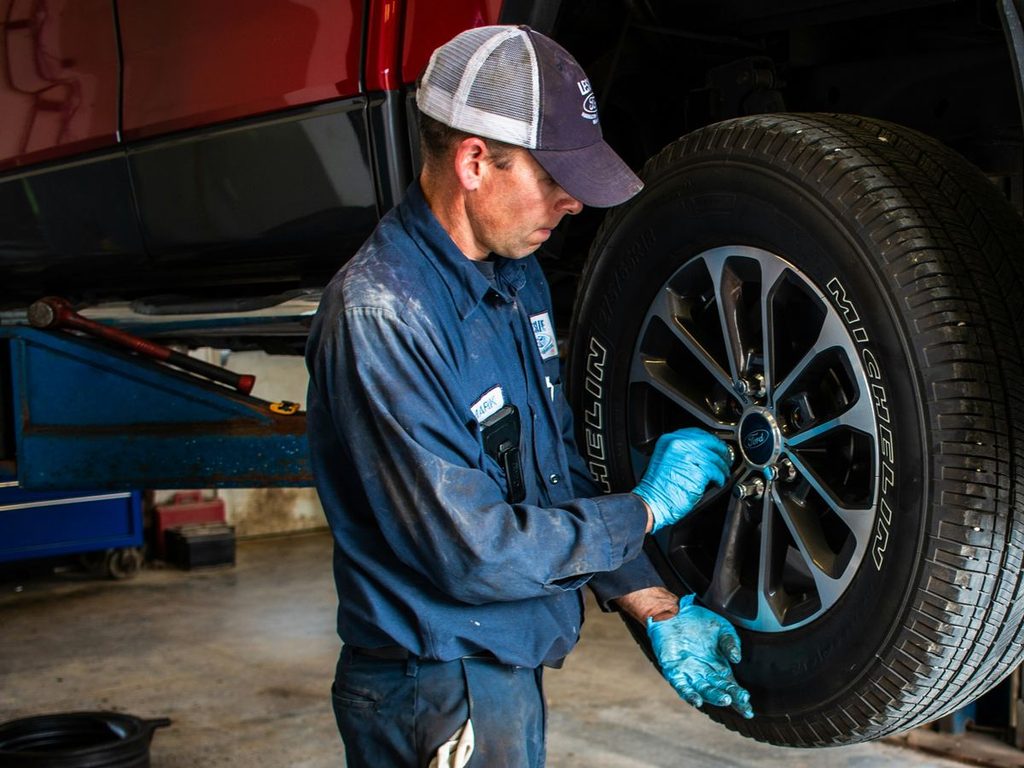
Unevenly tightened lug nuts can cause other problems too. See our guide on why a car shakes when braking at high speed.
Repair or Replace the Flat?
- Puncture in the tread area (like a nail or screw): usually repairable with a plug-patch, often about $20–$50.
- Sidewall damage, large cuts, or a tire driven flat: needs replacement, roughly $100–$300+ per tire, depending on size and brand.
Keep Your Spare Ready
- Check the spare’s pressure every few months. It’s the most commonly forgotten tire.
- Replace old spares. Rubber ages even when unused, so a spare that’s many years old may not be safe. Check the date code on the sidewall and ask a tire shop.
- Keep a tire pressure gauge and a portable tire inflator in your car.
For more on tire safety, see the resources at nhtsa.gov.
FAQ
Can I drive 100 miles on a donut spare?
It’s not recommended. Most donuts are meant for about 50–70 miles. Driving farther increases the risk of tire failure and poor handling.
How fast can you drive on a spare tire?
On a temporary spare, usually no more than 50 mph. Full-size spares have no special limit beyond the tire’s own speed rating.
Can I drive on the highway with a spare tire?
On a full-size spare, yes. On a donut, avoid highways if possible, and never exceed 50 mph.
How long can a spare tire stay on a car?
A donut should only stay on until you can repair or replace the flat, ideally within a day or two. A full-size matching spare can stay on as part of your regular tires.
What PSI should a spare tire be?
Temporary spares often need about 60 psi. Always check the number printed on the spare’s sidewall.
Safety note: A damaged or incorrectly used spare tire can fail. When in doubt, have your tires checked by a professional.
1 thought on “How Far Can You Drive on a Spare Tire? (Donut, Full-Size & Run-Flat)”