
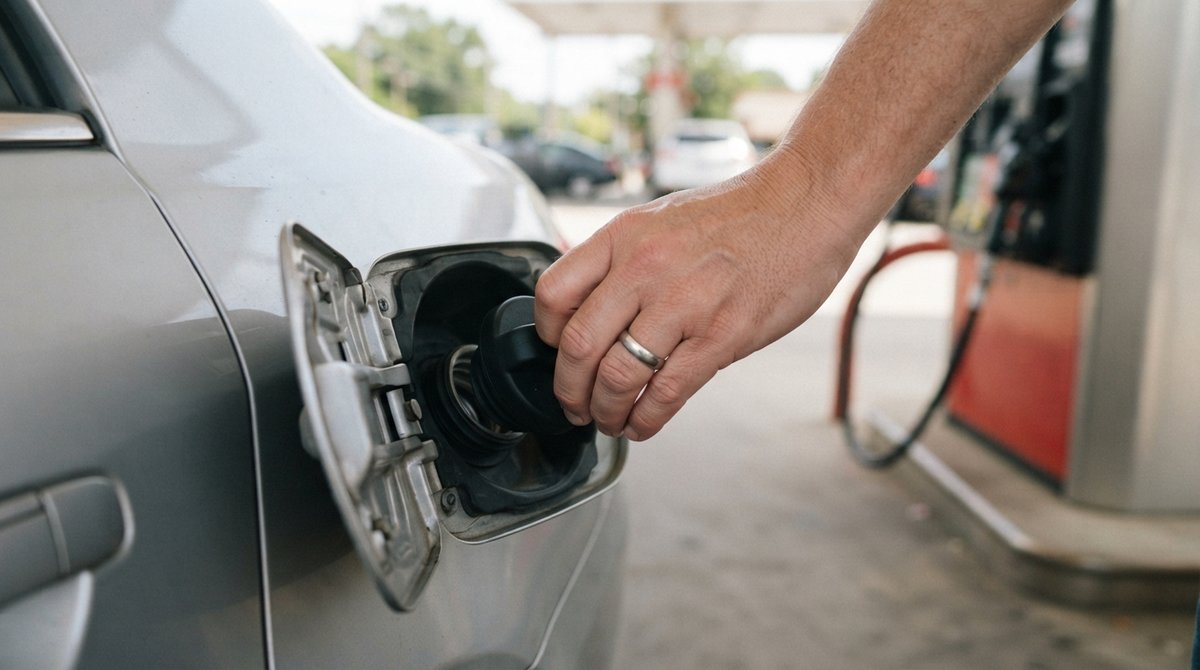
Seeing the check engine light after getting gas is one of the most common warning-light scares, and it usually has a simple cause: the fuel cap wasn’t tightened, its seal is worn, or the tank was overfilled. The car’s evaporative emission (EVAP) system checks that the fuel tank is sealed, and anything that breaks that seal during a fill-up can trigger the light a few drives later.
In this guide
| What you notice | Most likely cause | What to do |
|---|---|---|
| Steady light a day or two after filling up | Loose or worn gas cap | Tighten or replace the cap |
| Light after you kept pumping past the first click | Overfilled tank, flooded charcoal canister | Stop topping off, recheck codes |
| Rough start or stalling right after refueling | Stuck purge valve | Have the purge valve tested |
| Rough running, misfire, poor power after a fill-up | Bad or contaminated fuel | Avoid hard driving, get it checked |
| Fuel smell plus the light | Leak at the filler neck, cap or EVAP hose | Inspect before driving far |
| Flashing light | Severe misfire | Reduce driving, get it checked soon |
Check engine light after getting gas: 5 common causes
1. A loose, missing or worn gas cap
The cap seals the fuel tank so the EVAP system can hold pressure. If it isn’t clicked tight, is cross-threaded, or its rubber seal is cracked, the system’s leak test fails and the light comes on, often with a P0455, P0456 or P0442 code. Cars with capless fillers can have the same problem if the flap doesn’t close fully or is dirty. Many cars also show a separate “check fuel cap” message on the dashboard, which is a strong hint before the check engine light even comes on.
2. Topping off the tank
The pump nozzle clicks off when the tank is full. Squeezing in extra fuel after that can push liquid fuel into the charcoal canister, which is only meant to hold vapor. That can damage the canister and the purge valve and set EVAP codes. It can also make the car hard to start right after refueling.
3. A stuck purge valve
The purge valve lets fuel vapor flow to the engine. If it sticks open, it draws vapor in at the wrong time. The classic sign is a rough start or stalling right after refueling, along with a lean code or an EVAP flow code.
4. Bad or contaminated fuel
Water or debris in fuel, or the wrong fuel grade, can cause misfires, hesitation and rough running soon after filling up. A misfire code like P0300 is common. If this happens right after filling at a new station, keep your receipt. Using the octane grade in your owner’s manual matters too, especially on turbocharged engines.
5. A leaking filler neck or EVAP hose
Rust on a metal filler neck or a cracked vent hose near the tank can leak vapor, especially when the tank is full. You may smell gas around the rear of the car, which our guide to a car that smells like gas covers.
Why the light doesn’t come on right away
The EVAP leak test only runs under certain conditions, often after the car has sat for several hours with the fuel level in a middle range. That’s why the light can appear a day or two after the fill-up, and why the code is often stored as pending first. Our guide to pending vs stored vs permanent codes explains the difference.
What to do
- Pull over when it’s safe and check the gas cap. Remove it, check the rubber seal for cracks or dirt, then tighten it until it clicks.
- If the light is steady and the car drives normally, keep driving as usual. The light usually goes off by itself after several drives once the leak test passes.
- If it stays on after about a week, read the code with a scanner and look it up in our OBD2 code lookup.
- If the cap seal is worn, replace the cap with one made for your car.
- Stop topping off. Let the pump click off once and hang up the nozzle.
- If the car runs rough or the light flashes, see our guide to a check engine light flashing.
If you’re unsure what other symptoms mean, the car symptom checker can help narrow it down.
Can I reset the check engine light myself?
You can clear the code with a scanner after tightening the cap, but the light will come back if the problem is still there. Clearing also resets the readiness monitors, so don’t do it right before an emissions test.
How much does it cost to fix?
| Repair | Typical cost (parts and labor) |
|---|---|
| Tightening the cap | Free |
| Replacement gas cap | $15–$40 |
| Code read | Free at many parts stores |
| Smoke test for EVAP leaks | $100–$200 |
| Purge valve | $100–$250 |
| Charcoal canister | $300–$700 |
| Fuel system cleaning after bad fuel | $100–$400 |
Is it safe to drive?
With a steady light and a car that runs normally, yes. A loose cap doesn’t affect how the engine runs. A flashing light, rough running, stalling, or a strong fuel smell are different: reduce driving and get the car checked soon, and don’t park a car that smells of fuel in an enclosed space. Fuel system and EVAP parts are sometimes recalled, so check the NHTSA recall lookup before paying for a repair.
FAQ
How long does it take for the check engine light to go off after tightening the gas cap?
Often a few days to a week of normal driving, once the EVAP leak test runs and passes.
Can a gas cap really turn on the check engine light?
Yes. It’s one of the most common causes, because the cap is part of the sealed EVAP system.
Does topping off the tank cause problems?
It can. Extra fuel can flood the charcoal canister and damage the purge valve over time.
Should I buy a new gas cap right away?
Not necessarily. Tighten the cap first and drive for a week. If the light comes back, or the seal looks cracked, a new cap is a cheap next step.
Can bad gas turn on the check engine light?
Yes, usually with misfire codes and rough running soon after the fill-up.