
A P0300 code means your engine is misfiring, but not on any one cylinder in particular. The computer caught misfires on two or more cylinders, or so many that it couldn’t pin down which one. That word “random” is what makes this code more work than a P0301 or P0302, where you at least know where to look. If your scanner names a specific cylinder instead, start with our P0301 code guide.
In this guide
The good news is that a random misfire almost always comes from something shared by all the cylinders. That narrows it down quickly if you work through it in the right order.
First, is the light flashing?
If your check engine light is flashing, stop driving as soon as it’s safe. A flashing light means the misfire is bad enough to dump unburned fuel into the exhaust, where it burns inside the catalytic converter. A few minutes of that can melt the converter, turning a $200 repair into a $1,500 one. Our flashing check engine light guide explains what to do.
If the light is steady, you can drive gently to a shop, but don’t put it off. Misfires get worse, not better.
What a misfire feels like
Rough or shaking idle, especially at a stop light. Hesitation or stumbling when you accelerate. Worse fuel economy. Sometimes a smell of gas from the exhaust. If the car shakes when idling or jerks when accelerating, a misfire is high on the list. Misfires often show up first at a stop in gear, which is why a car shakes in drive but not in park so often has this code.
The causes, in the order to check them
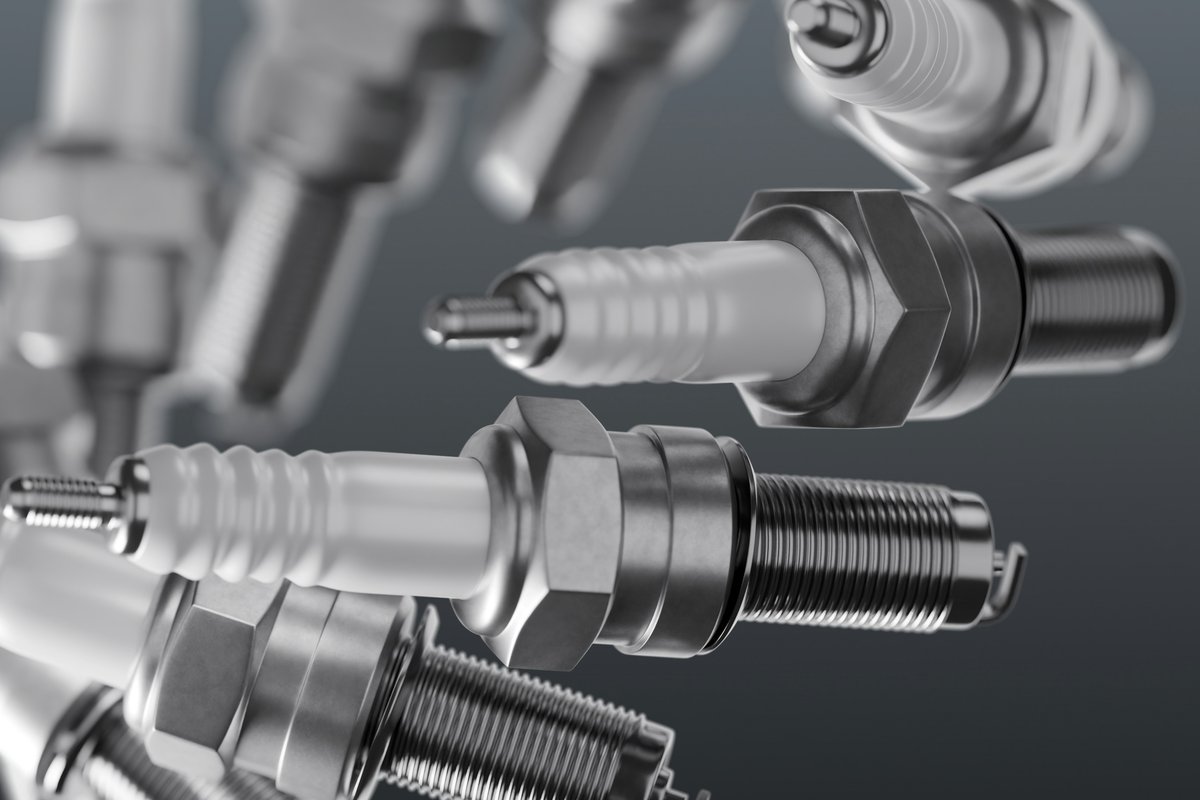
1. Spark plugs
Plugs are the cheapest and most common cause, so start here. If yours are past the interval in the owner’s manual (anywhere from 30,000 to 100,000 miles depending on the type), replace the set. Even plugs that aren’t due can foul from oil or fuel.
Pull one and read it. A light tan tip is normal. Black and sooty means a rich mixture. Oily means oil is getting past the rings or valve seals. White and blistered means the engine is running hot or lean.
2. Ignition coils and wires
A single bad coil causes a single-cylinder code. Several weak coils, or a shared coil pack on older cars, cause P0300. Coils fail more often in heat and in engines where the plugs were left in too long, because a worn plug makes the coil work harder. If your scanner points to cylinder 2, read our P0302 code guide.
If your car has one coil per cylinder, there’s a quick test: swap two coils, clear the code, drive, and re-scan. If a cylinder-specific code follows the coil you moved, you’ve found it. On cars with plug wires, look for cracks and check the resistance with a multimeter.
3. Vacuum leaks
A cracked hose, a split intake boot, a failed PCV valve or a leaking intake manifold gasket lets unmetered air into the engine. The mixture goes lean, and lean mixtures misfire, especially at idle. You’ll usually find a P0171 or P0174 code stored next to the P0300.
Listen for hissing with the engine running. A shop can smoke-test the intake in a few minutes and find leaks you’d never see.
4. Fuel delivery
If every cylinder is getting too little fuel, every cylinder misfires. A weak fuel pump, a clogged filter or a failing pressure regulator can do it. Dirty injectors spread the problem around too. A fuel pressure test tells you quickly whether the pump is keeping up. Low pressure under load is the giveaway.
5. Mass air flow sensor
A dirty or failing MAF sensor under-reports how much air is coming in, so the computer under-fuels the engine. The result is a lean misfire that often shows up with P0101 or P0171. A can of MAF cleaner costs about $10 and is worth a try before anything else.
6. EGR valve stuck open
The exhaust gas recirculation valve is supposed to open only at cruise. If carbon jams it open, exhaust floods the intake at idle and the engine stumbles or misfires. The clue: the misfire is worst at idle and goes away as soon as you drive.
7. Mechanical problems
Low compression from worn rings, burnt valves, a stretched timing chain or a failing head gasket all cause misfires that nothing above will fix. If plugs, coils, fuel and air all check out, a compression test or leak-down test is the next step. A head gasket leak often shows up as coolant disappearing with no visible leak and white exhaust smoke on cold start.
A sensible order of attack
- Read all stored codes, not just P0300. Companion codes point the way.
- Check the basics: oil level, coolant level, air filter, obvious hose damage.
- Replace the plugs if they’re due or look bad.
- Swap-test the coils.
- Clean the MAF sensor.
- Smoke-test for vacuum leaks.
- Test fuel pressure.
- Compression test if everything above is fine.
Most P0300 codes are solved somewhere in steps 3 through 6.
What it costs
| Fix | Typical cost (US) |
|---|---|
| Spark plugs (set) | $100 – $300 |
| Ignition coil (each) | $80 – $250 |
| Vacuum hose or PCV valve | $20 – $150 |
| Intake manifold gasket | $200 – $500 |
| MAF cleaning / replacement | $10 / $150 – $400 |
| Fuel pump | $400 – $1,000 |
| Head gasket | $1,500 – $3,000+ |
Don’t just clear it
Clearing the code without fixing anything is a coin toss, and the losing side is a cooked catalytic converter. If you’ve found and fixed something, clear the code and drive a few days to confirm. If the light stays off through a mix of city and highway driving, you got it.
Got a cylinder-specific code too, or a companion like P0171? Look them up in our OBD2 Code Lookup to see how they fit together.
It only takes a minute to enter your VIN in the NHTSA recall lookup and see whether a free recall repair applies.