
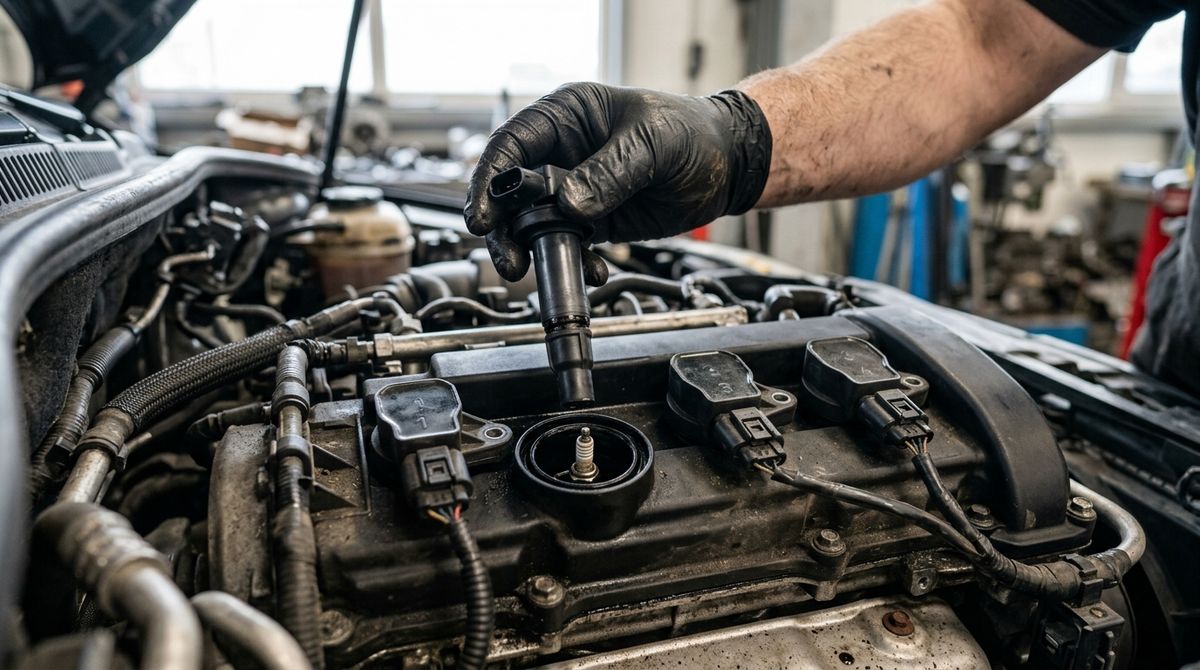
Of all the misfire codes, a P0301 code is one of the easiest to track down. Unlike P0300, which only tells you misfires are happening somewhere, P0301 points straight at cylinder 1. That means you can often find the culprit in your driveway with a simple swap test and fix it for the price of a spark plug or an ignition coil.
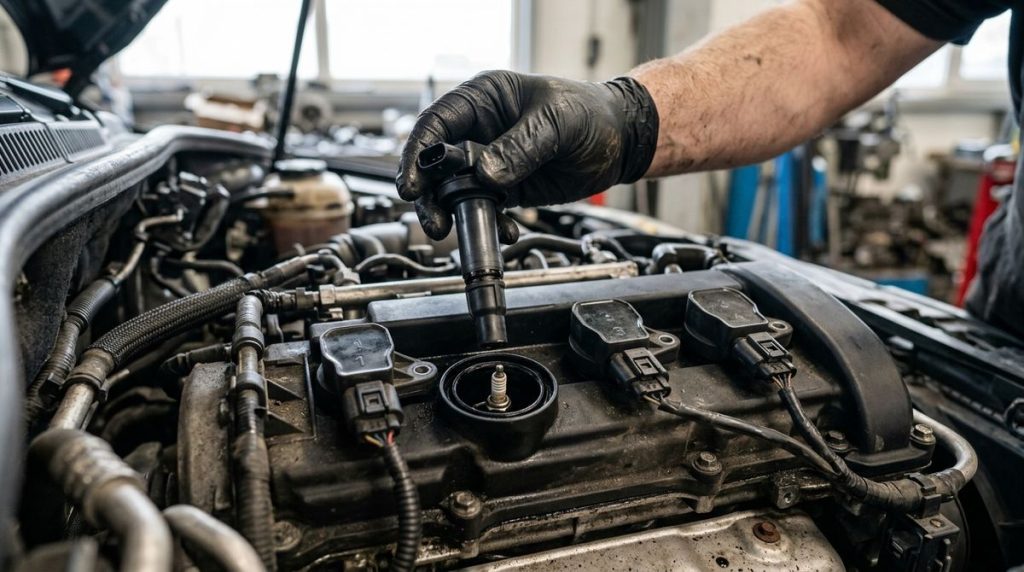
In this guide
Quick answer
| Question | Short answer |
|---|---|
| What it means | Cylinder 1 misfire detected |
| Most common causes | Worn spark plug or failing ignition coil |
| Other causes | Fuel injector, vacuum leak, low compression, wiring |
| Common symptoms | Rough idle, shaking, hesitation, check engine light |
| Safe to drive? | Gently, for short trips, if the light is steady. Not if it’s flashing |
| Typical cost | $20–$350 for plugs or a coil |
What a misfire actually is
Each cylinder needs spark, fuel, air, and good compression, all at exactly the right moment. When one of those is missing, the cylinder doesn’t fire properly. The engine computer notices because the crankshaft slows down for a split second every time that cylinder should have fired. It logs a code ending in the cylinder’s number: P0301 for cylinder 1, P0302 for cylinder 2, and so on.
Where cylinder 1 sits depends on your engine. On many inline engines it’s at the end with the timing belt or chain, but V6 and V8 layouts vary by manufacturer, so look up a diagram for your exact engine before you start swapping parts.
Symptoms of a P0301 code
- Rough idle or shaking, especially at stoplights. See car shakes when idling.
- Hesitation or jerking when you accelerate. See car jerks when accelerating.
- Less power and worse fuel economy.
- A flashing check engine light under load, which means the misfire is severe.
- A raw fuel smell from the exhaust in some cases.
Common causes
1. A worn or fouled spark plug
Plugs wear out gradually, and a worn one can misfire under load or in damp, cold weather. If your plugs are due according to your maintenance schedule, replace the whole set rather than just one.
2. A failing ignition coil
Most modern engines have one coil sitting directly on top of each spark plug. Heat cycles can crack them over time, and a weak coil often fails first on cold, damp mornings.
3. A damaged plug wire or boot, or oil in the plug well
On older engines with plug wires, a cracked wire or boot can leak spark. On any engine, oil pooling in the spark plug well, usually from a leaking valve cover gasket, can cause misfires.
4. A clogged or failed fuel injector
If cylinder 1 isn’t getting enough fuel, it won’t fire properly even with a perfect spark.
5. A vacuum leak near cylinder 1
A leaking intake gasket close to cylinder 1 can let in extra air and lean out that cylinder. It often comes with a lean code like P0171.
6. Low compression
A burnt valve, worn piston rings, or a failing head gasket can stop cylinder 1 from sealing. If you also see thick white exhaust smoke, read white smoke from exhaust when cold.
7. Wiring or connector problems
A corroded or loose connector at the coil or injector can cause intermittent misfires.
The swap test: find the cause yourself
This works on most engines with individual coils:
- Write down the code and any freeze-frame data, then clear it with your scanner.
- With the engine off and cool, swap the cylinder 1 ignition coil with the coil from a neighboring cylinder, such as cylinder 2.
- Drive normally until the check engine light returns, or check for pending codes with your scanner.
- Read the result. If the code changes to P0302, the coil is bad. If it’s still P0301, swap the spark plugs the same way and repeat.
- If the misfire still stays on cylinder 1, the injector, a vacuum leak, or compression is the likely cause, and a shop’s injector test or compression test is the next step.
While the coil is out, look for oil in the spark plug well.
Should you replace one coil or all of them?
If the swap test proves one coil is bad, replacing just that coil is a reasonable, budget-friendly fix. If your car has high mileage and the other coils are the same age, some owners replace them all at once to avoid repeat failures, but it isn’t required. Spark plugs are different: if they’re due, replace the full set, because plugs wear evenly and mixing old and new ones can leave you chasing the next misfire. If the code moves to cylinder 2 after the swap, our P0302 code guide covers the next steps.
How much does it cost to fix a P0301 code?
| Repair | DIY parts | Shop price |
|---|---|---|
| Spark plugs (full set) | $30–$120 | $150–$400 |
| Ignition coil (one) | $40–$150 | $150–$350 |
| Spark plug wire set | $30–$100 | $100–$250 |
| Fuel injector (one) | $60–$250 | $200–$600 |
| Valve cover gasket (oil in plug wells) | $30–$80 | $150–$450 |
| Compression test | — | $100–$250 |
| Valve or head gasket repair | — | $1,000–$3,000+ |
On V6 engines, rear spark plugs and coils can be hard to reach, so labor costs more. It’s also worth entering your VIN in the NHTSA recall lookup before buying parts, in case a recall or free repair applies.
Can I keep driving with a P0301 code?
If the check engine light is steady and the car only runs a little rough, you can usually make short, gentle trips until you fix it. Avoid hard acceleration, towing, and long highway drives.
If the light is flashing, the misfire is severe. Unburned fuel is going into the exhaust and can overheat the catalytic converter quickly, which turns a cheap coil repair into an expensive P0420 problem. Ease off, and get it checked as soon as possible. Our guide to check engine light flashing explains why.
If your scanner shows misfires on several cylinders instead of just one, read our P0300 code guide. You can look up any code in our OBD2 code lookup, or work from symptoms with the free car symptom checker.