
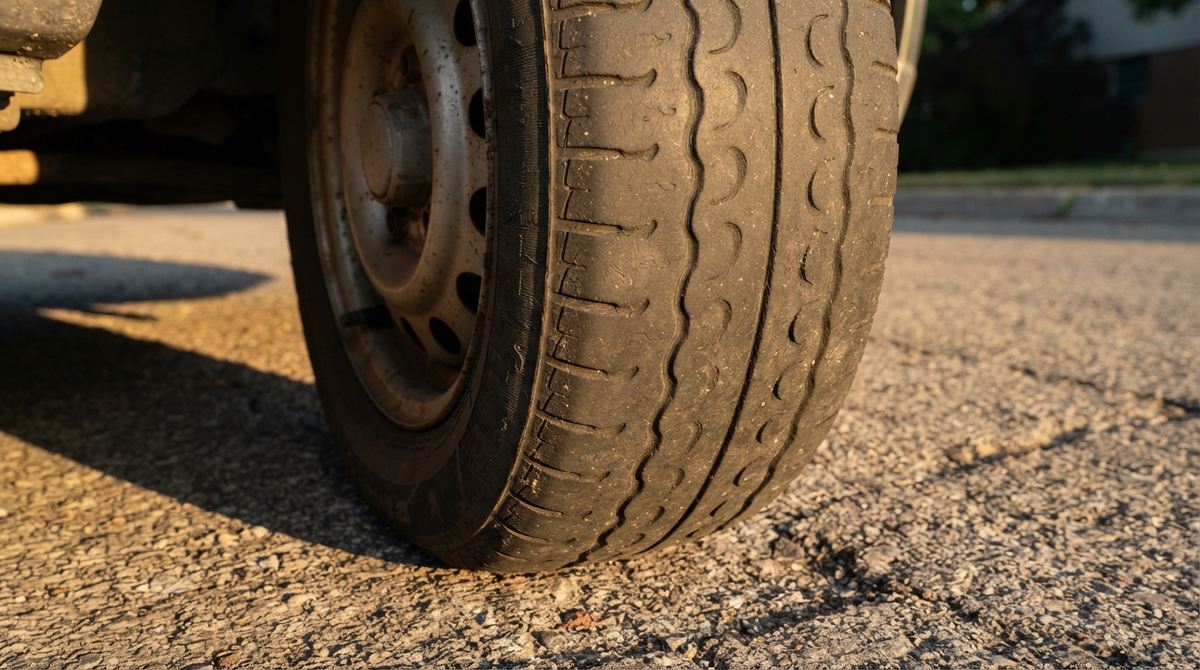
A humming noise when driving that rises as you speed up, and falls as you slow down, is tied to road speed rather than engine speed. That points to the parts that turn with the wheels: most often a worn wheel bearing or tires that have worn unevenly. Both start quietly and get louder over weeks, so catching the cause early saves money and, in the case of a bearing, avoids a real safety problem.
In this guide
| What you notice | Most likely cause | Urgency |
|---|---|---|
| Hum or growl that changes when you weave or turn | Worn wheel bearing | High |
| Rhythmic hum that changes on different road surfaces | Uneven tire wear (cupping or feathering) | Fix soon |
| Hum after fitting new winter or off-road tires | Normal tire tread noise | None |
| Hum that changes when you accelerate or coast | Differential or transmission | Fix soon |
| Hum plus vibration through the steering wheel | Tire imbalance or damaged tire | Fix soon |
| Hum plus ABS light | Worn bearing affecting the wheel speed sensor | High |
Humming noise when driving: 6 common causes
1. A worn wheel bearing
This is the classic cause. A failing bearing starts with a hum or drone around 30–40 mph and grows into a growl or grind as it wears. The giveaway is that it changes when you weave or take long corners, because that loads and unloads the bearing. On many cars, a noise that gets louder turning left points to the right-side bearing, and the other way around. A badly worn bearing can eventually cause a grinding noise while driving and even set off the ABS light.
2. Uneven tire wear
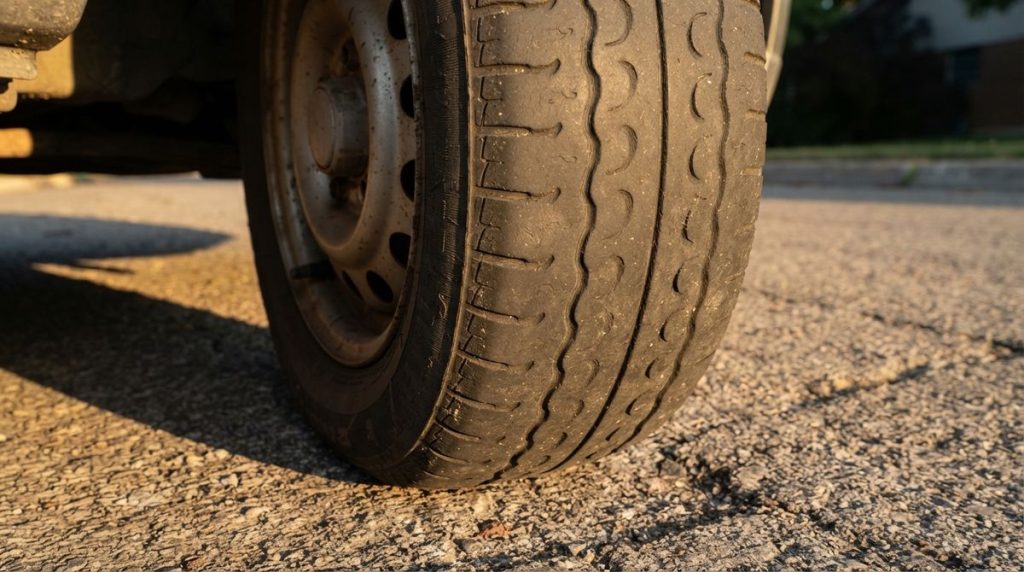
Tires that wear in patches (cupping) or with sharp edges across the tread blocks (feathering) make a rhythmic hum or “wub-wub” that changes on different road surfaces. Run your hand over the tread: high and low spots or saw-tooth edges confirm it. Uneven wear usually comes from worn shocks, bad alignment, or skipped rotations. Rotating the tires can move the noise to a different corner, which is a useful clue that the tires, not a bearing, are to blame.
3. Aggressive or winter tire tread
Mud-terrain, all-terrain and some winter tires are simply louder. If the hum started right after new tires were fitted and doesn’t change when turning, it’s probably normal. Tread noise is usually loudest on coarse concrete or grooved highway surfaces and quieter on smooth asphalt. If it bothers you, a touring or highway tire is much quieter at the next replacement.
4. Tire imbalance or damage
An out-of-balance wheel or a tire with a separated belt can hum and also make the steering wheel shake at high speed. Look for bulges on the sidewall or tread. A tire with a bulge can fail suddenly and should be replaced right away, not just balanced.
5. Differential or transfer case
On rear-wheel and all-wheel-drive cars, low or worn-out differential fluid or worn gears make a hum or whine that changes when you accelerate, coast, or decelerate. If the noise follows the throttle more than the road speed, see our guide to a car making noise when accelerating.
6. A worn CV joint or transmission bearing
Less often, a worn CV joint or a transmission bearing hums. Transmission bearing noise usually changes with gear selection rather than road speed. A CV joint more often clicks on tight turns, as covered in our guide to a clicking noise when turning.
How to narrow it down
- Note the speed when the hum starts and whether it rises steadily with road speed.
- On a quiet, empty road, weave gently left and right. A change in the noise points strongly to a wheel bearing.
- Shift into neutral while coasting at speed, where it’s safe. If the noise stays the same, it’s road-speed related (tires or bearings), not the engine or transmission.
- Drive on different road surfaces. A big change suggests tires.
- Check the tread by hand and look at each tire for uneven wear and bulges.
- A shop can raise the car, spin each wheel by hand, and check for roughness or play in the bearings.
If a warning light is on, look up the code in our OBD2 code lookup. The car symptom checker can help if you’ve noticed other symptoms.
Why it’s worth catching early
A humming bearing caught early is a single, planned repair. Left alone, it can wear the hub, damage the ABS sensor, and chew through a set of tires if it lets the wheel wobble. Uneven tire wear works the same way: fixing the alignment or worn shocks behind it saves the next set of tires.
How much does it cost to fix?
| Repair | Typical cost (parts and labor) |
|---|---|
| Tire rotation and balance | $40–$100 |
| Wheel alignment | $80–$150 |
| Replacement tire (each) | $100–$300 |
| Wheel bearing or hub assembly (one wheel) | $200–$600 |
| Differential fluid service | $100–$200 |
| CV axle | $200–$700 |
Is it safe to drive?
Tire hum is usually safe in the short term, although badly worn tires grip worse in rain. A wheel bearing is more serious. As it wears, it can develop play, overheat, and in rare cases fail, which can make the wheel wobble or seize. If the hum turns into a growl or grind, gets louder quickly, or comes with a wobbly or vague steering feel, get the car inspected right away. Wheel hub recalls do happen, so check the NHTSA recall lookup too.
FAQ
How do I know if it’s a wheel bearing or tires?
A bearing usually changes when you weave or turn. Tire noise usually changes with the road surface and doesn’t care about turning.
Can a bad wheel bearing make a humming noise?
Yes. Humming is usually the first sign, before it becomes a growl or grind.
Why does my car hum at 40 mph but not at 20?
Bearing and tire noise build with road speed, so they’re often quiet at low speed and obvious on faster roads.
Will replacing tires stop the humming?
Only if the tires are the cause. If the noise changes when you turn, new tires won’t fix it, so diagnose before buying.
Can I drive with a humming wheel bearing?
For a short time, but have it checked soon. Bearings get worse, and a failed bearing is dangerous.