
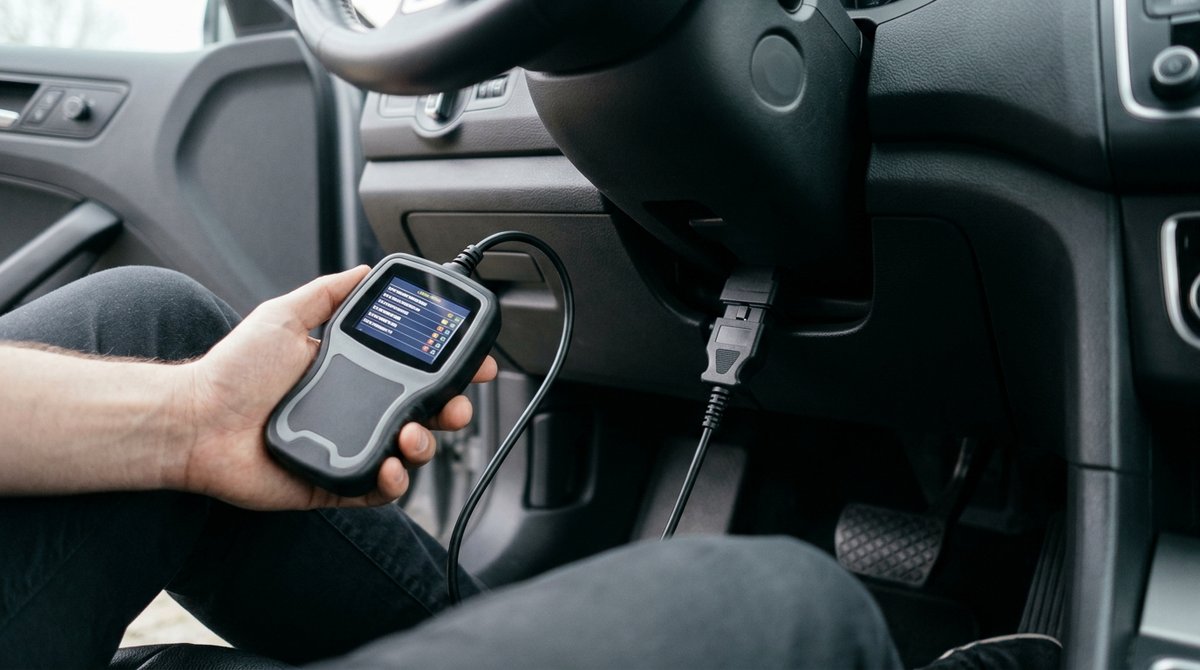
Pending vs stored vs permanent codes are the three labels most OBD2 scanners use, and the difference tells you whether a fault is a first warning, a confirmed problem, or one the car won’t let you erase. Knowing which one you have helps you decide whether to fix it now, keep an eye on it, or stop clearing it and get it repaired.
In this guide
| Code type | What it means | Check engine light | Can you clear it? |
|---|---|---|---|
| Pending | Fault seen once, not confirmed yet | Usually off | Yes, but it may come back |
| Stored (confirmed) | Fault confirmed on repeat drives | Usually on | Yes, but the light returns if the fault does |
| Permanent | Confirmed emissions fault locked in memory | On, or on until recently | No, only the car can clear it |
| History | Old fault that hasn’t repeated | Off | Yes, and it ages out on its own |
Pending vs stored vs permanent codes, explained
Pending codes
Your car’s computer runs self-tests, called monitors, on systems like the catalytic converter, oxygen sensors, misfire detection, and the evaporative emissions (EVAP) system. Many of these use two-trip logic. The first time a test fails, the computer saves a pending code but usually doesn’t turn on the check engine light. If the same test fails again on the next drive cycle, the code becomes confirmed. If it passes instead, the pending code eventually drops away. Very small EVAP leaks like the P0456 code often appear as pending codes first, because the test only runs under specific conditions.
A pending code is an early warning. It’s common with borderline faults, such as a catalytic converter that’s just starting to fade, which is why many people see a P0420 code that comes and goes. A lean condition like P0171 can also show up as pending before you notice any change in how the car drives. A loose cap often sets a pending code first, which is why a check engine light after getting gas can take a day or two to appear.
Stored (confirmed) codes
A stored code, also called a confirmed or active code, means the fault happened on repeat drives. For emissions faults, the check engine light is usually on. This is the code most people mean when they say “my car has a code.” For most faults, the light turns itself off after three drive cycles in a row without the problem. The code stays in memory as history for a while after that, and it’s typically erased automatically after about 40 engine warm-ups without the fault returning.
Permanent codes
Most US vehicles from the 2010 model year onward also save permanent codes for emissions faults. A scanner or a battery disconnect can turn the light off, but the permanent code stays until the car’s own monitor runs and passes. This stops people from clearing codes right before an emissions test. If you see a permanent code, the fault was real recently, and the only way to remove it is to fix the problem and drive until the monitor runs again.
History codes
Some scanners also show history codes. These are old faults that were confirmed at some point but haven’t come back recently. The light is off, and the computer erases them on its own after enough clean drives. A history code is still useful, because it tells you what the car has struggled with before, which can explain an intermittent problem. ABS faults are stored in a separate module, so a basic scanner may not show why the ABS light is on.
What to do with each type of code
- Write every code down before you clear anything, including pending ones. Many scanners also save freeze frame data, a snapshot of speed, engine temperature, and fuel trim at the moment the fault was set, which helps with diagnosis.
- Look up what the code means. Our OBD2 code lookup explains 180+ codes in plain English, for example P0300 or P0420.
- Treat a pending code as a heads-up and check the simple causes first. A pending EVAP code such as P0455 or P0442 is often just a loose or worn gas cap.
- Don’t keep clearing a stored code. Clearing hides the light, not the fault, and it resets the readiness monitors.
- Before an emissions test, make sure the monitors show “ready.” Clearing codes shortly before the test is one of the most common reasons cars fail as “not ready.”
How much does it cost to read and fix codes?
| Item | Typical cost |
|---|---|
| Basic OBD2 scanner (pending and stored codes) | $20–$60 |
| Scanner with live data and monitor status | $40–$150 |
| Code read at many auto parts stores | Free |
| Shop diagnostic fee | $100–$200 |
| The repair itself | Depends entirely on the code |
A replacement gas cap costs about $15–$30, while a catalytic converter can run $1,000 or more. Before paying for an emissions repair, check the NHTSA recall lookup in case a recall covers it, and check your warranty booklet. In the US, major emissions parts like the catalytic converter usually carry a federal emissions warranty of 8 years or 80,000 miles.
Is it safe to drive with a pending code?
Usually, yes, for a short while. A pending code on its own means the computer saw something once. Misfire codes are the main exception. A pending P0300 or cylinder-specific misfire that comes with rough running, shaking, or a flashing check engine light can overheat and damage the catalytic converter, so get it checked quickly. Don’t ignore any code that comes with overheating, a burning smell, or a loss of power. If you’re not sure what a symptom means, the car symptom checker can help narrow it down.
FAQ
Will a pending code turn on the check engine light?
Usually not at first. The light normally comes on only if the same fault repeats on the next drive cycle and the code becomes confirmed.
Why won’t my permanent code clear?
It can’t be cleared with a scanner. Fix the cause, then drive normally for a few days so the monitor can run and pass.
Can a pending code go away on its own?
Yes. If the self-test passes on later drives, the pending code clears without you doing anything.
Does disconnecting the battery clear codes?
On most cars it clears pending and stored codes and turns off the light, but it doesn’t clear permanent codes. It also resets the readiness monitors, so the car may not be ready for an emissions test for several days.