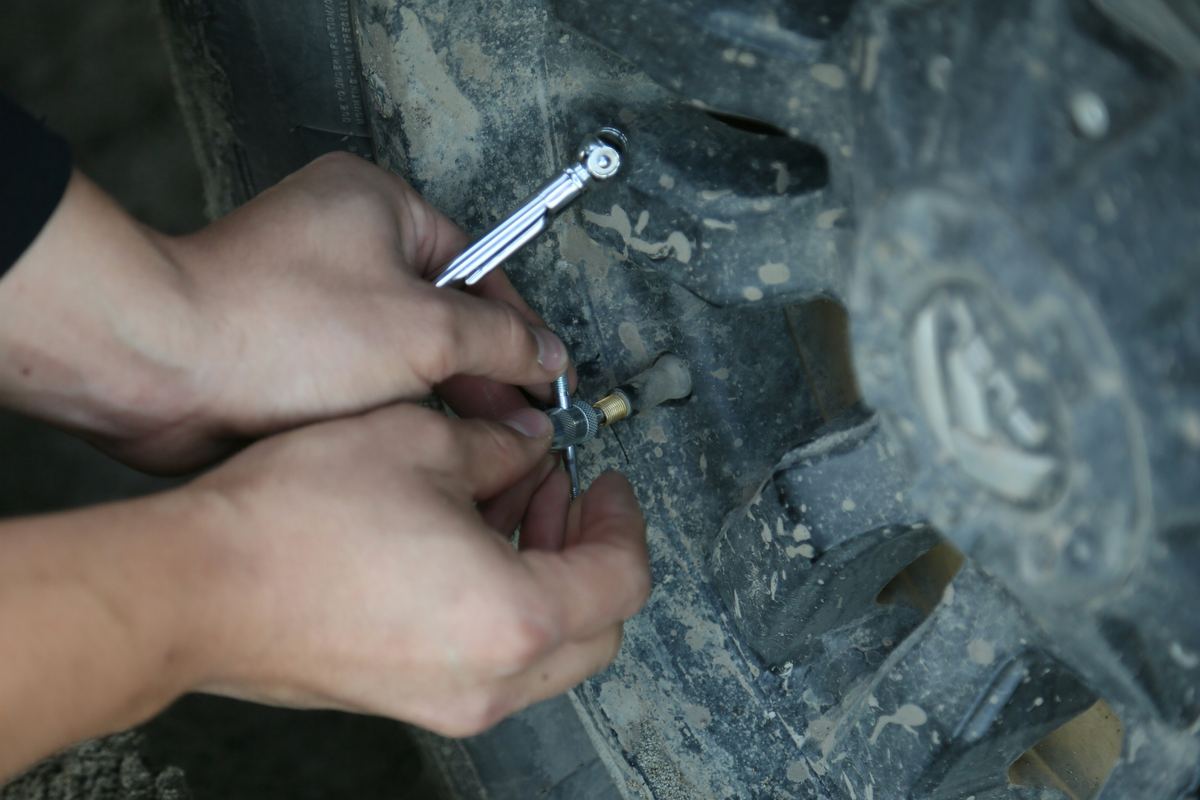
If your tire pressure light is on but your tires look fine, the most common reasons are that one tire is actually low (it can be hard to see), a drop in outside temperature lowered the pressure, or a tire pressure sensor has failed. Other causes include a low spare tire or a system that needs to be reset after inflating the tires.
First, check whether the light is steady or flashing. That tells you a lot.
Steady vs. Flashing Tire Pressure Light
- Steady light: at least one tire is significantly underinflated. In the US, the system is designed to warn you when a tire is about 25% below the recommended pressure.
- Flashing for about a minute at startup, then steady: the tire pressure monitoring system (TPMS) itself has a fault, often a dead sensor. It may not warn you if a tire goes low.
Tire Pressure Light On but Tires Are Fine: 7 Reasons
1. A Tire Is Actually Low
A tire can be 25% underinflated and still look normal, especially low-profile tires. You can’t judge tire pressure by eye.
Fix: check all four tires with a tire pressure gauge when they’re cold (before driving, or after the car has sat for a few hours). Inflate to the pressure on the sticker inside the driver’s door, not the maximum number on the tire’s sidewall.
2. Cold Weather
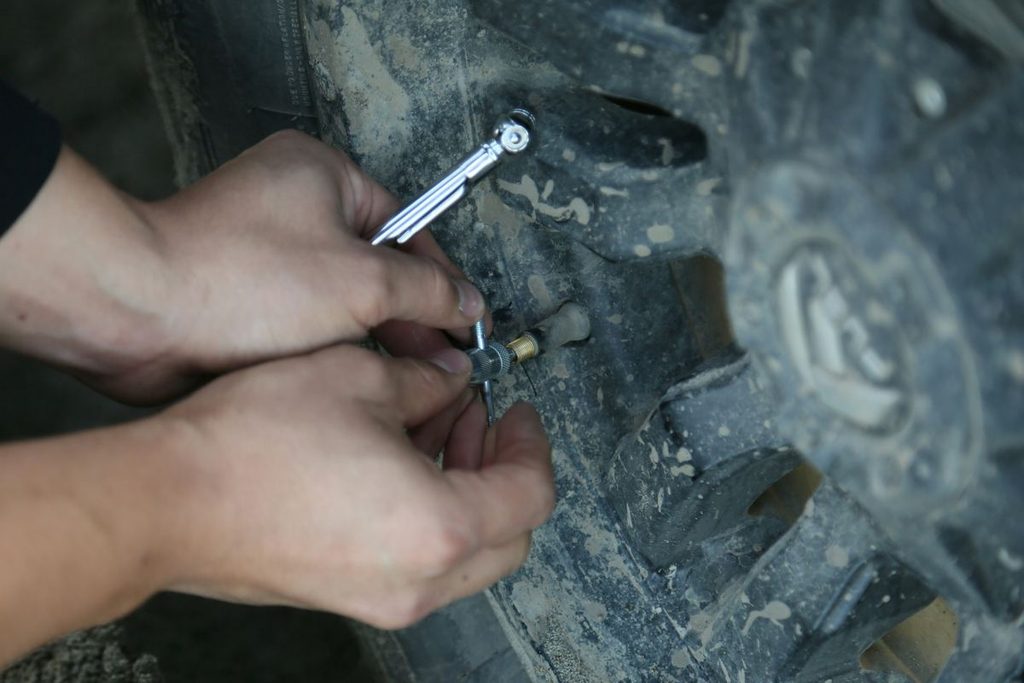
Tire pressure drops as the temperature falls, roughly 1 psi for every 10°F. A cold morning can push a slightly low tire under the warning limit, and the light may go off after driving as the tires warm up.
Fix: check and top up the pressure when temperatures drop, especially at the start of winter.
3. The Spare Tire Is Low
Some vehicles also monitor the full-size spare. If the spare is low, the light can come on even though the four tires on the road are fine.
Fix: check the spare too. Temporary “donut” spares often need about 60 psi; the correct number is on the spare’s sidewall. For more on spares, see how far you can drive on a spare tire.
4. Dead TPMS Sensor Battery
Most cars have a sensor inside each wheel with a built-in battery. These batteries usually last several years, often around 5–10 years, and can’t be replaced separately.
Signs: the light flashes at startup, then stays on.
Fix: replace the faulty sensor at a tire shop.
5. Damaged or Missing Sensor
Sensors can be damaged during tire changes, or left out when new wheels are installed.
Signs: the light came on right after new tires, a tire repair, or new wheels.
Fix: have the shop check and replace or install the sensor.
6. System Needs a Reset or Relearn
After inflating tires, rotating them, or replacing a sensor, some systems need to be reset or “relearn” which sensor is on which wheel.
Fix: many cars reset automatically after 10–20 minutes of driving. Others have a TPMS reset button (often under the steering wheel or in the glove box) or a reset option in the dashboard menu. Check your owner’s manual.
7. Slow Leak
A small nail or a leaky valve can lose air slowly, so the tire looks fine one day and triggers the light the next.
Fix: if one tire keeps losing pressure, have it inspected. A puncture in the tread can usually be repaired.
How to Fix It, Step by Step
- Check all tires (and the spare) with a gauge while they’re cold.
- Inflate to the door-sticker pressure.
- Drive for 10–20 minutes so the sensors can update.
- Reset the TPMS if the light is still on (see your owner’s manual).
- If the light flashes at startup, have the sensors checked at a tire shop.
Keep a digital tire pressure gauge and a portable tire inflator in your car to make this quick and easy.
Is It Safe to Drive?
A steady light means a tire is low. Check it as soon as possible, because underinflated tires handle worse, wear faster, use more fuel, and can overheat and fail.
A flashing light means the system isn’t working, so you won’t get a warning if a tire goes low. Until it’s fixed, check your tire pressures manually at least once a month.
Typical Costs
Rough US estimates; prices vary by vehicle and location:
- Tire pressure gauge: about $10–$25
- Air at a gas station: free to a few dollars
- TPMS reset or relearn at a shop: often free to about $50
- Puncture repair: about $20–$50
- TPMS sensor replacement: about $50–$250 per wheel
FAQ
Why does my tire pressure light come on when it’s cold?
Cold air lowers tire pressure. If your tires were already slightly low, a cold morning can push them below the warning limit.
Why is my tire pressure light flashing?
A flashing light at startup usually means a TPMS fault, most often a sensor with a dead battery, rather than low pressure.
How do I reset the tire pressure light?
Inflate all tires to the correct pressure first. Many cars reset after a short drive; others use a reset button or dashboard menu. Your owner’s manual has the exact steps.
Can I drive with the tire pressure light on?
Short distances, yes, but check your tires as soon as possible. If a tire is very low or visibly flat, don’t drive on it.
Safety note: Correct tire pressure is essential for safe braking and handling. If you’re unsure, have your tires checked at a tire shop.