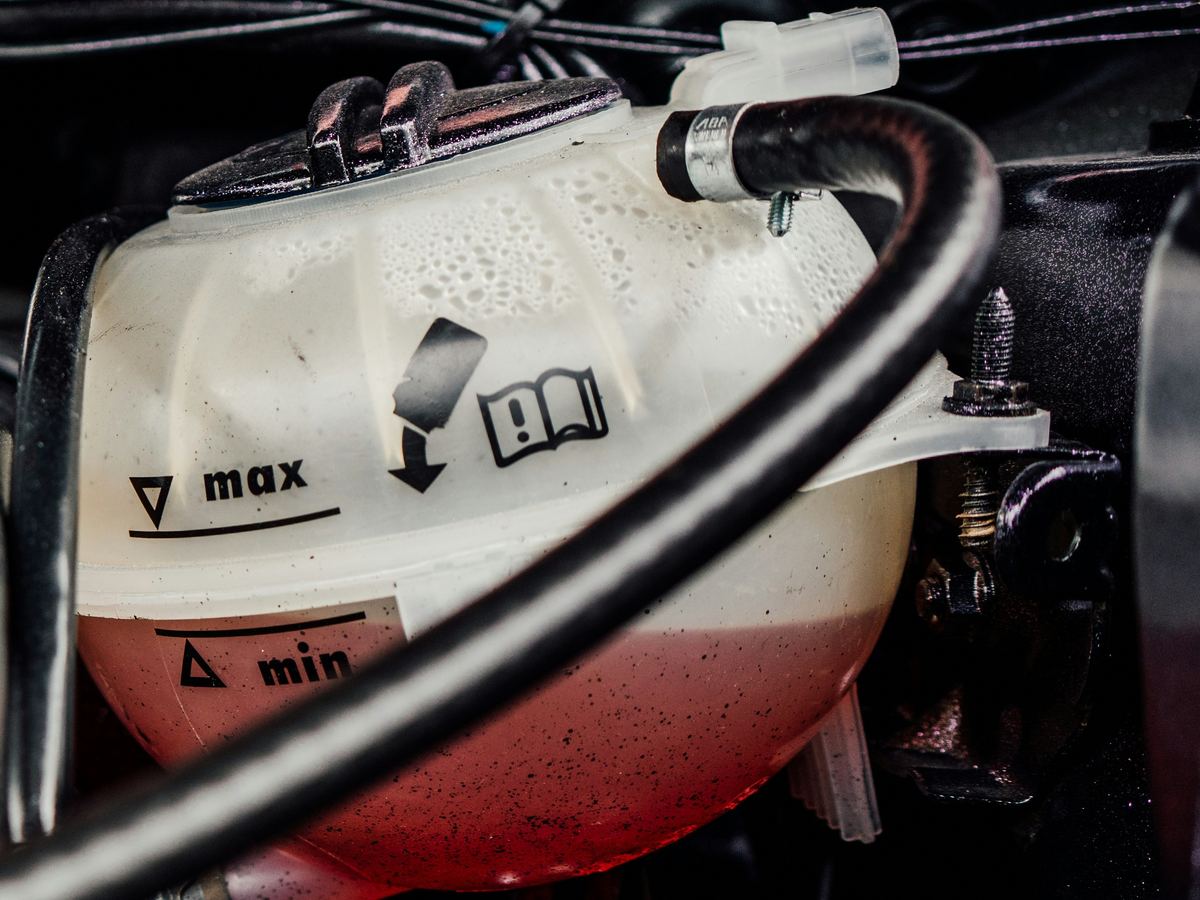
If your car’s temperature gauge rises toward hot and then drops back to normal, the most common cause is low coolant, often from a small leak. Other common causes are air trapped in the cooling system, a sticking thermostat, a failing radiator fan, or a worn water pump. Less often, it’s a sign of a head gasket problem.
Even if the gauge returns to normal, don’t ignore it. Overheating, even briefly, can seriously damage an engine.
What to Do Right Away
- Turn off the AC, then turn the heater to full hot with the fan on high. This pulls heat away from the engine.
- If the gauge reaches red or you see steam: pull over safely and turn off the engine.
- Never open the radiator cap or coolant reservoir while the engine is hot. Hot coolant is under pressure and can cause serious burns.
- Wait at least 30 minutes for the engine to cool, then check the coolant level.
- If the coolant is low, top it up with the correct coolant for your car. In an emergency, water can get you to a shop.
What the Pattern Tells You
- Overheats in traffic or at idle, normal at highway speed: likely the radiator cooling fan.
- Overheats on the highway or uphill, fine in town: likely a clogged radiator, weak water pump, or low coolant.
- Needle spikes, then quickly drops: often low coolant, an air pocket, or a sticking thermostat.
- Heater blows cold while the engine runs hot: usually low coolant or trapped air.
- White exhaust smoke, sweet smell, or bubbles in the coolant reservoir: possible head gasket failure.
7 Causes of a Car Overheating Then Going Back to Normal
1. Low Coolant (Most Common)
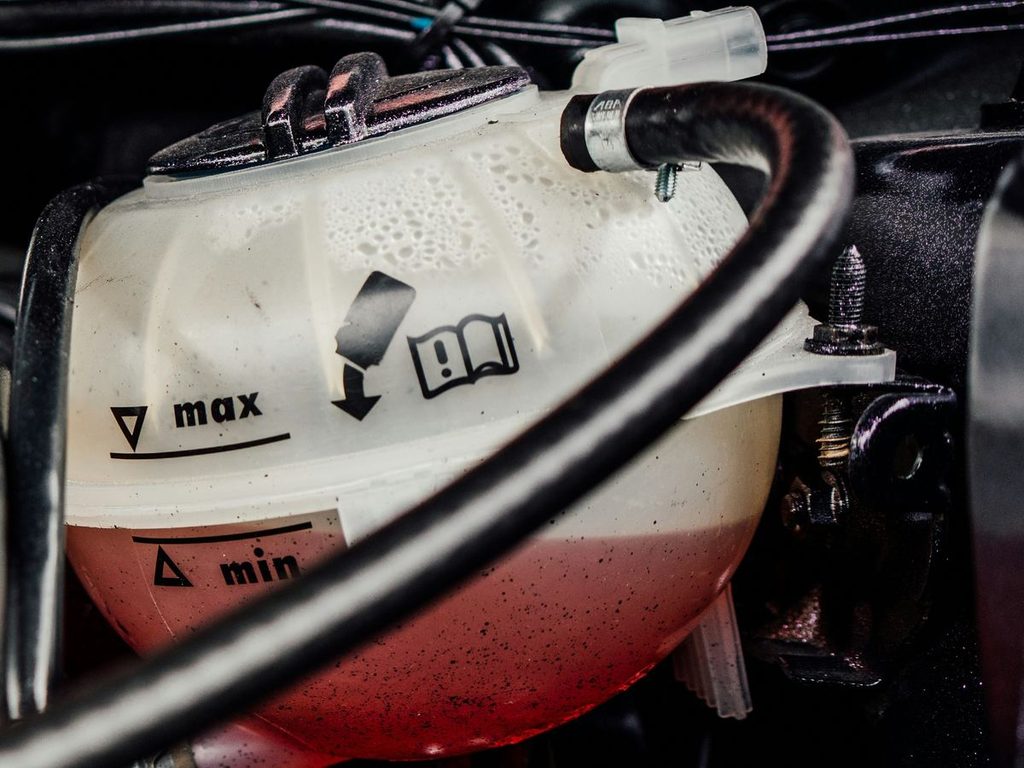
When coolant is low, air pockets form and pass by the temperature sensor, making the gauge jump up and down. Low coolant almost always means there’s a leak.
Signs: coolant reservoir below the MIN line, puddles of green, orange, or pink fluid, or a sweet smell. See our guide to burning smells after driving.
Fix: top up the coolant, then find and repair the leak.
2. Air Pocket in the Cooling System
After a coolant change, repair, or refill, air can get trapped in the system. It moves around and causes temperature swings.
Signs: the problem started right after cooling system work; the heater blows hot and cold.
Fix: “bleed” or “burp” the cooling system to remove the air. Many cars have a bleeder valve or a specific procedure; check your service manual.
3. Sticking Thermostat
The thermostat opens to let coolant flow to the radiator once the engine warms up. If it sticks, it may open late or only partly, causing the temperature to rise and then suddenly drop when it finally opens.
Signs: temperature climbs, then drops quickly, with no visible leak.
Fix: replace the thermostat. It’s a relatively inexpensive part.
4. Failing Radiator Cooling Fan
When you’re moving, air flows through the radiator naturally. In traffic, the engine relies on the cooling fan. If the fan, its relay, fuse, or sensor fails, the engine heats up at low speeds.
Signs: overheating in traffic or at idle, normal once you’re driving at speed. With the engine hot, you may notice the fan isn’t spinning.
Fix: check the fan fuse and relay first, then the fan motor.
5. Worn Water Pump
The water pump circulates coolant through the engine. A worn pump may not move enough coolant, especially at higher engine speeds.
Signs: coolant leaking from the front of the engine, a whining or squealing noise (see squealing noise when accelerating), or overheating under load.
Fix: replace the water pump. On some engines, it’s done together with the timing belt.
6. Clogged Radiator
Over time, deposits can build up inside the radiator, and debris like leaves or bugs can block the outside fins. Either one reduces cooling.
Signs: overheating on hot days, uphill, or when towing.
Fix: clean the fins gently; for internal clogs, flush or replace the radiator.
7. Head Gasket Problem
A failing head gasket can push hot combustion gases into the cooling system, causing pressure spikes and temperature swings. This is the most serious cause.
Signs: white exhaust smoke with a sweet smell, bubbles in the coolant reservoir, losing coolant with no visible leak, or a check engine light for misfires (see check engine light flashing).
Fix: a mechanic confirms it with a compression or combustion leak test. Repairs are expensive, so get it diagnosed early.
Is It Real Overheating or a Faulty Sensor?
Sometimes the gauge is wrong. A failing coolant temperature sensor can make the needle swing even though the engine is fine. If there are no other symptoms (no steam, no smell, the heater works normally, the coolant is full), have the sensor checked with a scan tool. Always assume the overheating is real until you’ve ruled it out.
Is It Safe to Drive?
Not for long. Repeated overheating can warp the cylinder head or damage the head gasket, turning a small repair into a very expensive one. If the gauge enters the red zone, pull over and turn off the engine.
A broken serpentine belt can also cause sudden overheating, often with the battery light on; see battery light on while driving.
Typical Repair Costs
Rough US estimates; prices vary by vehicle and location:
- Coolant top-up: about $15–$30 (DIY)
- Cooling fan relay or fuse: about $20–$150
- Cooling system flush: about $100–$200
- Thermostat: about $150–$350
- Water pump: about $300–$750+
- Radiator cooling fan: about $300–$800
- Radiator replacement: about $400–$1,000
- Head gasket: about $1,500–$3,000+
FAQ
Why does my temperature gauge go up and down while driving?
Most often because of low coolant or an air pocket in the cooling system. A sticking thermostat or failing sensor can also cause it.
Why does my car overheat at idle but not while driving?
When you’re moving, air flows through the radiator. At idle, the engine depends on the cooling fan, so a failing fan often causes overheating only in traffic.
Can I keep driving if the temperature goes back to normal?
Only for short distances while you get it checked. The cause is still there, and the next overheating episode can damage the engine.
Why does my heater blow cold air when the engine is overheating?
This usually means the coolant is low or there’s air in the system, so hot coolant isn’t reaching the heater core.
Safety note: Never open a hot radiator cap or coolant reservoir. If your engine overheats, stop driving and have the cooling system inspected by a certified mechanic.
1 thought on “Car Overheating Then Going Back to Normal? 7 Causes and What to Do”