
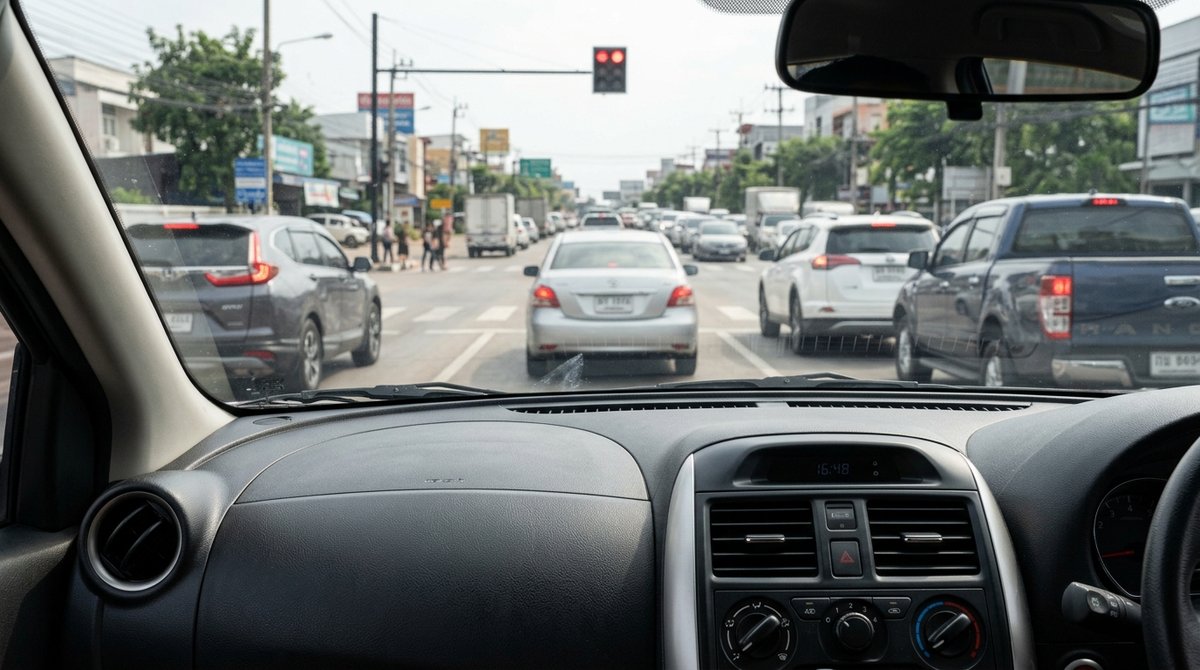
A car AC not cold at idle, but fine once you’re moving, is telling you something specific. The system can make cold air. What it can’t do is get rid of heat when there’s no wind rushing through the front of the car. That narrows the list of suspects a lot, and the top one is often a cheap fix.
In this guide
Quick answer
| Clue | Likely cause |
|---|---|
| Fan behind the grille doesn’t spin when the AC is on | Cooling fan motor, relay, or fuse |
| Fan spins, but the condenser is caked with bugs or leaves | Blocked condenser airflow |
| A bit cool at idle, much colder when you rev the engine | Low refrigerant or a weak compressor |
| Started right after a DIY recharge | Overcharged system |
| Temperature gauge also creeps up in traffic | Cooling fan or engine cooling problem |
Why idle is the hardest test for your AC
The condenser sits right in front of the radiator and works like a second radiator for the AC. Its job is to dump the heat the refrigerant picked up inside the cabin. At 40 mph, air pours through it for free. At a red light, the only airflow comes from the electric cooling fan. On top of that, the compressor is belt-driven, so at idle it spins slower and pumps less. A system with any weakness shows it at idle first.
6 causes of a car AC not cold at idle
1. The cooling fan isn’t running
This is the most common cause. With the engine idling and the AC on max, look through the grille or under the hood. On most cars at least one fan should be spinning. If neither runs, the problem could be the fan motor, a relay, a fuse, a fan control module, or a temperature sensor. Check the fuse and relay first, because they’re cheap.
2. A dirty or blocked condenser
Bugs, leaves, road grime, and even plastic bags collect on the condenser. So do bent fins from stones and pressure washers. Any of it cuts airflow. Rinse it gently with a garden hose; never use a pressure washer, because it flattens the fins.
3. Low refrigerant
A slightly low charge often still works at highway speed but struggles at idle. If the cooling has slowly got weaker over a season or two, a small leak is the likely reason. If it’s only slightly weak all the time, see car AC not cooling enough. If yours does the opposite, cold at idle but warm on the road, see why the AC blows hot air when driving.
4. Too much refrigerant
Overfilling from a recharge can send pressure on the high side soaring at idle. The system’s high-pressure switch then cuts the compressor out to protect it, and the air goes warm until you drive off.
5. A worn compressor
An aging compressor can lose efficiency inside. It keeps up when the engine is spinning fast but falls behind at idle speed. The clue is air that gets noticeably colder when you hold the revs at about 1,500 rpm.
6. The engine is running hot at idle
Many cars switch the AC off when coolant temperature gets high. If the temperature gauge creeps up in traffic, the cooling fan or another cooling system fault is likely affecting both the engine and the AC. Read car overheating then going back to normal if that sounds familiar.
A 5-minute test
- Park in a safe spot, engine idling, AC on max, fan on high, recirculation on.
- Put a cheap thermometer in the center vent. On a typical warm day, a healthy system blows somewhere around 35–45°F (2–7°C) there.
- Check that the cooling fan is running.
- Have someone hold the engine at about 1,500 rpm for a minute. If the air gets much colder, suspect low refrigerant, a weak compressor, or poor condenser airflow.
- Back at idle, gently spray water over the condenser with a hose. If the vents get colder right away, the problem is airflow: the fan or a blocked condenser.
Stay clear of the fan and belts while the engine is running.
How to stop it coming back
Most idle-cooling problems build up slowly, so a little maintenance goes a long way. Each spring, before the hot weather arrives, rinse the condenser from the front with a gentle hose spray and pick out any leaves or debris you can reach. Replace the cabin air filter once a year so the evaporator gets full airflow. If you live somewhere with lots of bugs, a quick look through the grille after long summer road trips is worth it.
Pay attention to the cooling fan, too. If you ever notice the temperature gauge rising in traffic, or the fan sounding louder or rougher than usual, get it checked before summer. A fan that’s getting weak usually shows up as an AC that’s slightly worse at idle long before it fails completely.
Car AC not cold at idle: repair costs
| Repair | Typical cost |
|---|---|
| Fan fuse or relay | $10–$60 DIY, $50–$150 at a shop |
| Condenser cleaning | $0–$100 |
| Cooling fan motor | $300–$800 |
| Fan control module or resistor | $150–$450 |
| Leak test and recharge | $150–$600 (depends on refrigerant type) |
| Condenser replacement | $500–$1,200 |
| Compressor replacement | $900–$2,000 |
Before you pay for a fan motor or compressor, it only takes a minute to enter your VIN in the NHTSA recall lookup in case a free recall repair applies to your car.
Can I keep driving?
Usually, yes. The one exception matters, though: on most cars the same electric fan that cools the condenser also pulls air through the engine radiator at idle. If that fan is dead, the engine can overheat in traffic too.
Keep an eye on the temperature gauge. If it starts climbing in traffic, switch the AC off and turn the heater to full hot with the fan on high. That pulls heat out of the engine. If the needle keeps rising, pull over and shut the engine off.
If the AC goes cold-then-warm even while you’re driving, see car AC blows cold then warm. If it never gets cold at all, start with car AC not blowing cold air. And if you hear the compressor clicking rapidly at idle, read AC compressor clicking on and off. For warning lights, our OBD2 code lookup explains any code, and the car symptom checker helps when you’re starting from symptoms. The heater has its own idle problem; read car heater only works when driving.