
Coolant works best as roughly a 50/50 mix with water. Straight antifreeze actually carries heat away less well than the right mix, and too much plain water lowers the boiling point. Use the type and mix your owner’s manual specifies.
In this guide
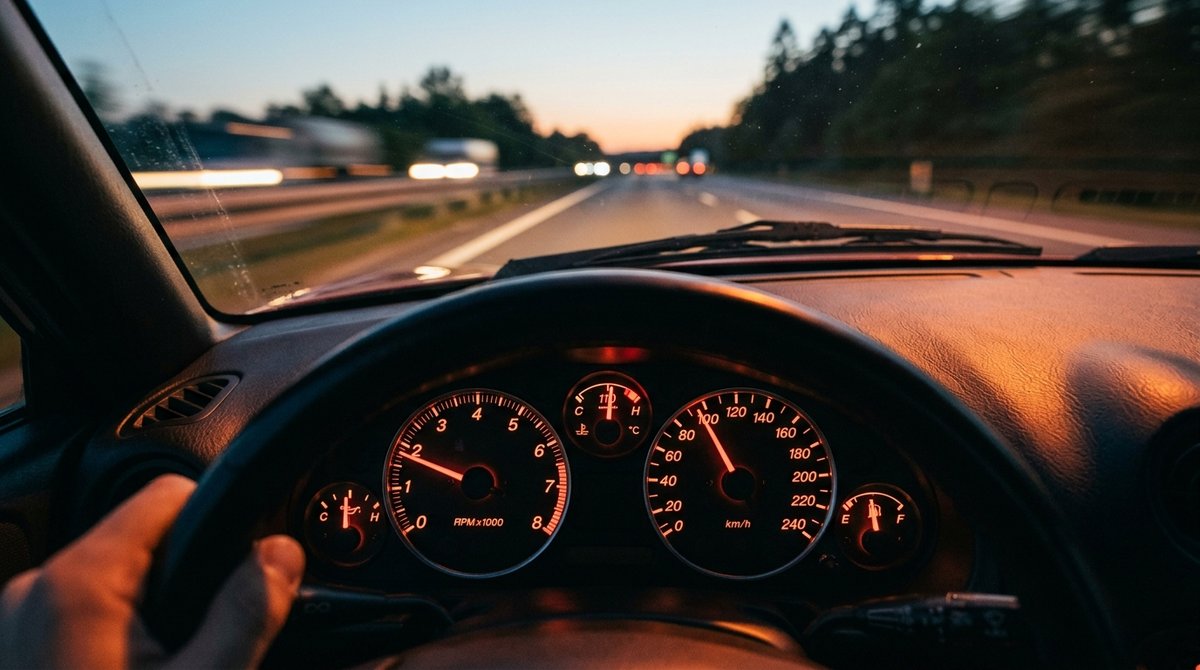
What to do if the gauge is climbing right now
- Switch off the AC to reduce the engine’s load.
- Turn the heater to full hot with the fan on high. It pulls heat out of the engine.
- If the needle keeps rising, pull over safely and switch the engine off.
- Wait at least 30 minutes before opening the hood to check anything, and don’t open the radiator cap while it’s hot.
Driving with an engine in the red can warp the cylinder head and turn a cheap repair into a very expensive one. A sweet smell after driving suggests a leak, so read why your car smells like antifreeze.
How to keep it from happening again
Most overheating problems build up slowly, so a few habits go a long way. Change the coolant on the schedule in your owner’s manual and stick to the type it specifies, rather than mixing brands. Glance at the coolant reservoir every few weeks with the engine cold, especially before long summer trips. Look over the hoses and drive belt at each oil change for cracks, bulges, or soft spots. Keep the front of the radiator clear of leaves and bugs. And get into the habit of noticing where your temperature gauge normally sits, so you spot any change early.
Car running hot but coolant is full: repair costs
| Repair | Typical cost |
|---|---|
| Radiator cap | $15–$40 |
| Cooling fan relay or fuse | $20–$100 |
| Coolant temperature sensor | $100–$250 |
| Cooling system flush and bleed | $100–$200 |
| Thermostat | $150–$400 |
| Water pump | $350–$900 |
| Cooling fan motor | $300–$800 |
| Radiator | $400–$1,000 |
| Head gasket | $1,000–$3,000+ |
Before approving a big repair, enter your VIN in the NHTSA recall lookup in case a recall covers part of your cooling system.
Can I keep driving?
Not for long. An engine that’s running hot is one of the few problems that can destroy an engine in a single drive. If the gauge goes above its normal position, follow the steps above and get it checked before you rely on the car again. If the temperature rises and then drops back to normal on its own, read car overheating then going back to normal, which covers that pattern.
If the gauge reads low instead of high, the thermostat may be stuck open, which often sets a P0128 code. You can look up any code in our OBD2 code lookup, or start from symptoms with the free car symptom checker.