
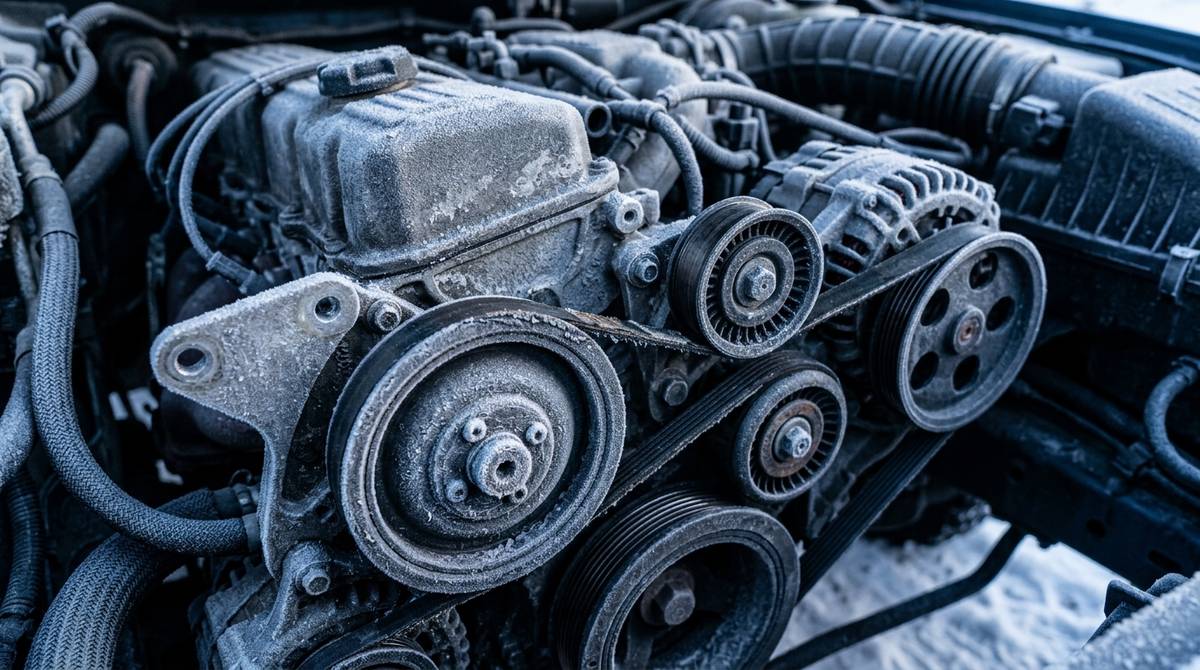
If your car squeals when starting in cold weather, then goes quiet after a minute or two, you’re hearing one of the most common winter car noises there is. In most cases it’s the serpentine belt slipping for a moment before it warms up and grips. That doesn’t always mean an urgent repair, but a squeal that’s getting louder or lasting longer is a sign the belt or one of its pulleys is wearing out.
In this guide
Quick answer
| What you hear | Likely cause |
|---|---|
| A short squeal for a few seconds on frosty mornings | Belt slipping on cold, damp pulleys |
| Squeal lasts longer every week | Worn or glazed serpentine belt |
| Squeal starts when the defroster or AC kicks in | Belt slipping under AC compressor load |
| Squeal plus chirping or grinding that continues when warm | Worn tensioner, idler pulley, or accessory bearing |
| Squeal when turning the wheel on a cold start | Power steering pump load on the belt |
| Belt looks shiny, cracked, or wet with oil | Glazed or contaminated belt |
Why a car squeals when starting in cold weather
The serpentine belt drives the alternator, the water pump on many engines, the power steering pump on hydraulic systems, and the AC compressor. In the cold, the rubber hardens and grips less, and frost or moisture on the pulleys makes it slip more easily. At the same time, the load on the belt is highest right after a cold start: the alternator is working hard to recharge the battery, power steering fluid is thick, and on many cars the defroster switches on the AC compressor. All of that together can make a belt slip and squeal until things warm up.
Common causes
1. A worn or glazed belt
Belts wear gradually. An old belt hardens, cracks, or develops shiny, glazed sides that slip easily. With the engine off, look at the belt for cracks across the ribs, missing chunks, or a glossy surface.
2. A weak belt tensioner
The spring-loaded tensioner keeps the belt tight. As its spring weakens, the belt slips more, especially under load. A tensioner arm that bounces or vibrates while the engine runs is a common sign.
3. A worn idler or tensioner pulley bearing
Pulley bearings can stiffen in the cold or start to wear. A worn bearing often chirps or squeals and may still make noise once the engine warms up.
4. The AC compressor kicking in
On most cars, defrost mode runs the AC compressor to dry the air. If the squeal starts right when you switch on the defroster, the extra load is making a marginal belt slip. If the squeal also returns whenever you switch on the air conditioning, read why a car squeals when the AC is on.
5. Power steering load
On hydraulic power steering, turning the wheel right after a cold start puts extra load on the belt while the fluid is still thick. A squeal that appears when you turn points here. A steady whine that changes as you turn the wheel points to the steering, not the belt; see our guide to a power steering whine when cold.
6. A contaminated belt
Oil or coolant on the belt makes it slip at any temperature. If the belt looks wet or greasy, find and fix the leak before replacing the belt.
Quick checks
- Note when it happens: only for a few seconds after a cold start, when the defroster comes on, when you turn the wheel, or all the time.
- Try it with the defroster and AC off for the first minute after starting. If the squeal disappears, the belt is slipping under compressor load.
- Inspect the belt with the engine off for cracks, glazing, missing chunks, or oil.
- Watch the tensioner with the engine running, from a safe distance. Excessive bouncing points to a weak tensioner.
Keep hands, sleeves, and hair well away from the belt and fan whenever the engine is running. Avoid belt dressing sprays; they only mask the noise for a while and can attract dirt.
How long does a serpentine belt last?
Modern serpentine belts often last somewhere around 60,000 to 100,000 miles, but check the interval in your owner’s manual, because it varies by car. Age matters as much as mileage: a belt on a car that sits a lot can still harden and crack. Since the tensioner and idler pulley wear alongside the belt, it often makes sense to replace them together on a higher-mileage car. A quick look at the belt during every oil change is the easiest way to catch wear before it starts squealing or snaps.
Car squeals when starting in cold: repair costs
| Repair | Typical cost |
|---|---|
| Serpentine belt | $90–$250 |
| Belt tensioner | $150–$400 |
| Idler pulley | $100–$300 |
| Fixing an oil leak onto the belt (e.g. valve cover gasket) | $150–$450 |
| Alternator (worn bearing) | $400–$900 |
| Power steering pump | $400–$900 |
| AC compressor clutch | $300–$700 |
Belts are usually cheapest to replace together with a worn tensioner, since the labor overlaps. Before winter, NHTSA’s winter driving tips cover other cold-weather checks worth doing at the same time.
Can I keep driving?
A brief squeal on frosty mornings that disappears within seconds isn’t an emergency, but get the belt and tensioner checked at your next service. A squeal that lasts longer, gets louder, or continues after the engine is warm needs attention sooner.
If the belt breaks, you lose the alternator, and on many cars the water pump and power steering too. The battery light comes on, the steering gets heavy, and the engine can overheat within minutes. If that happens, pull over safely and switch off the engine; see battery light on while driving and steering wheel hard to turn.
If the squeal happens when you accelerate rather than on cold starts, read squealing noise when accelerating. And remember that a long warm-up won’t help; our guide on how long to warm up a car explains why. For warning lights, use our OBD2 code lookup, or try the free car symptom checker.