
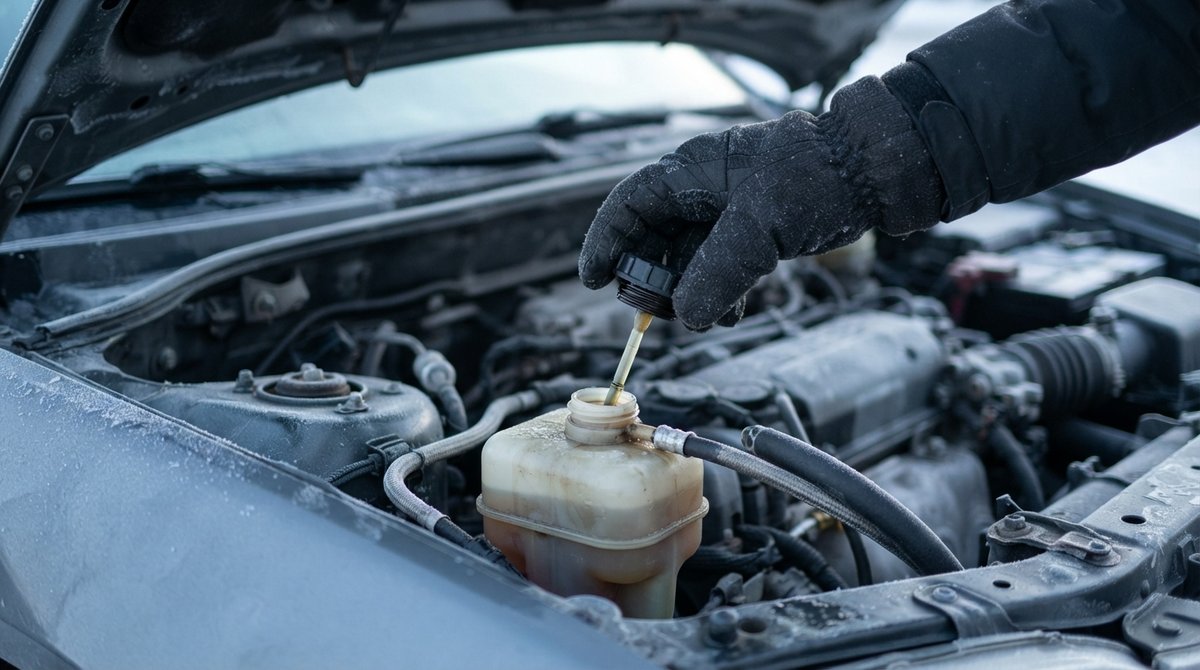
A power steering whine when cold is common on winter mornings, and a short whine that fades within a minute or so is often normal. Cold power steering fluid is thick, so the pump works harder until it warms up. But a whine that lasts, gets louder each week, or comes with heavier steering usually means low fluid, air in the system, or a pump that’s starting to wear.
In this guide
| What you notice | Most likely cause | Urgency |
|---|---|---|
| Brief whine on cold starts, gone within a minute | Thick, cold fluid | Normal |
| Whine that gets louder when you turn the wheel | Low fluid or air in the system | Fix soon |
| Foamy or milky fluid in the reservoir | Air being drawn in | Fix soon |
| Constant whine, warm or cold, plus heavy steering | Worn power steering pump | Fix soon |
| Sharp squeal when turning, not a whine | Slipping drive belt | Fix soon |
| Loud groan at full lock | Holding the wheel against the stop | Avoid doing it |
Why you hear a power steering whine when cold
Hydraulic power steering uses a belt-driven pump to push fluid through the steering rack. When the fluid is cold, it’s thicker and harder to pump, and any weakness in the system shows up as noise until it warms. Cars with fully electric power steering don’t have this pump, so a whine there points elsewhere.
1. Cold, thick fluid
On a freezing morning, a short whine for the first 30–60 seconds is normal, especially when you turn the wheel right away. It should fade as the fluid warms. Old fluid gets thicker and noisier, so changing it can help.
2. Low fluid
A small leak lets the level drop, and the pump starts to draw air with the fluid. The whine gets louder when you turn, and steering may feel heavier, the same symptom as a steering wheel that’s hard to turn. Look for leaks at the hoses, the pump, and the ends of the steering rack, which can show up as fluid leaking near the front wheel.
3. Air in the system
After a repair or a low-fluid episode, air can stay trapped. You’ll see foamy or bubbly fluid in the reservoir and hear a whine or groan that gets worse in the cold. Bleeding the system, usually by turning the wheel slowly lock to lock with the engine running and the reservoir topped up, often fixes it. Check your owner’s manual for the right procedure.
4. Wrong or degraded fluid
Using the wrong type of fluid, or fluid that’s dark and broken down, can make the pump noisy and wear its seals. Use the fluid specified in your owner’s manual, which may be a dedicated power steering fluid or an automatic transmission fluid, depending on the car.
5. A worn power steering pump
A pump with worn bearings or internal parts whines all the time, though it’s often worst when cold. Steering may feel heavier at low speed, and the noise rises with engine speed. A failing pump often gets loudest when you turn the wheel at a standstill, such as when parking.
6. A slipping belt
A belt that slips on the pump pulley usually squeals rather than whines, especially on cold mornings and when you turn the wheel. That’s covered in our guide to a car that squeals when starting in the cold.
How to check it
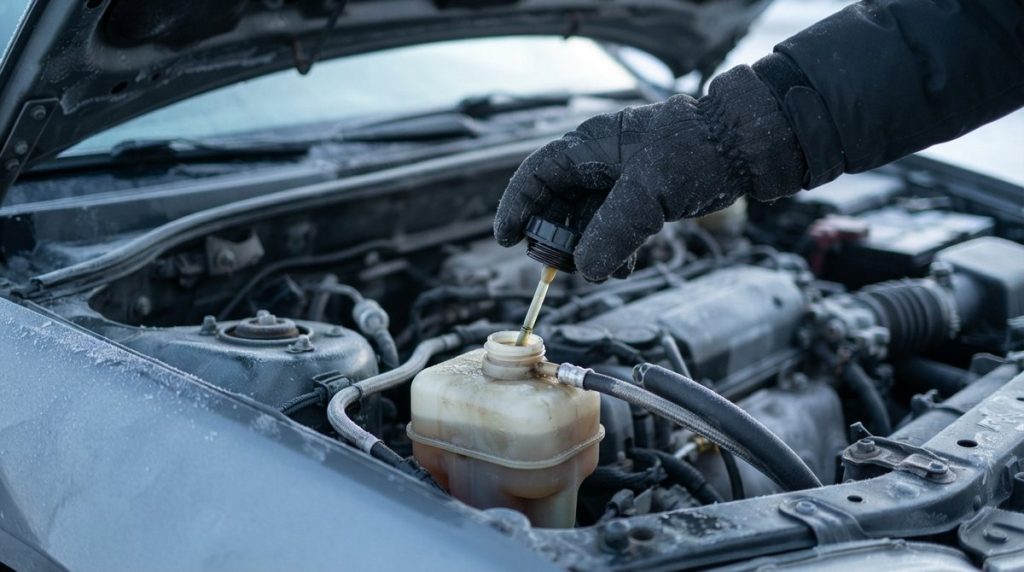
- Find the power steering reservoir under the hood; its cap often shows a steering wheel symbol.
- Check the level using the cold or hot marks on the dipstick or reservoir. Top up only with the specified fluid. The level rises as the fluid warms, so check it on the right mark.
- Look at the fluid. Bubbles or foam mean air, and dark fluid means it’s due for a change.
- Look for wet spots on the hoses, the pump, and the rubber bellows at each end of the steering rack.
- With the engine running, turn the wheel slowly from side to side and listen. Don’t hold it at full lock for more than a second or two.
Steering noise rarely sets a check engine code, but if a light is on, look it up in our OBD2 code lookup. The car symptom checker can help if you notice other symptoms. If the steering also feels loose, see our guide to play in the steering wheel.
How much does it cost to fix?
| Repair | Typical cost (parts and labor) |
|---|---|
| Topping up power steering fluid | $10–$20 |
| Bleeding air from the system | $50–$120 |
| Power steering fluid flush | $100–$200 |
| Power steering hose | $150–$400 |
| Drive belt | $100–$250 |
| Power steering pump | $300–$800 |
| Steering rack | $800–$2,000 |
Is it safe to drive?
A brief whine on cold mornings is safe. A constant or worsening whine means the pump is short of fluid or wearing out. If the pump fails, you don’t lose steering, but it becomes very heavy, which is dangerous in tight maneuvers. Fix leaks and noise early, and don’t keep driving if the steering suddenly gets heavy or the fluid is very low. Steering components are sometimes recalled, so check the NHTSA recall lookup.
FAQ
Is it normal for power steering to whine in cold weather?
A short whine for the first minute on very cold mornings is common. If it lasts longer or gets louder over time, check the fluid.
Can low power steering fluid cause a whine?
Yes. It’s the most common cause, because the pump starts drawing air with the fluid.
Will thicker or “stop leak” fluid fix the whine?
It may quiet it briefly, but it doesn’t fix the leak or the worn pump, and the wrong fluid can damage seals.
Can I drive with a whining power steering pump?
Usually for a while, but top up the fluid and fix any leak first. A pump that runs dry can fail quickly.
Do electric power steering systems whine?
Not from a pump, because they don’t have one. Some make a faint hum from the electric motor, which is normal.