
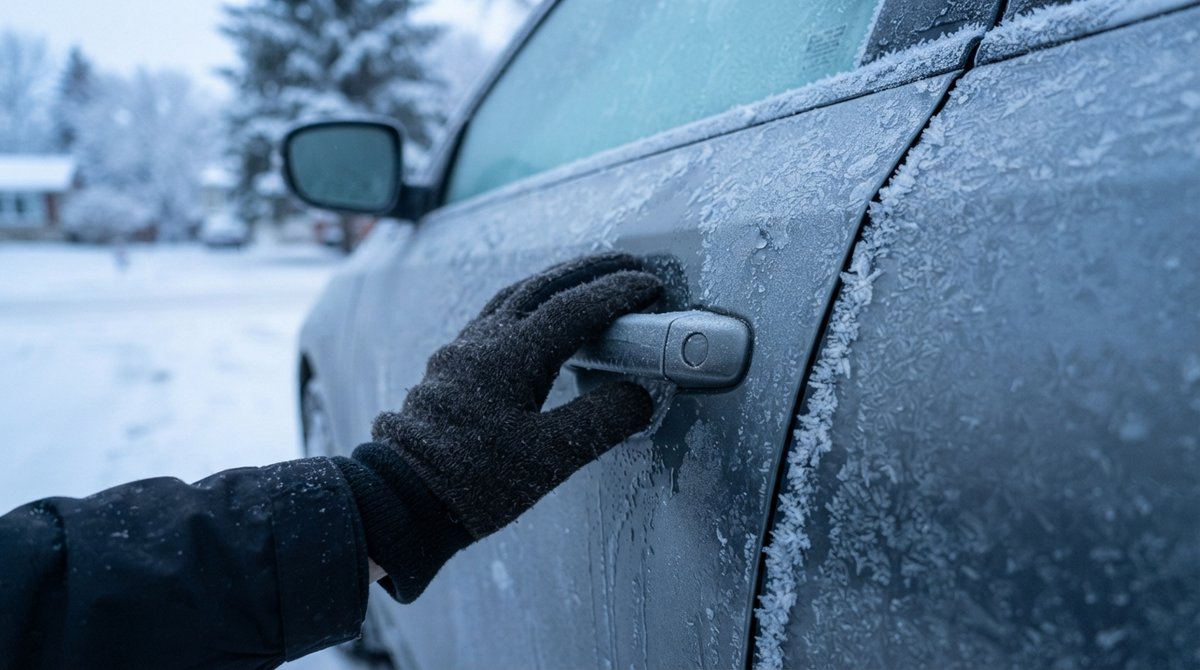
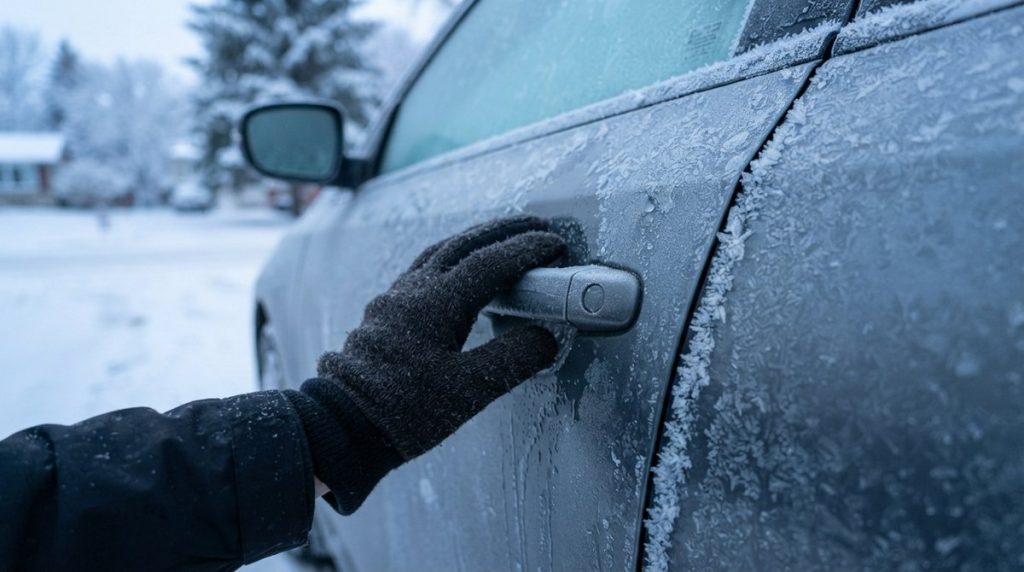
A car door frozen shut usually means water has frozen between the rubber seal and the door frame, gluing the door closed. Sometimes the lock or the handle mechanism freezes instead. Either way, the instinct to yank harder is the one that snaps handles and tears seals. A few gentle steps open most doors in minutes without damage.
In this guide
| What you notice | Most likely cause | What to do |
|---|---|---|
| Handle works but the door won’t move | Ice bonding the rubber seal | Push firmly on the door, then pull |
| Key won’t turn, or the fob unlocks but nothing moves | Frozen lock cylinder or latch | Use lock de-icer, try another door |
| Handle feels loose or won’t spring back | Frozen handle linkage | Warm the cabin from another door |
| Door opens but won’t latch shut | Ice in the latch | Warm the cabin, let the latch thaw |
| Window won’t move | Window frozen to the seal | Don’t force it, let it thaw |
How to open a car door frozen shut
- Push before you pull. Lean your weight into the door with a flat hand, pressing around the edges. This cracks the ice bond on the seal. Then pull the handle gently.
- Try every door. The passenger side, the rear doors, or the hatchback may not be frozen as hard. If one opens, start the car and run the heater on high with the defroster on. Climbing over the console is easier than forcing a frozen door.
- Use remote start if you have it. Ten to fifteen minutes of heat thaws most doors from the inside.
- Clear ice around the edges. Gently scrape ice from the door gaps with a plastic scraper, never a metal tool that can scratch paint.
- Use a de-icer spray. A car de-icer or lock de-icer, sprayed along the seal edges or into the lock, melts ice quickly.
- Be patient. If nothing works, wait for the sun or for temperatures to rise, rather than forcing it.
Mistakes to avoid
- Don’t pour hot or boiling water on the car. It can crack cold glass, and the water refreezes in the seals and lock, making things worse.
- Don’t yank the handle repeatedly. Door handles and their linkages snap easily in the cold.
- Don’t kick or hit the door to break the ice. A dent costs far more than a can of de-icer.
- Don’t use a lighter or torch on the lock or seals. It can damage paint, rubber, and electronics.
- Don’t heat the key fob. Fob batteries and electronics don’t like heat. Warm a plain metal key in your hand only.
- Don’t force frozen windows down. You can strip the regulator or tear the seal. Let them thaw first.
Frozen locks and latches
If the key won’t turn, spray lock de-icer into the cylinder or hold your warm hand over it for a minute. On cars with keyless entry, the fob may unlock the door electronically, but a frozen latch can still hold it closed. Get into the car through another door and let the cabin heat thaw the latch. If a door won’t latch closed after opening, keep the heat on for a few minutes before closing it. On very cold mornings the lock can stiffen too, which is one reason a key won’t turn in the ignition.
If the trunk or hatch is frozen too
The same rules apply. Push down firmly on the lid to crack the seal, use de-icer around the edges, and let the cabin heat work if the hatch shares the cabin’s air. On many cars the trunk also has an interior release you can reach once you’re inside.
How to stop it happening again
- Treat the rubber seals. Wipe them dry and apply a silicone spray or rubber protectant every few weeks in winter. Ice won’t bond as strongly.
- Keep the seals clean. Dirt and grit hold moisture.
- Lubricate the locks. A graphite or lock lubricant before winter keeps water out.
- Park smart. Facing the morning sun helps, and a car cover or garage helps more.
- Shake off snow before closing doors. Snow on the door edges melts in the warm cabin and refreezes overnight.
On the same mornings, the washers may freeze too; see what to do when your windshield washer fluid is frozen. If the car won’t start once you’re in, our guide to a car that won’t start in cold weather covers the next steps. If a warning light comes on, look it up in our OBD2 code lookup, or use the car symptom checker.
How much does it cost to fix?
| Item or repair | Typical cost |
|---|---|
| Lock de-icer spray | $5–$10 |
| Silicone spray for seals | $5–$15 |
| Plastic ice scraper | $5–$15 |
| Door seal replacement | $100–$300 |
| Exterior door handle repair | $100–$300 |
| Door lock cylinder or latch | $150–$400 |
Is it safe to warm up the car to thaw the doors?
Yes, with care. Make sure the exhaust pipe isn’t blocked by snow, and never run the engine inside a closed garage, because carbon monoxide can build up quickly. The NHTSA winter driving tips cover keeping the exhaust clear and other cold-weather safety checks. Once the doors open, clear all snow and ice from the windows and lights before you drive.
FAQ
Can I use hot water to open a frozen car door?
It’s not recommended. Hot water can crack cold glass and will refreeze in the seals. Lukewarm water poured on the seal only, not the glass, is a last resort, and you should dry the seal afterward.
Why does my car door freeze shut overnight?
Moisture from rain, snow, or a car wash sits on the rubber seal and freezes, bonding the door to the frame.
How do I stop my car door from freezing shut?
Dry the seals and treat them with silicone spray, lubricate the locks before winter, and shake snow off before closing the doors.
Does a water-displacing spray stop doors freezing?
It can help in a pinch, but silicone spray is better for rubber seals because it lasts longer and won’t dry the rubber out.
Will a frozen door damage my car?
Not by itself. Damage usually comes from forcing it, such as snapped handles, torn seals, or cracked glass.