
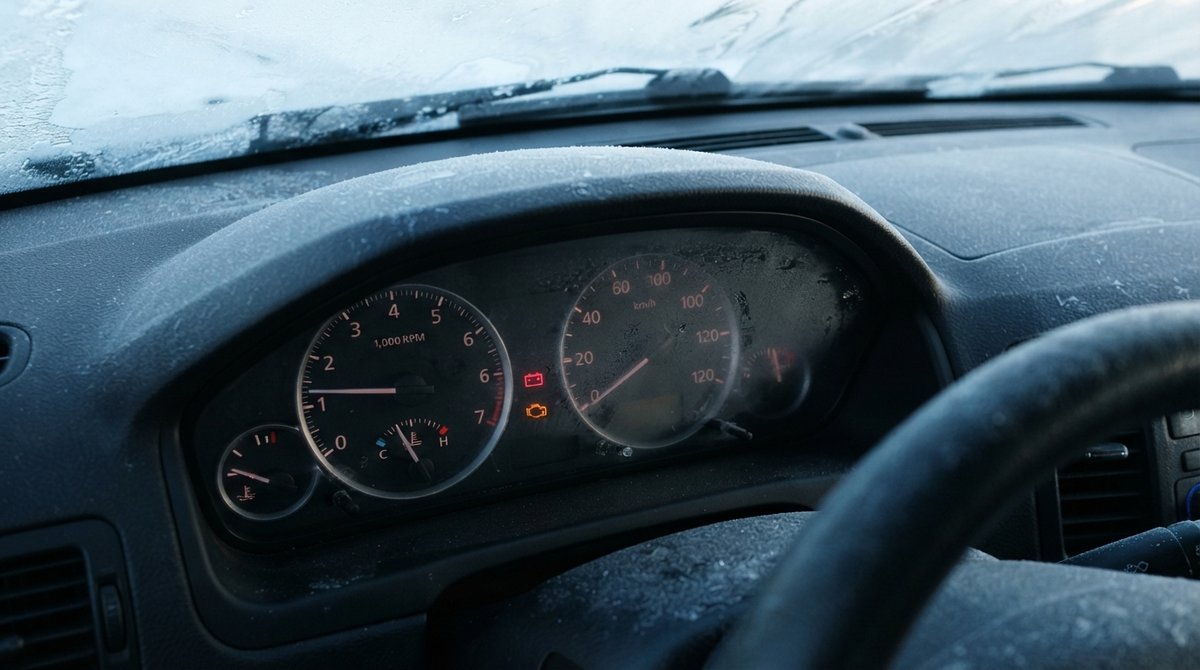
A rough idle when cold that smooths out once the engine warms up points to something the engine computer struggles with only before it reaches temperature. Cold engines need extra fuel and a higher idle to run smoothly, and any part that throws off that cold-start mixture, or any weakness in the ignition, shows up as shaking, stumbling, or uneven RPM for the first few minutes.
In this guide
| What you notice | Most likely cause | First check |
|---|---|---|
| Rough for 1–5 minutes, then fine, no warning lights | Faulty coolant temperature sensor or dirty throttle body | Compare the gauge with how the engine behaves |
| Rough when cold, lean code like P0171 | Vacuum leak that seals as parts expand | Listen for hissing at startup |
| Shaking and a misfire code on cold starts | Worn spark plugs or a weak ignition coil | Read the codes |
| Rough idle and hard starting in the cold | Leaking or dirty fuel injectors | Note any fuel smell |
| Rough on a direct-injection engine with high mileage | Carbon buildup on the intake valves | Check service history |
| Brief vibration in the first 30 seconds, then normal | Normal cold start | Nothing to fix |
What’s normal on a cold start
When you start a cold engine, the idle usually jumps to around 1,000–1,500 RPM, then settles as the engine warms. A slight vibration for the first 30 seconds or so is normal, especially in freezing weather. It isn’t normal if the engine shakes, stumbles, nearly stalls, or the check engine light comes on.
Rough idle when cold: 7 common causes
1. A faulty coolant temperature sensor
The engine computer uses this sensor to decide how much extra fuel a cold engine needs. If it reads warmer than reality, the engine runs too lean when cold, and it stumbles until it really warms up. Codes from P0115 to P0119 point to this sensor, and a thermostat stuck open can set P0128.
2. A vacuum leak
Rubber hoses and intake gaskets shrink and harden in the cold. A small crack can leak air when the engine is cold, then seal again as the parts warm and expand. The extra air makes the mixture lean, often with a P0171 code. A hiss from the engine bay at startup is a strong clue.
3. A dirty throttle body or idle control valve
Carbon buildup around the throttle plate or a sticky idle control valve makes it harder for the computer to hold a steady cold idle. Cleaning the throttle body is cheap and often helps. Disconnecting the battery can also reset learned idle values, causing a rough idle for a day or two until the computer relearns.
4. Worn spark plugs or a weak ignition coil
Cold, dense air and a rich mixture are harder to ignite. Worn plugs or a failing coil may misfire only when cold, which you feel as an uneven shake. The check engine light may flash, and codes like P0300 or P0301 are common.
5. Leaking or dirty fuel injectors
An injector that drips fuel after the engine is shut off floods its cylinder, causing a rough start and idle that clears after a minute. Dirty injectors spray poorly, which matters most when the engine is cold.
6. Carbon buildup on the intake valves
Many direct-injection engines build up carbon on the intake valves over time. The carbon soaks up fuel on cold starts, causing misfires and a rough idle until the engine warms. It needs professional cleaning.
7. A sticking EGR valve
An exhaust gas recirculation valve stuck partly open lets exhaust into the intake at idle, which makes a cold engine stumble. Some cars set an EGR code.
How to narrow it down
- Note how long the rough idle lasts and whether it’s worse on colder mornings.
- Read the codes, including pending ones, with a scanner, and look them up in our OBD2 code lookup. Our guide to pending vs stored vs permanent codes explains what you see.
- Listen around the engine at startup for hissing.
- Watch the temperature gauge. If it stays low for a long time, suspect the thermostat.
- If it shakes even when fully warm, see our guide to a car that shakes when idling, or use the car symptom checker.
How much does it cost to fix?
| Repair | Typical cost (parts and labor) |
|---|---|
| Throttle body cleaning | $10 DIY, $50–$150 at a shop |
| Coolant temperature sensor | $100–$250 |
| Vacuum hose or intake gasket | $50–$500 |
| Spark plugs | $100–$350 |
| Ignition coil (one) | $100–$300 |
| Fuel injector cleaning or replacement | $100–$600 |
| Intake valve carbon cleaning | $300–$700 |
| EGR valve | $200–$500 |
Is it safe to drive?
A mild rough idle that clears in a minute or two is usually safe in the short term, but don’t ignore it, because the cause often gets worse. If the check engine light is flashing, the engine is misfiring badly enough to overheat the catalytic converter, so limit driving and get it checked soon. A vacuum leak or faulty sensor can also hurt fuel economy all winter. Some engine and sensor issues are covered by recalls, so check the NHTSA recall lookup.
FAQ
Is it normal for a car to idle rough when cold?
A little vibration for the first 30 seconds is normal. Shaking that lasts minutes, or comes with a check engine light, isn’t.
Can cold weather cause a misfire?
Yes. Worn plugs, weak coils, and carbon buildup are more likely to misfire in cold, dense air.
Can a bad thermostat cause a rough idle when cold?
Not directly, but a thermostat stuck open keeps the engine cold for longer, which can stretch out a rough idle caused by another problem.
Why does my car idle high when cold?
A high idle of about 1,000–1,500 RPM helps a cold engine warm up and run smoothly. It should drop within a few minutes.
Will a fuel additive fix a rough cold idle?
It can help if dirty injectors are the cause, but it won’t fix a vacuum leak, a bad sensor, or worn plugs.