
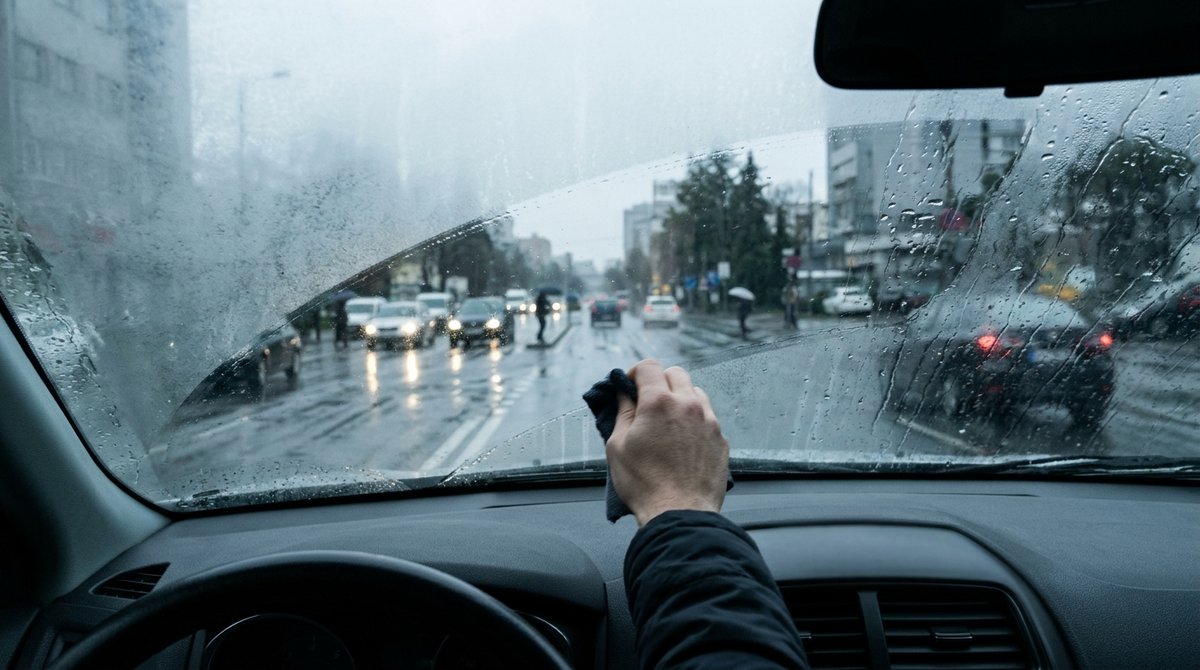
A windshield fogging up inside means warm, damp air in the cabin is meeting cold glass, and the moisture condenses on it like water on a cold drink. A little fog on a cold or rainy morning is normal. Fog that keeps coming back, takes ages to clear, or leaves a greasy film is a sign that there’s too much moisture in the car or something is leaking.

In this guide
| What you notice | Most likely cause | What to do |
|---|---|---|
| Fog on cold or rainy mornings that clears in a few minutes | Normal condensation | Use AC, fresh air and defrost |
| Fog returns quickly, especially on recirculate | Recirculation trapping humid air | Switch to fresh air |
| Damp carpets, musty smell, fog every day | Water leak into the cabin | Find and dry the leak |
| Greasy film that smears, sweet smell | Leaking heater core | Have the cooling system checked |
| Fog that clears very slowly, weak airflow | Clogged cabin air filter | Replace the filter |
| Streaky haze that’s worse in sunlight | Dirty inside of the glass | Clean the glass |
How to clear a foggy windshield fast
- Turn on the defroster and set the fan to high.
- Turn the AC on, even in winter. The AC dries the air before it reaches the glass, which clears fog much faster. On most cars the defrost setting switches the AC on automatically.
- Turn the temperature up. Warm air can hold more moisture and warms the glass.
- Switch recirculation off so drier outside air comes in.
- Crack a window for a minute if it’s very humid inside, for example with wet coats and several passengers.
Wiping the glass with your hand smears oils on it and makes fog come back faster, so avoid it if you can.
Windshield fogging up inside: 6 common causes
1. Recirculation mode
Recirculate keeps reusing the cabin air, along with the moisture from everyone’s breath and wet clothes. It’s useful for a few minutes in heavy traffic fumes but fogs the glass quickly in cold weather. Fresh-air mode fixes it. Some cars switch to recirculation automatically when you turn the AC to max, so check the button after changing settings.
2. Water getting into the cabin
Wet carpets act like a sponge that keeps releasing moisture. Common sources are a blocked AC drain, a blocked sunroof drain, a leaking door seal, or blocked drains below the windshield wipers that let rainwater into the fresh-air intake. Press on the carpets, especially the front footwells, to check. Lift the floor mats too, because water can sit underneath them for weeks without you noticing. A damp spare-tire well in the trunk points to a leaking rear seal or taillight. If the passenger footwell is wet after using the AC, see our guide to a car AC leaking water inside.
3. A leaking heater core
The heater core is a small radiator behind the dashboard. When it starts to leak, coolant vapor gets into the cabin air and leaves an oily, sticky film on the inside of the windshield that’s hard to wipe off. You may also smell something sweet and notice the coolant level dropping. Our guide to bad heater core symptoms covers the other signs.
4. A clogged cabin air filter
A dirty filter cuts the airflow to the windshield and can hold moisture itself, so fog clears slowly. It often comes with a musty smell, which our guide to a car AC that smells musty explains.
5. A defroster or blend door problem
If little air reaches the windshield, or the air never gets warm, the glass stays foggy. That points to the blower, the vent doors, or the heat itself. See our guides to a defroster not working and a car heater blowing cold air.
6. Dirty glass
Smoke, vinyl off-gassing from the dashboard, and fingerprints leave a film that gives moisture something to cling to. A thorough clean with glass cleaner and a microfiber cloth helps more than most people expect.
How to stop it from coming back
- Use fresh air instead of recirculation in cold or wet weather.
- Leave the AC switch on with the heater in winter.
- Shake off snow and wet umbrellas before getting in, and take wet mats out to dry.
- Replace the cabin filter about once a year.
- Clean the inside of the glass every few weeks.
- On cold mornings, give the defroster a minute before you set off. Our guide on how long to warm up a car explains why driving gently warms things up faster than idling.
Fogging doesn’t usually set a warning light, but if one is on, look it up in our OBD2 code lookup. The car symptom checker can help if you notice other symptoms.
How much does it cost to fix?
| Repair | Typical cost |
|---|---|
| Cleaning the inside of the glass | $0–$10 |
| Cabin air filter | $15–$40 DIY, $50–$90 at a shop |
| Clearing AC, sunroof or cowl drains | $0–$150 |
| Door or windshield seal repair | $100–$400 |
| Drying out soaked carpets | $50–$200 |
| Heater core replacement | $800–$1,500+ |
Is it safe to drive?
Not until you can see. A fogged windshield is a real hazard, especially at night and in rain. Clear it fully before setting off, and pull over if it fogs faster than the defroster can clear it. If a sweet smell or greasy film suggests a heater core leak, watch the temperature gauge and coolant level too. The NHTSA winter driving tips cover getting your defroster and wipers ready before cold weather arrives.
FAQ
Should I use hot or cold air to defog my windshield?
Use warm air with the AC on. The heat warms the glass and the AC dries the air, which clears fog fastest.
Why does my windshield fog up when it rains?
Rain raises the humidity inside the car through wet clothes and shoes. Fresh-air mode with the AC on usually stops it.
Why does my windshield fog up even with the defroster on?
Usually because recirculation is on, the AC is off, the cabin is damp from a leak, or the cabin filter is clogged.
Why does my windshield fog up on the outside instead?
In warm, humid weather, a very cold AC chills the glass below the dew point, so moisture condenses on the outside. Use the wipers and turn the AC slightly warmer.
Do anti-fog sprays work?
They help a little on clean glass, but they don’t fix a damp cabin or a leaking heater core.