
If your car AC smells musty the moment you switch it on, like a damp basement or old gym socks, you’re far from alone. The smell usually fades after a few minutes, then comes right back the next day. It’s almost always mold or bacteria growing where moisture collects inside the AC system, and the good news is that it’s usually cheap to fix yourself. If the smell is burnt rather than musty, see car heater smells like burning.
In this guide
Quick answer
| Question | Short answer |
|---|---|
| Main cause | Mold or bacteria on the AC evaporator behind the dashboard |
| Other causes | Dirty cabin air filter, clogged AC drain tube, wet carpet |
| Easiest fix | Replace the cabin air filter and use an evaporator cleaner |
| DIY cost | About $25–$55 |
| Safe to drive? | Yes, but it can bother allergies and asthma |
| Stop it coming back | Dry the system by running just the fan before you park |
Why your car AC smells musty
Your AC cools the air by blowing it over the evaporator, a small radiator tucked deep behind the dashboard. As warm air crosses the cold fins, moisture condenses on them. That’s normal, the same reason a cold drink sweats on a summer day. The water is supposed to drip off and drain out under the car through a small tube. If the air also loses its chill after a few minutes, our guide on car AC blows cold then warm covers why.
The trouble is that the evaporator box is dark, damp, and full of dust and pollen that slips past the filter. That’s a perfect home for mold and bacteria. When you park, the evaporator stays wet. Over days and weeks things start to grow, and you smell it every time you turn the AC back on.
Common causes
1. Mold or mildew on the evaporator
This is the cause in most cases. The smell is strongest in the first minute or two after you turn the AC on, then fades as airflow dries things a little.
2. Dirty or damp cabin air filter
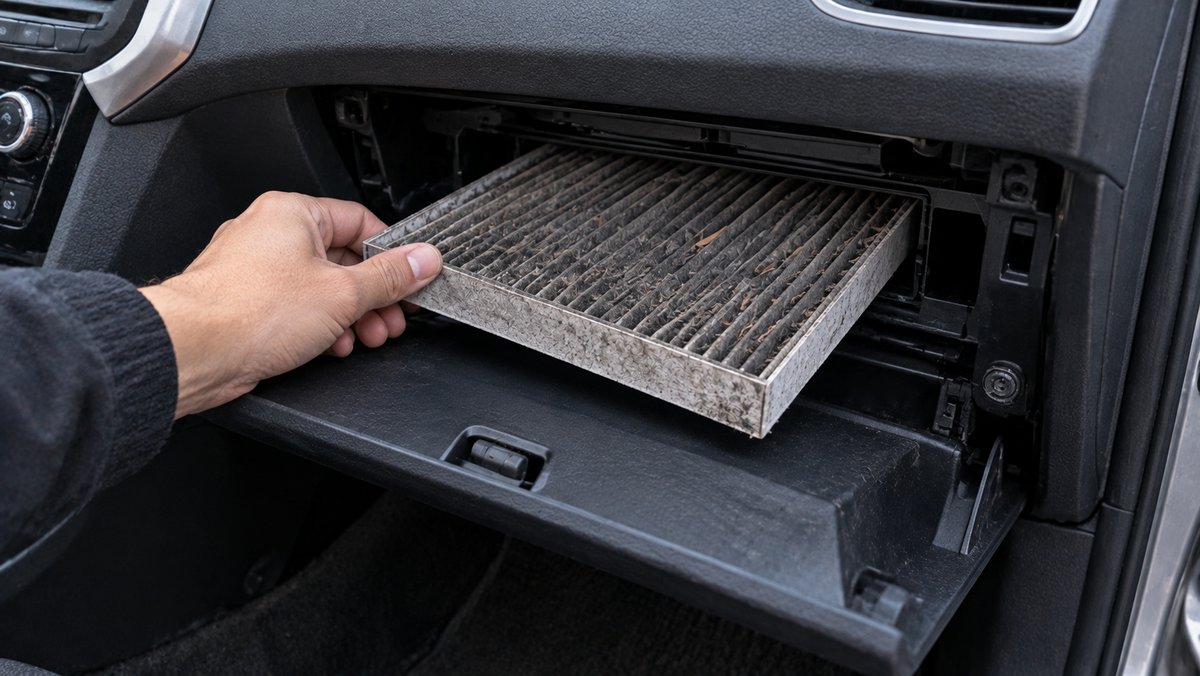
The cabin air filter cleans the air coming into the car, usually from behind the glovebox. Over time it fills with leaves, dust, and pollen, and if it gets wet it can start to smell on its own. Plenty of people have never changed theirs. Most manufacturers suggest every 15,000 to 30,000 miles, or about once a year. A clogged cabin filter also weakens airflow to the windshield; see defroster not working. A badly clogged filter can also cut airflow so much that it feels like your car AC is not blowing air at all.
3. Clogged AC drain tube
If the drain tube gets blocked by debris or insects, water pools inside the evaporator box and the mold problem gets much worse. Signs include a wet passenger-side floor mat or water sloshing behind the dash on turns. On a hot day with the AC running, you should normally see a small puddle of clear water under the car near the front passenger side. If you never see one, the drain may be blocked. If you’ve also found water on the passenger floor, read car AC leaking water inside.
4. Water leaking into the cabin
A musty smell that’s there even with the AC off often means wet carpet. Leaky door seals, clogged sunroof drains, or a blocked cowl drain under the windshield can let rainwater soak the padding under the carpet, where it stays hidden and grows mildew.
5. Always using recirculation
Running the AC on recirculate all the time traps humid air and stale smells in the system. Switching to fresh air now and then helps things dry out.
How to get rid of the musty smell
Step 1: Replace the cabin air filter. On most cars this takes 10 minutes and no tools. Empty the glovebox, unclip it so it drops down, and slide out the old filter. If it’s gray and full of debris, you’ve found part of the problem. Buy one for your exact model; activated carbon filters help with odors.
Step 2: Use an AC evaporator cleaner. These foaming sprays cost $10 to $25 at auto parts stores. Depending on the product, you spray it through the drain tube, into the air intake at the base of the windshield, or into the filter housing. The foam coats the evaporator, then drains out as liquid. Follow the label exactly and air the car out afterward.
Step 3: Check the drain tube. Find where it exits the firewall, usually low on the passenger side under the car. Clear it gently with a short burst of compressed air or a flexible piece of plastic tubing. Don’t jam anything sharp in there.
Step 4: Check for wet carpet. Press down on the carpet in the footwells and the trunk. If it’s damp, find the leak and dry the padding fully, or the smell will keep coming back.
If the smell survives all of that, a shop can do a deeper evaporator cleaning or an ozone treatment.
Make sure it’s actually a musty smell
Other vent smells mean very different things:
- Sweet, syrupy smell, maybe with a foggy windshield: likely coolant leaking from the heater core. Get this checked soon. Our guide on car heater blowing cold air covers heater core problems.
- Burning smell: see burning smell after driving.
- Gasoline smell: see car smells like gas.
- Rotten eggs: see car smells like rotten eggs.
How much does it cost?
| Fix | DIY | Shop |
|---|---|---|
| Cabin air filter | $15–$30 | $50–$100 |
| Evaporator foam cleaner | $10–$25 | $80–$180 |
| Clear the AC drain tube | $0 | $50–$120 |
| Ozone odor treatment | — | $75–$150 |
| Evaporator replacement (rarely needed) | — | $800–$2,000 |
Can you keep driving with a musty AC smell?
Yes. It won’t hurt the car and it isn’t an emergency. But breathing mold spores isn’t great, especially for kids or anyone with allergies or asthma, so don’t let it drag on for months. Until you fix it, cracking the windows for the first minute after turning on the AC helps.
The exception is the sweet coolant smell mentioned above. That one deserves attention sooner, because a leaking heater core can let coolant run low and lead to overheating.
It only takes a minute to enter your VIN in the NHTSA recall lookup and see whether a free recall repair applies.
How to stop it coming back
The single best habit: switch the AC off but leave the fan running for the last two or three minutes of your drive. The fan dries the evaporator before you park, so nothing has a damp place to grow. Some newer cars do this automatically after you shut off the engine. Beyond that, change the cabin filter once a year and use fresh-air mode when you can.
If your AC is also blowing warm, start with car AC not blowing cold air. A musty smell won’t trigger a warning light, so if your check engine light came on around the same time, that’s a separate issue you can look up in our OBD2 code lookup. For anything else, our free car symptom checker can point you in the right direction.