
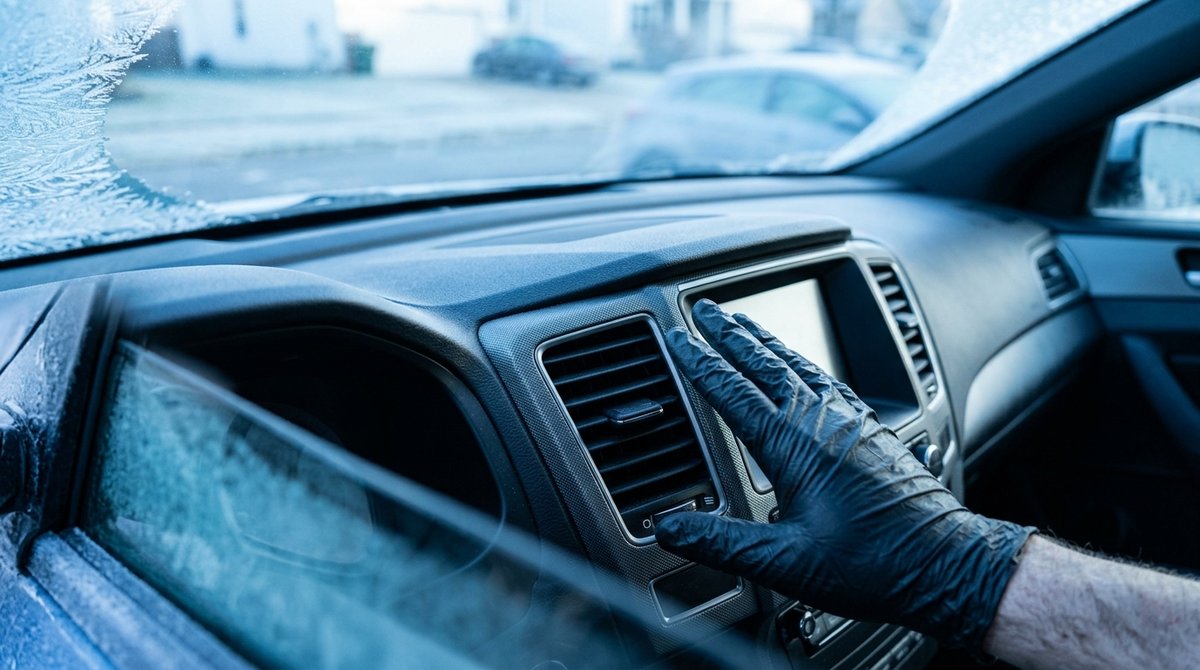
If your car heater smells like burning the first time you switch it on in autumn, don’t panic. That’s usually just a season’s worth of dust cooking off the heater core. If the smell hangs around, or smells like hot plastic, oil, or something sweet, it’s telling you something different, and a couple of those are worth acting on quickly.
In this guide
What the smell is telling you
| Smell | Likely cause | How urgent |
|---|---|---|
| Dusty, slightly burnt, fades in minutes | Dust burning off on first use of the season | Normal |
| Burning leaves or smoky and musty | Debris in the cowl intake or a clogged cabin filter | Low |
| Hot plastic or electrical | Failing blower motor, resistor, or wiring | High: turn the fan off |
| Burning oil | Oil leaking onto the hot exhaust, pulled in through the vents | Medium |
| Sweet and syrupy | Coolant leak, often from the heater core | Medium to high |
| Burning rubber | Slipping belt, or a hose touching something hot | Medium |
| Musty, rotten, or “animal” | A rodent nest in the air intake | Medium |
Why a car heater smells like burning on first use
Over the summer, dust, pollen, and tiny bits of debris settle on the heater core and inside the air ducts. The first time you run the heat, that layer gets hot and burns off, which smells a lot like a space heater switched on for the first time in months. It should fade within 5 to 10 minutes, and be gone after a drive or two.
To speed things up, run the heat on high with the fan up and the windows cracked for one drive. If the smell is just as strong a week later, something else is going on.
When the smell means something else
Hot plastic or electrical
This is the one to take seriously. A blower motor that’s wearing out draws extra current, and the blower resistor or its wiring connector can overheat and melt. Clues include the fan only working on certain speeds, changing speed by itself, or a sharp electrical smell. Turn the fan off right away, and if you see smoke from the vents, pull over and shut the car off.
Burning oil
A leaking valve cover gasket can drip oil onto the hot exhaust manifold. The fresh-air intake at the base of the windshield pulls those fumes into the cabin, so you smell them through the vents, often most at stoplights. Our guide to burning smell after driving covers oil leaks in detail.
A sweet, syrupy smell
That’s coolant, not burning, though people often describe it as a “hot” smell. A leaking heater core or heater hose is the usual source. Other signs include a greasy fog on the inside of the windshield, damp carpet, and coolant that keeps dropping. See car heater blowing cold air and defroster not working. If the smell is sweet rather than burnt, see bad heater core symptoms.
Leaves and debris
Leaves collect in the cowl, the area under your windshield wipers, and in the cabin air filter. When they get warm, they can smell smoky or musty. Clearing the cowl and replacing the filter usually fixes it; our guide to car AC smells musty shows how to change the filter.
A rodent nest
Mice like to nest in warm, sheltered spots in winter, including the air intake and cabin filter box. When the heat runs, the smell comes straight through the vents. If you find nesting material or droppings, wear gloves and a mask, and spray the area with disinfectant before cleaning rather than sweeping or vacuuming it dry.
Burning rubber
A slipping belt or a hose resting against a hot part can also send a rubbery smell through the vents. Look under the hood with the engine off and cool.
Quick checks you can do
- Note the smell and when it happens: only on first use, every time, or mostly when stopped.
- Check the cabin air filter for leaves, nesting material, or droppings.
- Look at the cowl under the wipers and clear out any leaves.
- Check the coolant level with the engine cold.
- Look for oil around the valve cover and exhaust manifold with the engine cool.
- Try every fan speed. If some don’t work, the blower resistor is a likely culprit.
How to prevent heater smells
A little autumn maintenance stops most of these smells before they start. Replace the cabin air filter once a year, ideally just before the cold weather arrives. Clear leaves out of the cowl under the wipers after the trees drop them. Run the heat for a few minutes on a mild day in early autumn, so the dust burns off before you really need it. And deal with small oil leaks early, while they’re still a cheap gasket rather than a mess on the exhaust.
How much does it cost?
| Fix | Typical cost |
|---|---|
| Cabin air filter | $15–$60 |
| Cowl cleanout | $0–$100 |
| Rodent nest removal and cleaning | $100–$300 |
| Blower motor resistor | $50–$250 |
| Blower motor | $200–$500 |
| Heater hose | $100–$300 |
| Valve cover gasket | $150–$450 |
| Heater core replacement | $800–$2,000 |
Can I keep driving?
If it’s just the first-use dust smell, yes. It’ll go away on its own.
If the smell is electrical or like hot plastic, stop using the heater fan until it’s checked, and don’t drive at all if there’s smoke from the vents. Blower and wiring faults occasionally show up in recalls, so it’s worth entering your VIN in the NHTSA recall lookup. An oil smell can usually wait a few days but shouldn’t be ignored, since oil on a hot exhaust can occasionally catch fire. A sweet coolant smell means watching your temperature gauge closely until it’s fixed. If the smell from the vents is sweet rather than burnt, it’s more likely coolant, which our guide to why a car smells like antifreeze covers.
Heater smells rarely set a check engine code, but if that light is on too, look it up in our OBD2 code lookup. For anything else, our free car symptom checker can help you narrow it down.