
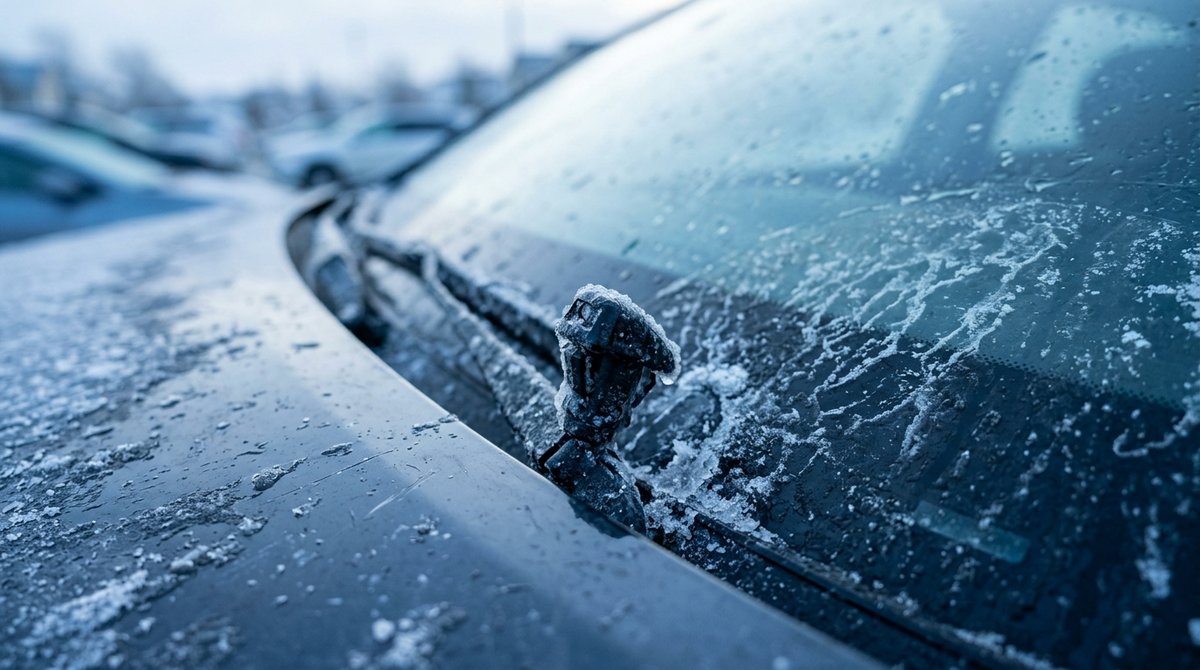
You pull the washer stalk to clear a film of road salt, and all you get is the wipers smearing it across the glass. A windshield washer not working is easy to shrug off in summer, but in winter it can leave you driving half-blind. Most causes are simple, though, and one quick test tells you where to look.
In this guide
The one-second test: listen for the pump
With the key on or the engine running, pull the washer switch and listen near the front of the car, or have someone else listen. The washer pump makes a distinct whirring hum.
| What you hear and see | Likely cause |
|---|---|
| Pump hums, but no spray | Empty reservoir, frozen fluid, clogged nozzles, or a disconnected hose |
| Pump hums, weak or one-sided spray | Partly clogged nozzle or a kinked hose |
| No sound at all | Blown fuse, failed pump, or a bad switch or wiring |
| Front washer works, rear doesn’t | Split rear hose, or a rear pump or valve problem |
| Fluid leaking under the car | Cracked reservoir or a split hose |
Why a windshield washer not working is so common in winter
The biggest winter culprit is frozen fluid. Plain water, or summer washer fluid without much antifreeze in it, can freeze in the reservoir, the pump, the thin hoses, and the nozzles. Ice and salt crust can also block the nozzles from the outside. And frozen water expands, which can crack the reservoir and leave you with a leak once it thaws.
Common causes
1. An empty reservoir or the wrong fluid
Check the level first. Washers use more fluid in winter than people expect, and the low-fluid warning on some cars only comes on when it’s nearly empty.
2. Frozen fluid
If the pump hums but nothing comes out on a cold morning, the fluid has probably frozen. Park in a heated garage for a few hours, or drive with the heat and defrost on high, which warms the area around the base of the windshield. Pour lukewarm water over icy nozzles if needed, but never pour hot water on the windshield itself, as the sudden temperature change can crack the glass. Avoid running the pump over and over while the system is frozen, since that can burn out its motor. If the washers stopped on a freezing morning, see how to deal with windshield washer fluid frozen in the lines.
3. Clogged nozzles
Wax, dirt, and debris can block the tiny jets. Clear them gently with a pin or needle, then use it to re-aim the spray toward the middle of the windshield.
4. A disconnected or cracked hose
Hoses can pop off their fittings or crack where they bend near the hood hinge. On SUVs and hatchbacks, the hose to the rear washer often splits where it passes into the tailgate.
5. A blown fuse
If the pump is silent, check the washer fuse; your owner’s manual shows where it is. Replace it with one of the same rating. If it blows again, there’s a short or a seized pump.
6. A failed washer pump
With a good fuse and no hum, the pump itself may have failed. It’s usually mounted on the reservoir, often reachable behind the front bumper or wheel liner.
7. A faulty switch
If the wipers work but the washer side of the stalk does nothing, and the pump and fuse check out, the switch may be worn.
8. A cracked reservoir
A reservoir that was filled with plain water and froze can crack. You’ll notice fluid disappearing or a puddle under the front of the car. If you also spot a blue puddle under a front corner, compare it with the other causes of a car leaking water underneath.
Quick fixes you can try right now
- Top up with winter washer fluid rated for the coldest temperatures you expect.
- Thaw a frozen system gently, as described above.
- Clear and re-aim the nozzles with a pin.
- Check the washer fuse.
- Pop the hood and look for a hose that’s come loose.
NHTSA’s winter driving tips recommend filling your reservoir with winter fluid that contains de-icer before the cold weather arrives. Plain water is the most common reason washers fail in winter.
How to winterize your washer system
Before the first freeze, run the reservoir nearly empty and refill it with winter fluid, so summer fluid doesn’t dilute it. Check the label for its temperature rating and pick one that covers the coldest nights where you live. Replace worn wiper blades too, since streaky blades make even a working washer far less useful.
On very cold days, washer fluid can freeze on the windshield itself if the glass is icy. Run the defroster for a few minutes first, so the glass is warm enough for the fluid to do its job instead of icing over.
How much does it cost?
| Fix | Typical cost |
|---|---|
| Winter washer fluid | $3–$10 per gallon |
| Clearing the nozzles | $0 |
| Fuse | $1–$10 |
| Washer nozzle | $10–$50 |
| Washer hose or connector | $10–$100 |
| Washer pump | $30–$100 DIY, $100–$250 at a shop |
| Washer switch (stalk) | $50–$300 |
| Washer reservoir | $50–$250 for the part, $150–$400 at a shop |
Can I keep driving?
You can, but be careful. In winter, spray from other cars quickly coats your windshield in salt and grime, and without washers your wipers just smear it around. Until it’s fixed, keep a jug of winter fluid and a cloth in the car, and pull over somewhere safe to clean the glass when you need to. In some areas, working washers are also part of the vehicle safety inspection.
If your windshield is also fogging up or frosting over, read defroster not working. A washer problem won’t set a check engine code, so if that light is on too, look it up in our OBD2 code lookup, or try the free car symptom checker.