
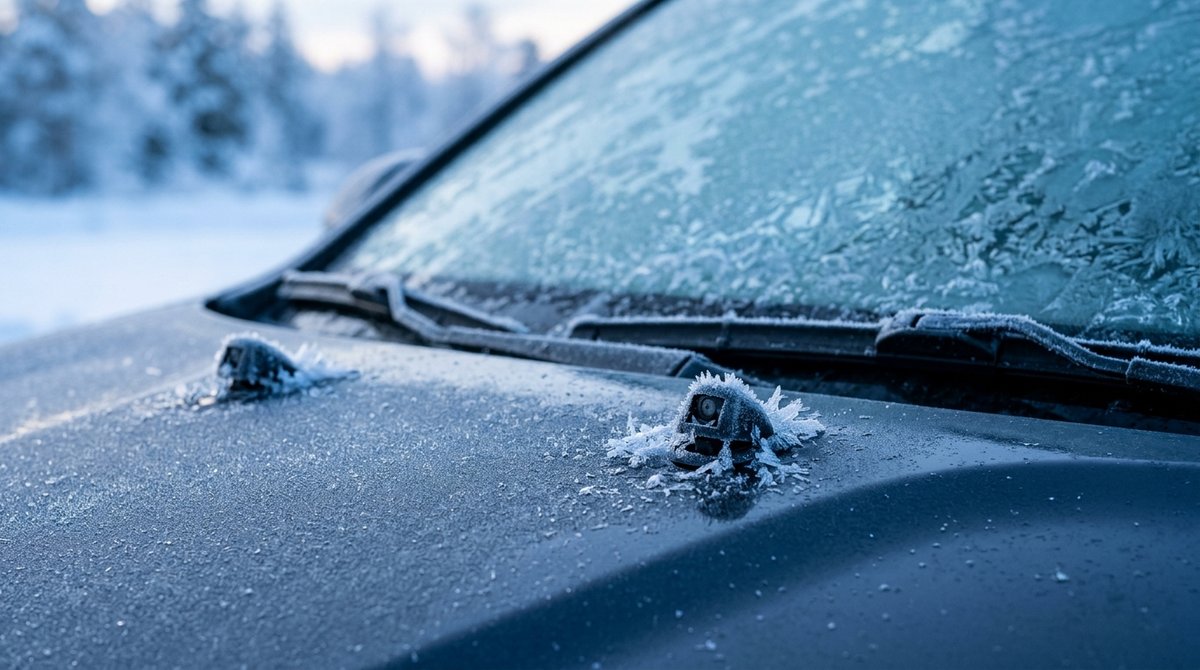
Finding your windshield washer fluid frozen usually happens at the worst moment, behind a truck spraying salty slush across your windshield. The pump hums but nothing comes out, or it sprays a weak trickle. The fix is usually simple, but a few common “quick fixes” can crack the glass or burn out the pump, so it’s worth doing it the right way.
In this guide
| What you notice | Most likely cause | What to do |
|---|---|---|
| Pump hums, nothing sprays | Fluid frozen in the reservoir or lines | Thaw it, then add winter fluid |
| Weak spray from one side only | One nozzle or line iced up | Run the defroster to warm the nozzles |
| No pump sound at all | Blown fuse or pump stopped by ice | Check the fuse after thawing |
| Fluid leaks after a thaw | Cracked reservoir or split line | Inspect and replace the part |
| Washers froze even with “winter” fluid | Fluid diluted with water or the wrong rating | Drain and refill with fluid rated for your lows |
Why windshield washer fluid freezes
Plain water and summer washer fluid freeze at or near 32°F (0°C). Winter fluid contains alcohol that lowers its freezing point, often to around -20°F (-29°C) or lower, depending on the brand. Washers usually freeze for one of three reasons. The reservoir was topped up with water or summer fluid. The winter fluid was diluted by older fluid still in the tank. Or the temperature dropped below the fluid’s rating. The thin lines and nozzles freeze first because they’re the most exposed.
Washer fluid can also freeze on contact with a very cold windshield while you drive, smearing a thin layer of ice across the glass. Using fluid with a lower rating, and running the defroster for a few minutes before you spray, helps prevent it. On the same freezing mornings, you may also find your car door frozen shut, and the fixes work the same way: gentle heat, not boiling water.
Windshield washer fluid frozen? How to thaw it safely
- Stop pressing the washer switch. Running the pump against ice can burn out its motor or blow the fuse.
- Park somewhere warmer if you can. A few hours in a heated garage is the safest and most complete fix.
- Run the engine and the defroster. Heat from the engine bay warms the reservoir, and the defroster warms the glass and the nozzles. On many cars the nozzles sit right where the defroster air reaches.
- Add winter-rated fluid once there’s room. If the reservoir isn’t solid, adding fluid rated well below your local lows helps melt the slush and stops it refreezing.
- Clear the nozzles gently. Use a de-icer spray made for cars, or let the defroster work. Don’t poke the nozzles with sharp objects.
- Test with short bursts once the spray starts to return.
Avoid these mistakes:
- Don’t pour hot or boiling water on the windshield. The sudden temperature change can crack the glass.
- Don’t add engine coolant (antifreeze) to the washer reservoir. It can damage paint and rubber, smear on the glass, and it’s toxic.
- Don’t keep running the pump while it’s frozen.
Check for damage after a freeze
Water expands when it freezes, so a reservoir full of plain water can crack, and lines can split. After thawing, look under the car near the front corners for blue drips, and check whether the level drops overnight. Our guide to a car leaking water underneath shows how to tell washer fluid from other leaks. A pump that whines but doesn’t spray after a thaw may have a cracked inlet or a blocked filter screen inside the reservoir. If the pump still doesn’t work once everything has thawed, see our guide to a windshield washer not working for the fuse, pump, and line checks.
How to stop it happening again
- Switch to winter-rated fluid before the first frost, and choose a rating well below your coldest nights.
- Run the washers for a few seconds after refilling, so the new fluid fills the lines and nozzles too.
- Don’t dilute winter fluid with water to stretch it.
- Check the label for the temperature rating rather than going by the color, because colors vary by brand.
- Keep a spare jug of winter fluid in the trunk on long winter trips.
If you’re not sure whether another problem is involved, the car symptom checker can help, and our OBD2 code lookup explains any warning light that appears.
How much does it cost to fix?
| Item or repair | Typical cost |
|---|---|
| Winter washer fluid (per gallon) | $3–$8 |
| Washer pump fuse | $1–$10 |
| Washer pump replacement | $50–$200 |
| Washer reservoir replacement | $50–$300 |
| Washer line or nozzle | $20–$150 |
Is it safe to drive with frozen washers?
Not in winter conditions if you can avoid it. Road salt and slush quickly cover the windshield, and without washer fluid, the wipers just smear it. If you must drive, thaw the system first, carry a jug of winter fluid, and pull over to clean the glass by hand when visibility drops. A scraper and a cloth in the car make that easier. The NHTSA winter driving tips cover getting your wipers and washer fluid ready before cold weather arrives.
FAQ
At what temperature does washer fluid freeze?
Summer fluid and water freeze near 32°F (0°C). Winter fluid is often rated to around -20°F (-29°C) or lower. Check the rating on the jug.
Can I pour hot water into the reservoir?
Lukewarm water in the reservoir won’t hurt, but it dilutes the fluid and can refreeze. It’s better to thaw the system with heat and then add winter-rated fluid.
Will frozen washer fluid damage my car?
It can. Ice can crack the reservoir, split lines, or burn out the pump if you keep running it.
How long does frozen washer fluid take to thaw?
In a heated garage, usually a few hours. With the engine running and the defroster on, ice in the nozzles and lines may clear in 15–30 minutes, but a solid reservoir takes much longer.
Can I mix summer and winter washer fluid?
Yes, but the mix freezes at a higher temperature than winter fluid alone. Drain or use up most of the summer fluid first.