
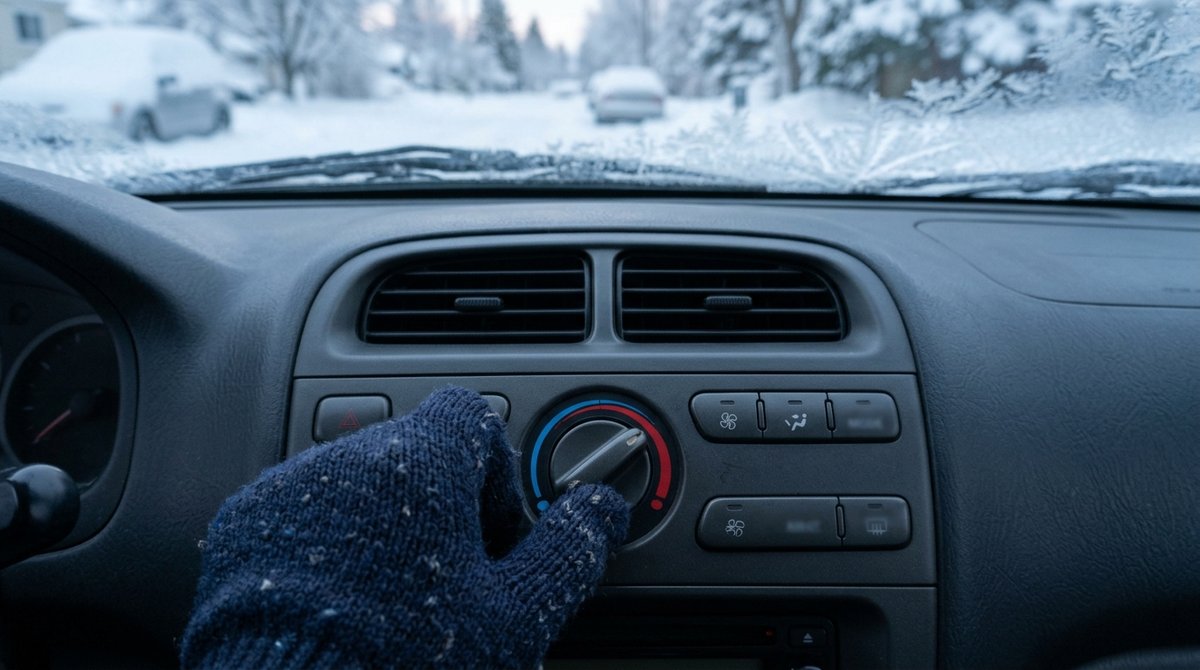
When the heater takes forever to warm up, you’re left scraping frost from the inside of the windshield and shivering for the first twenty minutes of every drive. Some delay is normal on a cold morning, because the heater gets its warmth from the engine’s coolant. But if the cabin is still cold after 10–15 minutes of driving, something in the cooling or heating system is holding the heat back.
In this guide
| What you notice | Most likely cause | First check |
|---|---|---|
| Temperature gauge stays low or takes ages to rise | Thermostat stuck open | Watch the gauge on a 15-minute drive |
| Gauge normal, heat weak or slow, gurgling sound | Low coolant or air in the system | Check the coolant level (engine cold) |
| Gauge normal, heat lukewarm at best | Partly clogged heater core | Feel both heater hoses |
| Hot on one side, cool on the other, or stuck temperature | Blend door or actuator fault | Listen for clicking behind the dash |
| Slow heat only in very cold weather, short trips | Normal for efficient or hybrid engines | Drive longer, use seat heaters |
Why the heater takes forever to warm up
1. A thermostat stuck open
The thermostat keeps coolant inside the engine until it’s warm, then opens to send it to the radiator. If it sticks open, coolant flows through the radiator from the start, and on a cold day the engine struggles to reach normal temperature. The gauge stays low or takes a long time to climb, the heat is weak, and fuel economy drops. Many cars set a P0128 code for this, which you can check with our OBD2 code lookup. This is the most common cause. Thermostats are inexpensive, so replacing one is often a sensible first step once low coolant has been ruled out.
2. Low coolant or air in the system
The heater core sits high in the system, so it’s the first place to lose coolant flow when the level is low or an air bubble is trapped. You might hear gurgling behind the dash. Low coolant also explains why a car heater blows cold air, and it means there’s a leak to find.
3. A partly clogged heater core
Over time, rust and sludge can narrow the small tubes in the heater core. Hot coolant reaches it, but too little flows through, so the heat stays lukewarm. With the engine warm, carefully feel both heater hoses at the firewall. If one is hot and the other only warm, the core is likely restricted. Our guide to bad heater core symptoms covers the other signs.
4. A blend door or actuator problem
A small door inside the dash mixes hot and cold air. If its actuator fails or loses calibration, the door may never move fully to hot. You may hear clicking, or get different temperatures on each side. On some cars, a recalibration with a scan tool, or a battery disconnect, gets the door moving properly again.
5. A weak water pump
A worn pump impeller moves less coolant, especially at idle. The heat may improve when you rev the engine, which overlaps with a heater that only works when driving.
6. It’s normal for your car
Modern engines, small turbo engines, diesels, and hybrids are very efficient and give off less spare heat, so they can take 10 minutes or more to warm the cabin in freezing weather. Short trips may never get the engine fully warm. In very cold regions, a block heater or remote start gets heat flowing sooner.
How long should a car heater take to warm up?
On most gasoline cars, you should feel warm air within about 5–10 minutes of driving in cold weather, and the temperature gauge should reach its normal position in about 10–15 minutes. Driving gently warms the engine faster than idling in the driveway, as our guide on how long to warm up a car explains. Until the heat arrives, use the AC and fresh air to stop the windshield fogging up inside.
How to check it
- Watch the temperature gauge on a 15-minute drive. If it never reaches its usual spot, suspect the thermostat.
- With the engine fully cold, check the coolant reservoir level. Never open the radiator cap on a hot engine.
- Once warm, feel the two heater hoses at the firewall carefully.
- Turn the temperature from full cold to full hot and listen for the blend door moving.
- If you’re unsure what else might be involved, use the car symptom checker.
How much does it cost to fix?
| Repair | Typical cost (parts and labor) |
|---|---|
| Coolant top-up and bleeding air | $0–$100 |
| Coolant flush | $100–$200 |
| Thermostat replacement | $150–$400 |
| Heater core flush | $100–$250 |
| Blend door actuator | $150–$500 |
| Water pump | $300–$750 |
| Heater core replacement | $800–$1,500+ |
Is it safe to drive?
Usually, yes, if the temperature gauge stays out of the red and the windshield stays clear. Poor heat can mean a weak defroster, so don’t drive with a fogged or frosted windshield. If low coolant is the cause, top it up and find the leak soon, because running low can lead to overheating. If the defroster isn’t clearing the glass, see our guide to a defroster not working. Thermostat and cooling system recalls do happen, so check the NHTSA recall lookup as well.
FAQ
Can a bad thermostat cause slow heat?
Yes. A thermostat stuck open is the most common reason a heater takes a long time to warm up, especially in cold weather.
Does idling warm the heater faster?
No. Driving gently warms the engine faster than idling, so the heat arrives sooner.
Why does my heater take longer in winter than in fall?
The colder the air, the more heat the engine loses, and the longer it takes to reach normal temperature, especially on short trips.
Will a new thermostat fix weak heat?
If the old one was stuck open, yes, usually within the first drive. If the gauge already reached normal before, the problem is more likely low coolant, the heater core, or the blend door.
Can low coolant cause slow heat without overheating?
Yes. The heater core often loses flow before the engine shows any sign of overheating, so slow or weak heat can be the first warning.