
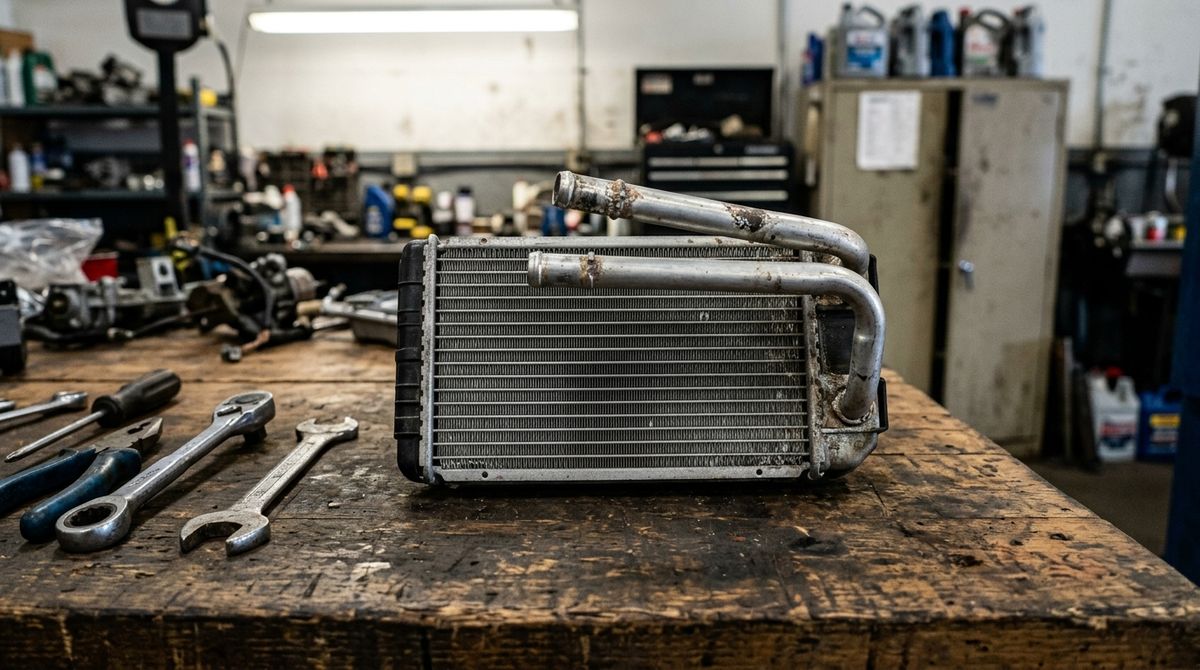
Bad heater core symptoms are easy to mistake for other problems at first: a faint sweet smell, a windshield that fogs up more than it used to, or heat that’s just not as strong as last winter. The heater core is a small radiator hidden behind your dashboard, and when it leaks or clogs, the signs show up inside the car. Catching them early matters, because a leaking heater core can let your engine run low on coolant.
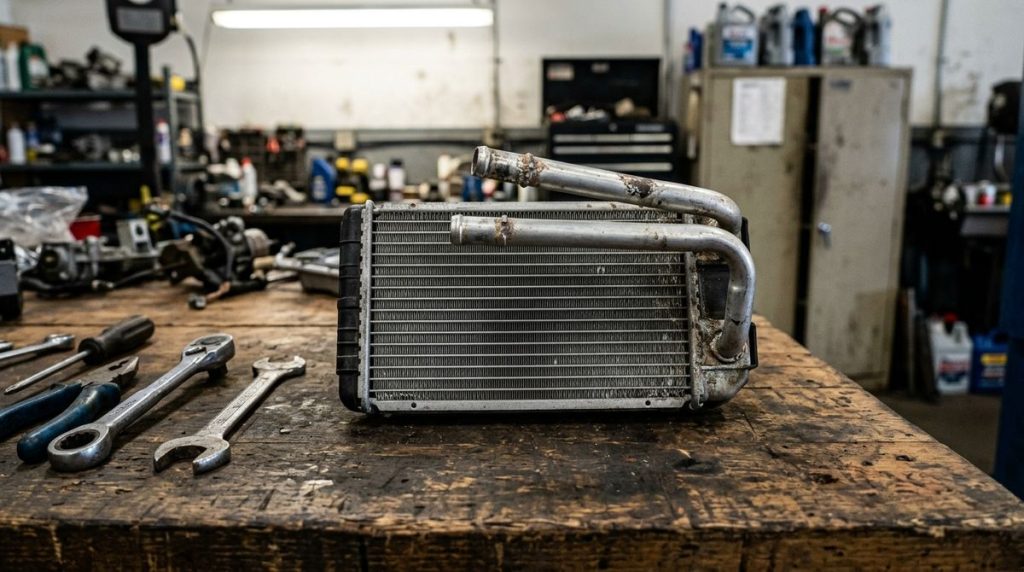
In this guide
Quick answer
| Sign | Points to |
|---|---|
| Sweet, syrupy smell inside the car | Coolant leaking from the heater core |
| Greasy fog on the inside of the windshield | Coolant vapor from a leak |
| Damp, sticky carpet on the passenger side | Coolant dripping from the heater core |
| Weak or no heat, but coolant level is fine | Clogged heater core |
| Coolant keeps dropping with no leak under the car | Internal heater core leak |
| Heat only on one side | Usually a blend door, not the heater core |
What the heater core does
Hot coolant from the engine flows through the heater core, and the blower pushes cabin air across its fins to warm it. It’s the same idea as the radiator at the front of the car, just smaller and tucked deep behind the dashboard, which is why replacing it is often a big job.
7 bad heater core symptoms
1. A sweet smell inside the car
Coolant has a distinctive sweet, syrupy smell. If you notice it inside the car, especially with the heat on, a heater core leak is the most likely source. If the smell is burnt rather than sweet, see car heater smells like burning. A sweet smell inside the cabin is one of the clearest signs, explained in our guide to why a car smells like antifreeze.
2. A foggy, greasy windshield
Coolant vapor condenses on the cold glass as a greasy film that’s hard to wipe clean and fogs up again quickly. It’s also why a leaking core makes the defroster seem not to work. A greasy film that keeps coming back is a classic reason for a windshield fogging up inside.
3. Damp carpet on the passenger side
Leaking coolant drips onto the floor, usually in the front passenger footwell. Coolant feels slightly slimy and smells sweet; plain water from the AC drain doesn’t. Our guide to car AC leaking water inside explains how to tell the two apart.
4. Weak or no heat
A clogged heater core lets less hot coolant through, so the heat is weak even when the engine is warm and the coolant is full. With the engine warm, carefully feel both heater hoses at the firewall; if one is hot and the other only warm, the core is likely restricted. See car heater blowing cold air for other causes of weak heat. A partly clogged core usually shows up first as a heater that takes forever to warm up.
5. Coolant loss with no visible leak
If you keep topping up coolant and can’t find a drip under the car, the leak may be inside the dashboard.
6. Overheating
A badly leaking core can let the coolant level drop far enough for the engine to overheat. Watch the temperature gauge closely.
7. Steam or mist from the vents
In more serious leaks, you may see a light mist from the vents when the heat is on. Turn the heat off and get it checked.
Why heater cores fail
Heater cores usually fail from the inside. Old coolant loses its corrosion protection, and the thin metal tubes slowly corrode until they leak. Mixing different coolant types can cause sludge that clogs the core, and stop-leak products can block its narrow passages. Electrical problems in the cooling system, such as a poor engine ground, can also speed up corrosion. Changing the coolant on schedule with the type your manual specifies is the best way to make a heater core last.
Flush or replace?
If the heater core is clogged but not leaking, a professional flush often restores the heat for a fraction of the cost of a replacement. If it’s leaking, a flush won’t help, and replacement is the real fix. A shop can usually tell you which you’re dealing with after checking hose temperatures and pressure-testing the system.
How to confirm it
A shop can pressure-test the cooling system to find leaks and check the heater core directly. Wiping the inside of the windshield with a clean cloth and smelling it, or pressing a paper towel into the passenger carpet and checking whether it’s sticky and sweet-smelling, are simple checks you can do yourself.
Temporary options
Some drivers bypass a leaking heater core by connecting its two hoses together, which stops the leak and keeps the engine cooling system working. The catch is that you lose all heat and defrosting, which can be unsafe in winter. Stop-leak products are generally best avoided here, because they can clog the heater core and other parts of the cooling system. Treat any temporary fix as a short bridge to a proper repair.
Bad heater core symptoms: repair costs
| Repair | Typical cost |
|---|---|
| Cooling system pressure test | $50–$150 |
| Heater core flush (for a clogged core) | $100–$250 |
| Heater hoses | $100–$300 |
| Heater core bypass (temporary) | $50–$150 |
| Heater core replacement | $800–$2,000 |
The cost of a replacement depends mostly on labor, since many cars require the dashboard to come out. Before paying for it, enter your VIN in the NHTSA recall lookup in case a recall or extended warranty applies.
Can I keep driving?
With a clogged heater core, yes; it’s mainly a comfort and defrosting problem. With a leaking one, get it fixed soon. Breathing coolant fumes isn’t healthy, a greasy windshield is a visibility hazard, and a steady leak can lead to overheating. Until it’s repaired, keep an eye on the coolant level and the temperature gauge.
If the heat only works when you’re moving, see car heater only works when driving. For any warning light, use our OBD2 code lookup, or try the free car symptom checker.