
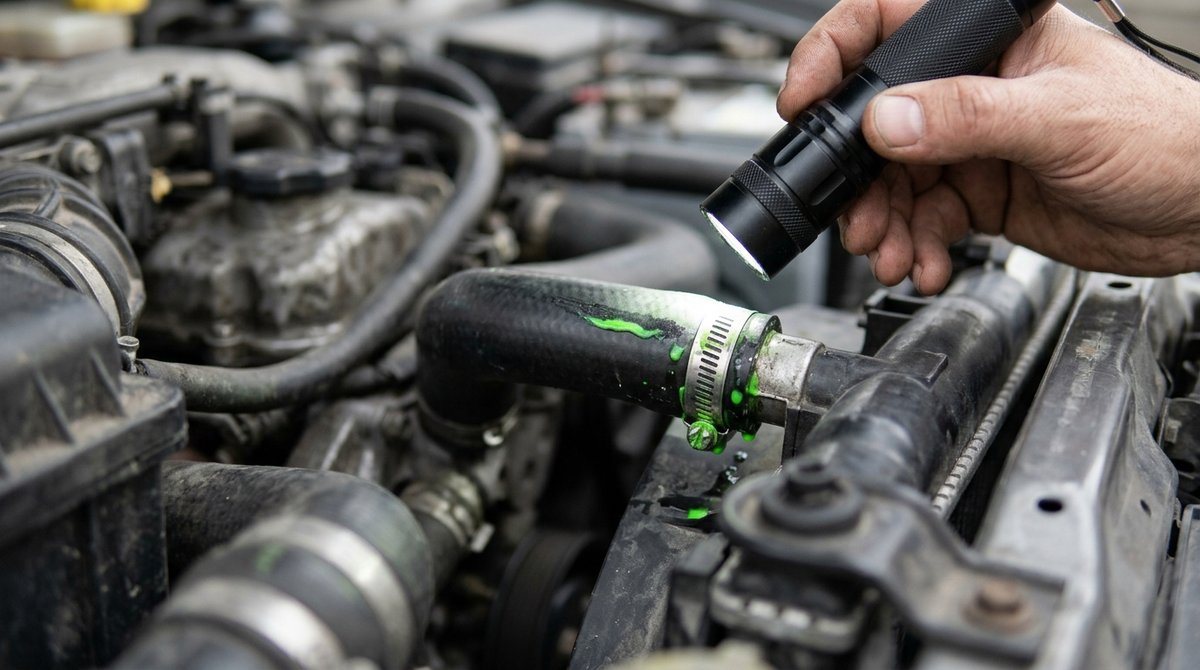
If your car smells like antifreeze, the sweet, maple-syrup smell means coolant is leaking somewhere and getting hot. Where you notice the smell is the biggest clue: outside the car after a drive usually points to the engine bay, while a sweet smell inside the cabin, especially with fogged windows, points to the heater core. Coolant leaks rarely fix themselves, and running low can overheat the engine, so it’s worth finding the source soon.
In this guide
| Where and when you smell it | Most likely source | Urgency |
|---|---|---|
| Outside, near the hood, after driving | Hose, radiator, or water pump leak | Fix soon |
| Inside the cabin, with heater on, foggy windows | Leaking heater core | Fix soon |
| Sweet smell plus white exhaust smoke | Head gasket or intake gasket | High |
| Smell only after topping up or a coolant service | Spilled coolant burning off | Low |
| Smell plus temperature gauge rising | Significant leak, low coolant | Stop driving |
Why your car smells like antifreeze
1. A leaking radiator hose or clamp
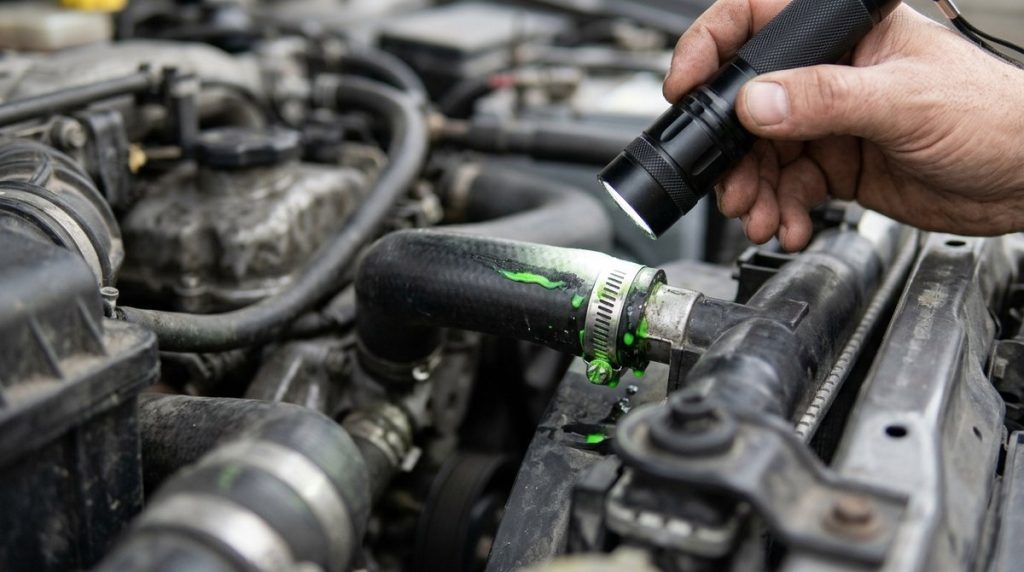
Rubber hoses harden and crack with age, and clamps loosen. Coolant seeps out, drips onto hot engine parts, and steams off, producing the sweet smell. Look for crusty, colored residue around hose ends and clamps. Squeeze the hoses when the engine is cold. A hose that feels soft, swollen, or crunchy is due for replacement.
2. A leaking radiator or reservoir
Plastic radiator tanks crack, and the core can corrode. A leaking reservoir or a worn pressure cap lets coolant escape as vapor when the engine is hot. Coolant comes in several colors, including green, orange, pink, and blue, but all of them smell sweet. You may see a colored puddle under the car as well.
3. A leaking water pump
The water pump has a small weep hole that drips when its seal starts to fail. Look for drips or dried residue below the pump at the front of the engine, often with a whining or grinding noise.
4. A leaking heater core
The heater core sits behind the dashboard. When it leaks, coolant vapor comes out of the vents, so you smell it inside the car, often with a windshield fogging up inside and leaving a greasy film. You may also find a damp passenger-side carpet. A heater core leak is the one to take most seriously indoors, because you’re breathing the vapor while you drive. Our guide to bad heater core symptoms explains the other signs.
5. A leaking head gasket or intake gasket
Coolant burning inside the engine causes a sweet smell from the exhaust and thick white smoke that doesn’t clear once the engine is warm. The coolant level drops with no visible leak, and the engine may overheat. Steam on a cold start is normal, as our guide to white smoke from the exhaust when cold explains, but persistent white smoke is not.
6. Spilled coolant
If the smell started right after a top-up or service, a little coolant may have spilled on the engine. It should burn off within a few drives. If the smell is still there after a week, look for a real leak.
How to find the leak
- With the engine cold, check the coolant reservoir level against the MIN and MAX marks. Never open the radiator cap on a hot engine.
- Look for colored residue or wet spots on the hoses, radiator, water pump, and around the reservoir.
- Slide a sheet of white cardboard under the front of the car overnight and check the color of any drips.
- Feel the passenger-side carpet for dampness and check the inside of the windshield for a greasy film.
- Watch the temperature gauge on your next drive.
- A shop can pressure-test the cooling system to find small leaks, and test for combustion gases in the coolant if a head gasket is suspected.
If the engine runs hot even with the reservoir full, see our guide to a car running hot but coolant is full. If the gauge rises and then drops back, read why a car overheats then goes back to normal. Look up any warning light in our OBD2 code lookup, and use the car symptom checker for other symptoms.
How much does it cost to fix?
| Repair | Typical cost (parts and labor) |
|---|---|
| Hose clamp or radiator cap | $10–$80 |
| Radiator hose | $100–$300 |
| Cooling system pressure test | $50–$150 |
| Coolant reservoir | $100–$300 |
| Water pump | $300–$750 |
| Radiator | $400–$1,000 |
| Heater core | $800–$1,500+ |
| Head gasket | $1,000–$2,500+ |
Is it safe to drive?
A faint smell with a full reservoir and a normal temperature gauge is usually safe for a short drive to a shop, but don’t wait. Stop driving if the gauge climbs toward hot, you see steam from under the hood, or there’s heavy white smoke from the exhaust, because overheating can warp the engine. Breathing coolant vapor in the cabin isn’t healthy either, so fix a heater core leak promptly. Clean up any spilled coolant right away, because it’s toxic to pets and children. Cooling system parts are sometimes recalled, so check the NHTSA recall lookup.
FAQ
Why does my car smell sweet after driving?
Coolant is leaking onto hot engine parts and evaporating. The smell is often strongest just after you park.
Why do I smell antifreeze inside my car?
Usually a leaking heater core, especially if the windows fog up and leave a greasy film.
Can I drive with a coolant leak?
Only short distances while the level is topped up and the gauge stays normal. Get it fixed soon.
Can I use a stop-leak product?
It may seal a tiny leak for a while, but it can also clog the radiator and heater core. Treat it as a temporary fix, not a repair.
Does a sweet smell always mean a head gasket?
No. Hoses, the radiator, and the water pump are far more common sources. A head gasket usually comes with white smoke and unexplained coolant loss.