
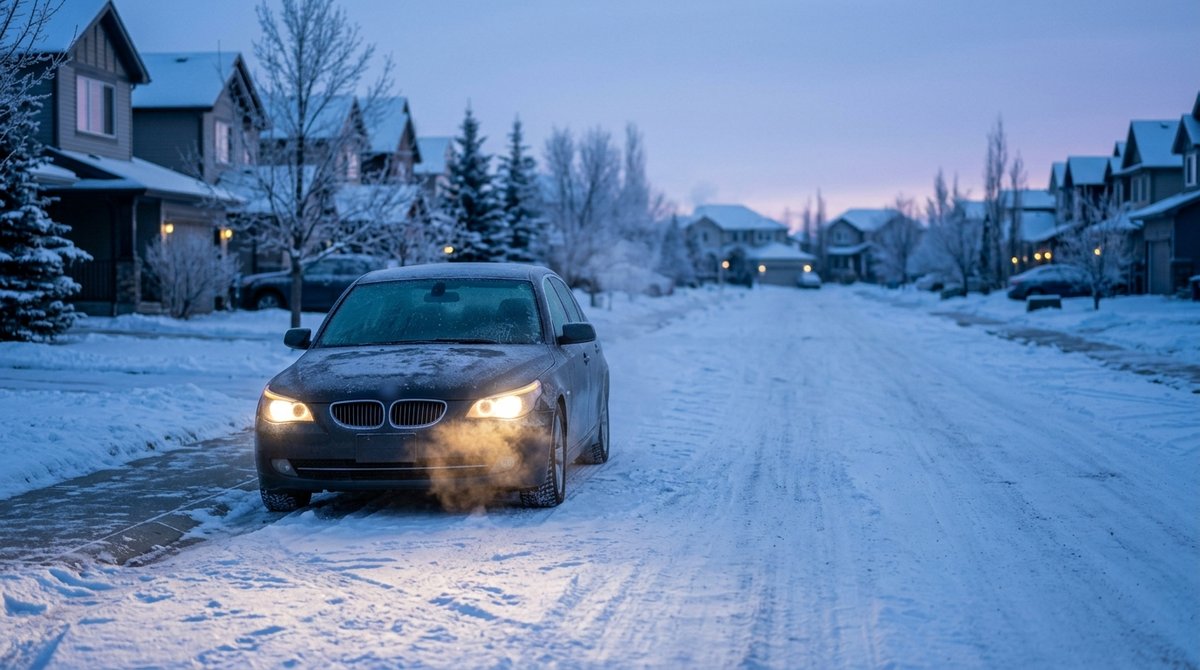
How long to warm up a car is one of those questions where the old advice no longer fits. For most modern cars, the answer is about 30 seconds to a minute of idling, just long enough for the oil to start circulating, and then you drive off gently. Driving warms the engine faster than sitting still, and a long warm-up mostly burns fuel.
In this guide
Quick answer
| Situation | Recommended warm-up |
|---|---|
| Modern fuel-injected car, normal winter morning | 30–60 seconds, then drive gently for 5–10 minutes |
| Very cold, around 0°F (−18°C) or below | 1–3 minutes, or what your owner’s manual recommends |
| Frost or fog on the windows | As long as it takes to clear all the glass |
| Diesel | Wait for the glow plug light, then a few minutes in extreme cold |
| Older carbureted car | Several minutes, until it idles smoothly |
| Electric car | Precondition the cabin and battery while it’s still plugged in |
Why modern cars don’t need long warm-ups
Long warm-ups made sense when cars had carburetors. A cold carbureted engine stumbled and stalled until it warmed up. Modern fuel injection adjusts the fuel mixture automatically, so the engine runs smoothly within seconds of starting.
Oil also reaches the important parts quickly. Once it’s circulating, the best way to bring the engine up to temperature is light driving, which warms it much faster than idling. A cold engine also runs a little rich, adding extra fuel, so long periods of cold idling waste fuel and can leave more of it washing past the piston rings. Gentle driving shortens that phase. Hot oil is thinner than cold oil, which is why low pressure usually shows up as an oil light flickering at idle once the engine is fully warm.
How long to warm up a car in very cold weather
When temperatures drop to around 0°F (−18°C) or lower, give the engine an extra minute or two before you set off, and drive especially gently for the first few miles. Oil is thicker in deep cold, so it takes a little longer to flow freely. If your owner’s manual gives specific cold-weather advice, follow it. If your car squeals when starting in cold weather, a longer warm-up won’t fix it. If ice has sealed the doors, our guide to a car door frozen shut shows how to get in without damage.
An engine block heater makes a big difference in very cold climates. Plugged in for a few hours before you leave, it keeps the engine and oil warm enough that a short warm-up is plenty. If your car struggles to start at all in the cold, read car won’t start in cold weather.
The right way to warm up your car
- Start the engine and let it idle for 30 to 60 seconds while you buckle up.
- Clear every window, mirror, and light of snow and ice, plus the roof and hood. Visibility matters more than engine temperature.
- Drive gently for the first 5 to 10 minutes. Avoid hard acceleration and high revs until the temperature gauge starts to rise.
- Use the heater gradually. Warm air takes a few minutes either way, and it comes faster once you’re driving.
- Never warm up a car in a closed garage, even with the door partly open, because exhaust fumes contain carbon monoxide. If the car has been snowed in, make sure the tailpipe is clear before idling. NHTSA’s winter driving tips cover more cold-weather safety basics.
What long warm-ups really cost
An idling car gets zero miles per gallon, and depending on engine size and what’s switched on, it typically burns somewhere around a quarter to half a gallon of fuel per hour. Ten minutes of warm-up every winter morning adds up to several gallons over a season, with nothing to show for it.
Some states and cities also limit how long you can leave a vehicle idling, and leaving a running car unattended can make it an easy target for theft. Remote start is handy for clearing frost before you get in, but it costs the same fuel, so keep it short.
Warm-up myths worth dropping
“Idling recharges the battery.” At idle, the alternator puts back very little charge. A 20-minute drive does far more for a weak battery than 20 minutes in the driveway.
“Wait until the temperature gauge reaches the middle.” That can take ten minutes or more at idle. The engine warms faster, and with less wear, once you’re driving gently.
“Revving the engine warms it up faster.” Revving a cold engine puts extra strain on parts before the oil has fully thinned out. Let it idle briefly, then drive gently instead.
“The cabin needs to be warm before you leave.” Comfort is nice, but visibility is what matters. Clear the glass, then let the heater catch up as you drive. On cold mornings, also check that the washers spray, since windshield washer fluid frozen in the lines is a common winter surprise.
Costs: winter warm-up helpers
| Item | Typical cost |
|---|---|
| Battery maintainer | $30–$80 |
| Synthetic oil change (flows better when cold) | $70–$130 |
| Engine block heater, installed | $150–$400 |
| Remote starter, installed | $200–$600 |
| Thermostat replacement (if the engine never warms up) | $150–$400 |
Is it bad to drive right away?
No, not with a modern car, as long as you drive gently for the first few minutes. Driving off after a short warm-up is easier on your wallet and, for most engines, perfectly fine.
There are a few signs that your car is having trouble warming up and needs a look:
- The temperature gauge stays low, or the check engine light shows a P0128 code. This usually means the thermostat is stuck open.
- The heater only gets warm while you’re moving. See car heater only works when driving.
- Thick white smoke doesn’t clear after the engine warms up. See white smoke from exhaust when cold.
- The engine shakes or misfires on cold starts. A misfire code like P0302 can point to the cause.
You can look up any check engine code in our OBD2 code lookup, or start from symptoms with the free car symptom checker.