
An oil light flickering at idle is the engine telling you its oil pressure is borderline. Pressure is lowest when the engine is hot and turning slowly, so that’s when a marginal problem first shows. It can be as simple as a low oil level or a faulty switch, but because the same symptom can warn of a worn pump, it’s never one to ignore.
In this guide
| What you notice | Most likely cause | What to do |
|---|---|---|
| Flickers at hot idle, oil level low | Low oil | Top up to the full mark |
| Flickers at idle, oil change overdue | Oil too thin or degraded | Change the oil and filter |
| Flickers, oil level fine, no engine noise | Faulty oil pressure switch | Test with a mechanical gauge |
| Flickers and the engine ticks or knocks | Low pressure reaching the engine | Stop and get it checked |
| Light stays on while driving | Serious loss of oil pressure | Stop the engine now |
Oil light flickering at idle: why it happens
The oil pressure light is controlled by a simple switch. When pressure falls below a set point, often only a few psi, the switch closes and the light comes on. At hot idle, the pump is turning slowly and the oil is thin, so if pressure is already marginal, it dips below the set point and the light flickers. A few revs raise the pressure and the light goes out again. That’s why the light flickers rather than staying on.
1. Low oil level
This is the first thing to check, and the most common cause. Engines burn and leak small amounts of oil between changes, so it’s worth checking the level every few fill-ups, especially on older engines. With too little in the pan, the pump can suck air in turns and at idle. If you find drips under the car, our guide to a car leaking water underneath helps identify oil.
2. Old or wrong oil
Oil that’s overdue for a change, diluted by fuel from short trips, or thinner than the grade in your owner’s manual loses pressure when hot. A fresh change with the correct grade often stops the flicker. Short trips in cold weather are especially hard on oil, because the engine rarely gets hot enough to burn off fuel and moisture.
3. A faulty oil pressure switch
The switch itself is a common failure. It can leak, stick, or trigger at the wrong pressure, especially on older cars. A leaking switch often leaves fresh oil around its base, which is a useful clue. It’s cheap, but the only way to be sure is to test the real pressure first, not just swap the part.
4. A clogged pickup screen or filter
Sludge from missed oil changes can partly block the pickup screen in the oil pan, starving the pump at idle. A cheap or wrong oil filter can also restrict flow.
5. A worn oil pump
As the pump wears, it moves less oil at low RPM. Pressure may be fine on the highway but drop at idle, which is exactly the flicker pattern. Pumps rarely fail suddenly, so the low pressure usually builds gradually over many miles.
6. Worn engine bearings
On high-mileage engines, worn bearings let oil escape faster than the pump can supply it. A deep knocking sound that rises with RPM is the warning sign, and it’s serious. At that point the engine needs professional diagnosis before it’s driven much further.
What to check
- Park on level ground, turn the engine off, and wait a few minutes.
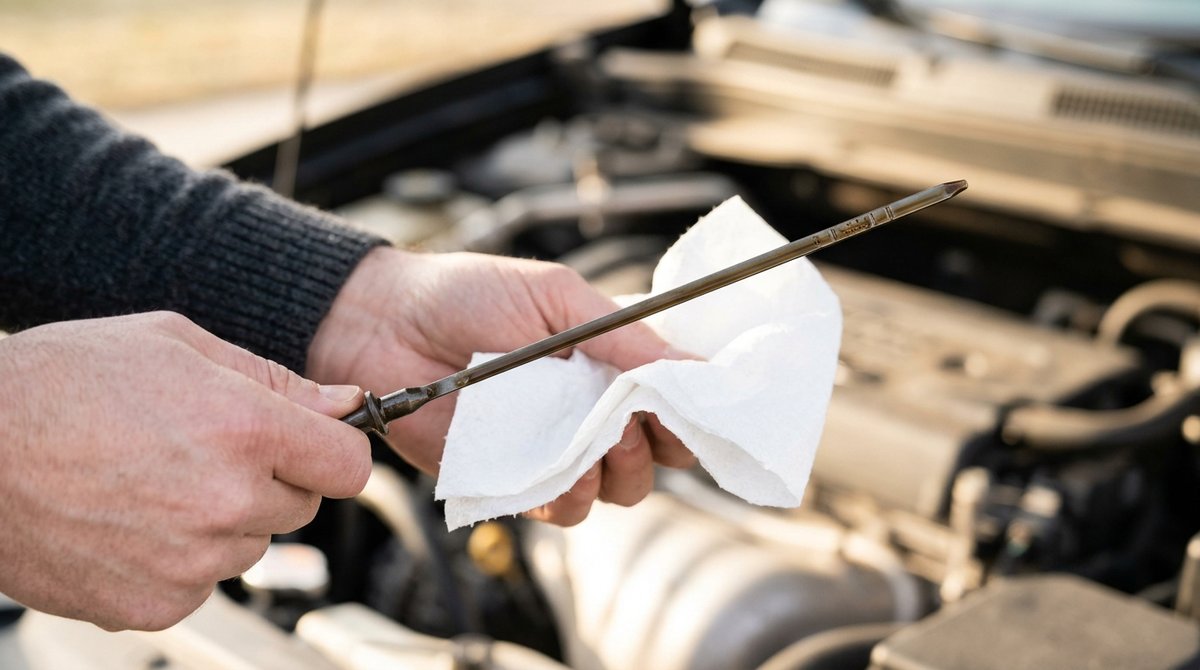
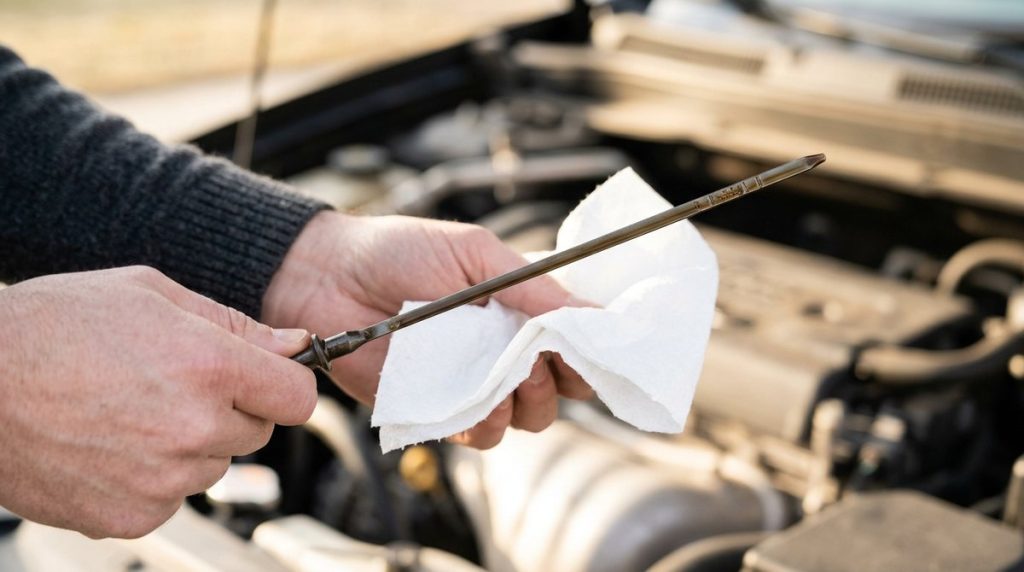
- Pull the dipstick, wipe it, push it back in fully, and read the level. Top up with the oil grade in your owner’s manual if it’s low.
- Check when the oil was last changed.
- Listen at idle for ticking or knocking from the engine.
- Note the pattern: only at hot idle, only when braking or turning, or all the time. That detail helps a mechanic a lot.
- Ask a shop to measure the pressure with a mechanical gauge. It’s quick, and it tells you whether the problem is the switch or the engine.
Some cars also store an oil pressure code, from P0520 to P0524, which you can decode with our OBD2 code lookup. If the light comes on steadily instead of flickering, read our guide to the oil pressure light on, and use the car symptom checker if you have other symptoms.
How much does it cost to fix?
| Repair | Typical cost |
|---|---|
| Topping up oil | $10–$40 |
| Oil and filter change | $40–$120 |
| Oil pressure test with a gauge | $50–$150 |
| Oil pressure switch | $50–$200 |
| Cleaning the pickup screen (oil pan removal) | $300–$800 |
| Oil pump replacement | $500–$1,500 |
| Engine bearing repair or rebuild | $2,000+ |
Is it safe to drive?
If the light only flickers at hot idle, the level is full, and the engine sounds normal, you can usually drive carefully to a shop soon. Don’t put it off, because low pressure wears the engine quickly. If the light stays on while driving, or the flicker comes with ticking or knocking, pull over and turn the engine off. Running without oil pressure can ruin an engine within minutes. Some engines with oil consumption or pump problems have been recalled, so check the NHTSA recall lookup for your car.
FAQ
Is it normal for the oil light to flicker at idle?
No. It means pressure is dipping below the switch’s set point. The cause may be minor, but it should always be checked.
Can low oil cause the oil light to flicker?
Yes. It’s the most common cause, especially at hot idle and in turns.
Will thicker oil stop the flicker?
It might hide it, but it doesn’t fix the cause. Use the grade your manual specifies and find out why the pressure is low.
Why does the oil light flicker when I brake or turn?
When the oil level is low, the oil sloshes away from the pump’s pickup during braking and cornering, and the pump briefly sucks air. Check the level right away.
Can a bad oil filter cause the light to flicker?
Yes. A clogged, wrong, or cheaply made filter can restrict flow or let oil drain back when the engine is off. Use a filter made for your engine.