
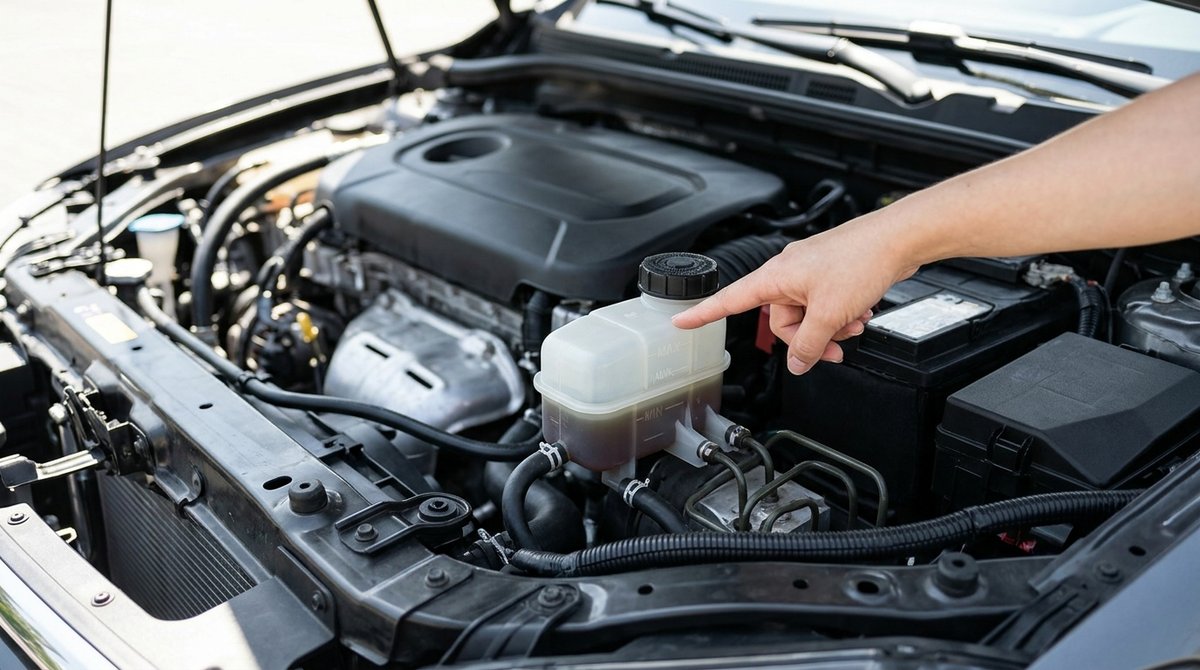
A red brake warning light on your dashboard can mean something as harmless as a parking brake that isn’t fully released, or as serious as a brake fluid leak. Because the stakes are high, it’s worth two minutes of checking before you drive anywhere. Start with the easy causes, then work toward the ones that need a mechanic.
In this guide
| What you see | Most likely cause | What to do |
|---|---|---|
| Light on, parking brake handle slightly up | Parking brake not fully released | Release it fully |
| Light on, fluid below MIN | Worn pads or a leak | Inspect before driving |
| Light flickers on bumps or turns | Fluid right at the MIN mark | Check pads and fluid |
| Light on, fluid full, parking brake off | Faulty switch or sensor | Have it tested |
| Red brake light plus amber ABS light | Brake system or distribution fault | Don’t drive |
| Light on and pedal soft or sinking | Hydraulic failure | Don’t drive, tow it |
Which light is the brake warning light?
Most cars use a red circle with an exclamation mark, or the word BRAKE. Cars with an electric parking brake often have a separate red or amber light with a P. An amber circle with dashed edges is a pad wear light on some cars, and an amber ABS symbol means the anti-lock system has a fault, which our guide to an ABS light on covers. This article is about the red brake light.
Brake warning light on: 6 common causes
1. The parking brake isn’t fully released
This is the most common and the cheapest cause. Pull the handle up a click and push it all the way down, or press the electric parking brake button again. If the light goes out, you’re done. Driving with the parking brake partly on overheats the rear brakes, so it’s worth checking every time.
2. A faulty parking brake switch
If the light stays on even with the parking brake fully off, the small switch under the handle or pedal may be stuck or out of adjustment. It’s a cheap part, but rule out low fluid before you blame the switch.
3. Low brake fluid from worn pads
As brake pads wear, the caliper pistons move out and more fluid sits in the calipers, so the reservoir level drops slowly. A level near MIN with no leak usually means the pads are due. Our guide to brake pads vs rotors explains what to replace. Topping up without checking the pads only hides the warning, and when the new pads go in, the level rises again and can overflow a reservoir that was filled to MAX.
4. A brake fluid leak
A level that drops quickly, a wet patch on the inside of a wheel, or a slick, clear-to-brown puddle under the car point to a leak from a caliper, brake hose, or line. Our guide to a car leaking water underneath shows how to tell brake fluid from other drips. A leak is a safety problem, not a maintenance item.
5. A faulty fluid level sensor
The float in the reservoir can stick or the sensor can fail, lighting the warning with a full reservoir. It’s not dangerous in itself, but it means the warning can’t be trusted until it’s fixed.
6. A brake system or master cylinder fault
If the red light comes on with the ABS light, the car’s brake distribution system may have a fault. A failing master cylinder can make the pedal slowly sink while you hold it at a stop. Both need a mechanic before the car is driven.
How to check it safely
- Park on level ground and fully release the parking brake.
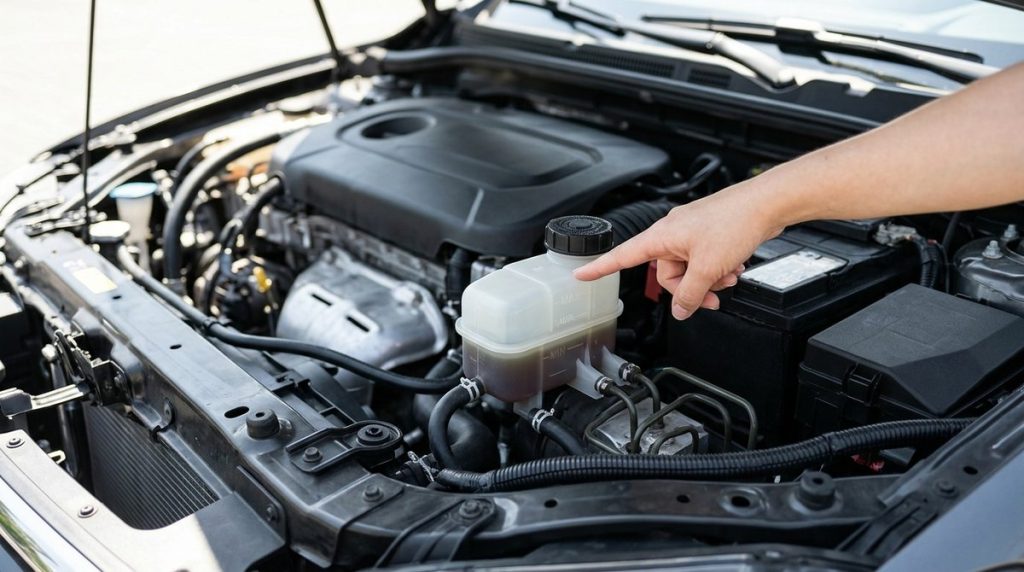
- Open the hood and find the brake fluid reservoir, usually near the back of the engine bay on the driver’s side. Check the level against the MIN and MAX marks.
- Look behind each wheel and under the car for wet spots or drips.
- With the engine running, press the pedal firmly. It should feel high and solid, not soft or sinking.
- If the level is low, top up only with the fluid type printed on the cap, then find out why it was low.
- Note the level so you can tell whether it drops again over the next week.
If other warning lights are on too, look up any engine code in our OBD2 code lookup, or run your symptoms through the car symptom checker.
How much does it cost to fix?
| Repair | Typical cost |
|---|---|
| Releasing the parking brake | Free |
| Brake fluid top-up (DIY) | $10–$20 |
| Brake fluid flush | $80–$150 |
| Parking brake switch | $50–$150 |
| Fluid level sensor | $50–$200 |
| Brake pads (one axle) | $150–$300 |
| Brake hose or line | $150–$450 |
| Caliper (one side) | $150–$400 |
| Master cylinder | $300–$700 |
When to stop driving
If the brake warning light comes on while you’re driving, slow down gently, pull over somewhere safe, and test the pedal. Don’t drive on if the pedal is soft, sinks toward the floor (see brake pedal goes to the floor), the fluid is well below MIN, or the ABS light is on as well. Have the car towed instead. If the parking brake was the cause and the light is now off, you can carry on. Brake components are sometimes recalled, so check the NHTSA recall lookup for your car. If the pedal also feels unusually stiff, read our guide to a brake pedal that’s hard to press.
FAQ
Can I drive with the brake warning light on?
Only if you’ve confirmed the cause is the parking brake or a faulty switch and the pedal feels normal. Otherwise, get it checked first.
Why does my brake light come on when I turn?
The fluid is right at the MIN mark and sloshes away from the sensor in corners. Check the pads and look for leaks.
Does topping up the fluid fix the light?
It turns the light off, but the level dropped for a reason. Worn pads or a leak still need attention.
What does a brake light with a P mean?
It’s the parking brake indicator, common on cars with an electric parking brake. If it stays on or flashes after you release the brake, the parking brake system has a fault and should be checked.