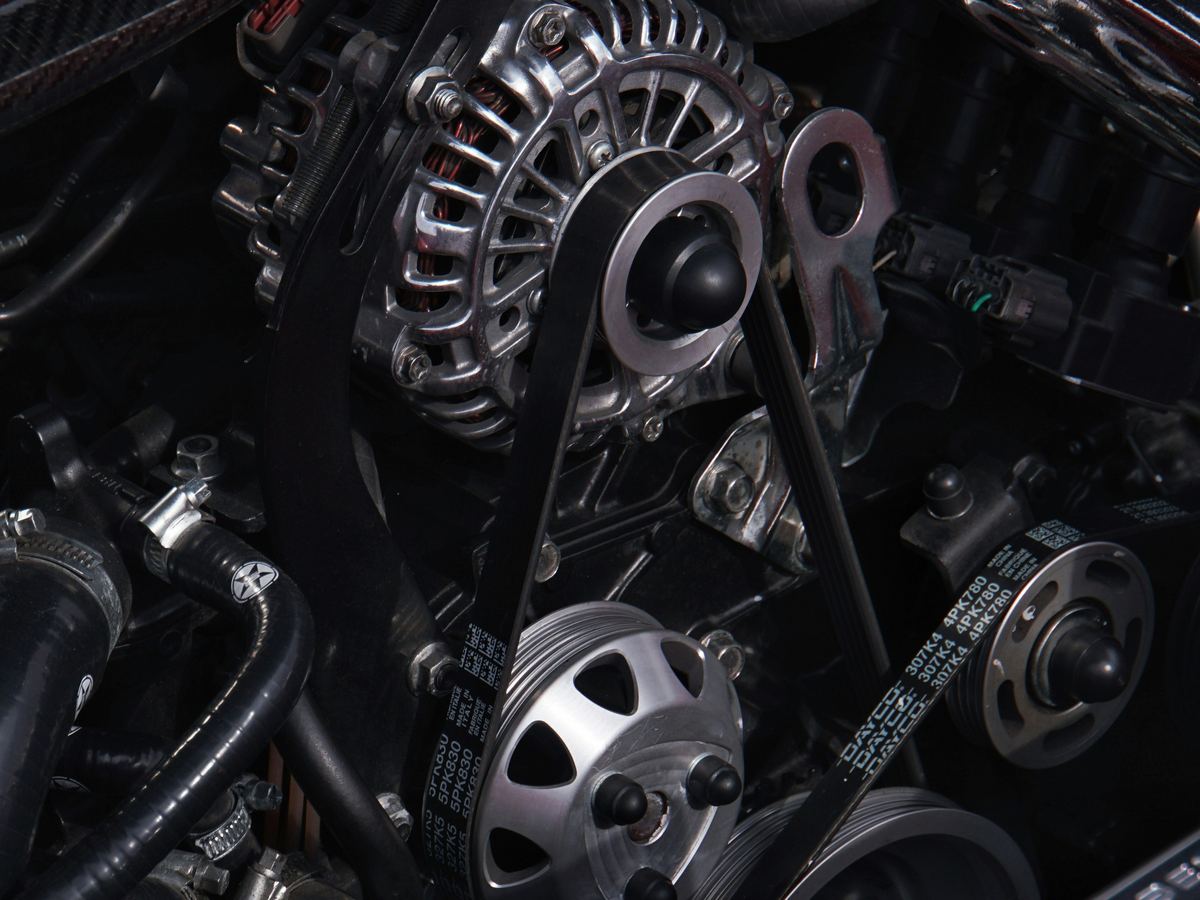
A squealing noise when accelerating is most often caused by a slipping serpentine belt, because the belt is loose, worn, glazed, or contaminated with fluid. Other common causes include a weak belt tensioner, a worn pulley bearing, or a failing accessory like the alternator, water pump, power steering pump, or AC compressor.
Most of these are simple repairs, but don’t ignore them. If the belt breaks, you can lose battery charging, power steering, and engine cooling.
When Does the Squeal Happen?
- On cold mornings or in wet weather, then fades: usually a worn or glazed belt.
- Gets louder the harder you accelerate: often a slipping belt or weak tensioner.
- When you turn the steering wheel: often the power steering pump or the belt slipping under the extra load.
- Only with the AC on: likely the AC compressor or its clutch.
- A constant squeal or chirp that rises with engine speed: often a worn pulley bearing.
- While driving, and it stops when you brake: probably the brake wear indicators, not the engine (see below).
7 Causes of a Squealing Noise When Accelerating
1. Worn, Loose, or Glazed Serpentine Belt (Most Common)
The serpentine belt drives the alternator, power steering pump, AC compressor, and often the water pump. When accelerating, the engine spins faster and the accessories demand more power. If the belt can’t grip the pulleys, it slips and squeals.
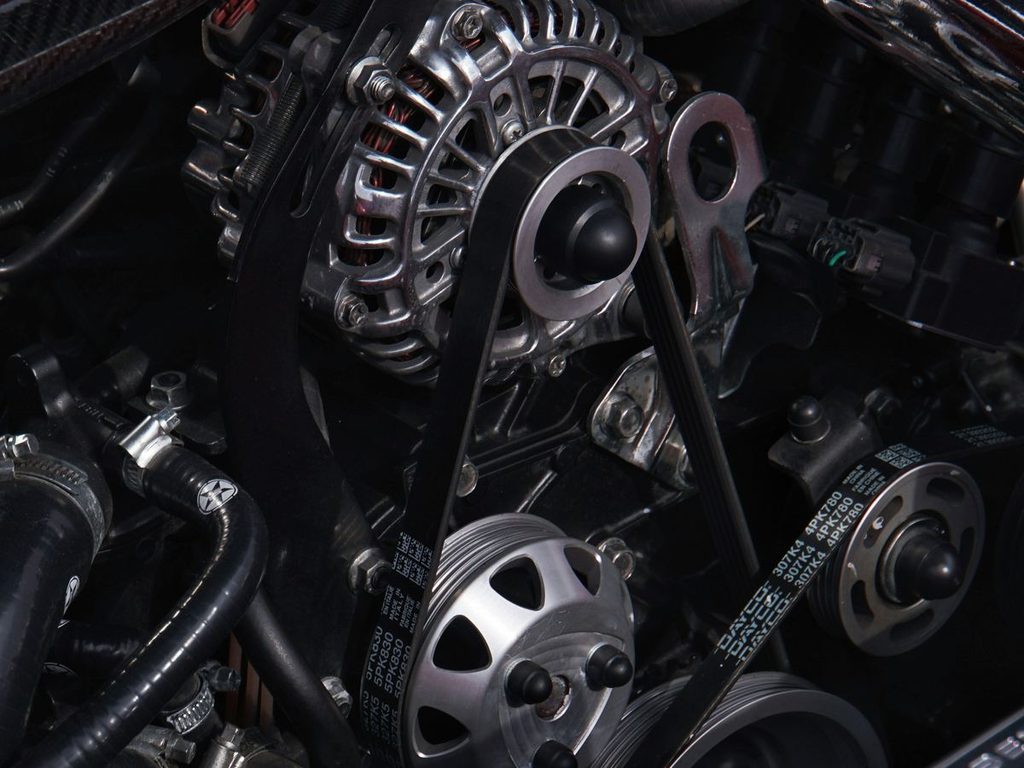
Signs: squealing on startup or acceleration, cracks or missing chunks in the belt’s ribs, or a shiny, glazed surface.
Fix: replace the belt. Belts are relatively cheap, and many last around 60,000–100,000 miles; check your owner’s manual for your car’s interval.
2. Weak Belt Tensioner
The automatic tensioner keeps the belt tight. When its spring weakens, the belt loosens and slips.
Signs: squealing even with a newer belt, or the tensioner arm bouncing or shaking while the engine runs.
Fix: replace the tensioner, and usually the belt at the same time.
3. Worn Idler or Tensioner Pulley Bearing
Pulleys spin on bearings. When a bearing wears out, it can squeal, chirp, or grind, and the noise usually rises and falls with engine speed.
Signs: a steady noise that changes with RPM, a pulley that wobbles or feels rough when turned by hand (engine off).
Fix: replace the worn pulley.
4. Fluid on the Belt
Oil, coolant, or power steering fluid on the belt makes it slippery. It also damages the rubber over time.
Signs: squealing plus a visible leak or a wet belt; you may also notice a burning rubber smell. See our guide to burning smells after driving.
Fix: repair the leak first, then replace the belt, since a soaked belt won’t recover.
5. Failing Alternator, Water Pump, or Power Steering Pump
A worn bearing in any belt-driven accessory can squeal or whine, especially under load.
Signs:
- Alternator: dimming lights or a battery warning light. A failing alternator can eventually leave you unable to start the car; see car won’t start but lights work.
- Water pump: coolant leaks near the front of the engine, or rising engine temperature.
- Power steering pump: whining or squealing when turning, or heavy steering.
Fix: replace the failing part.
6. AC Compressor or Clutch Problem
If the squeal appears only when the AC is on, the compressor or its clutch may be seizing or slipping, putting extra drag on the belt.
Fix: have the AC system checked. Sometimes only the clutch needs replacing, not the whole compressor.
7. Misaligned Pulley
If a pulley is slightly out of line, the belt rubs at an angle and chirps or squeals, and it wears unevenly along one edge.
Signs: chirping noise, belt edges frayed or shredded.
Fix: a mechanic finds and corrects the misaligned pulley or bracket.
Other Noises That Sound Like Squealing
- Brake wear indicators: a high-pitched squeal while driving that stops when you press the brakes usually means the pads are worn out.
- Vacuum or exhaust leak: can make a whistling or hissing sound when accelerating.
- Turbocharger: a light whistle is normal on turbo engines; a loud siren-like whine may signal a failing turbo.
- Transmission: a whining (not squealing) noise that changes with speed can indicate low transmission fluid or other transmission problems.
DIY Checks You Can Do
- Note when it happens: cold starts, acceleration, turning, AC on.
- Inspect the belt (engine off): look for cracks, missing ribs, fraying, glazing, or fluid.
- Check the tensioner: many have wear indicator marks; with the engine running, watch whether the arm jumps around.
- Spin the pulleys by hand (engine off, belt removed only if you know how): roughness, wobble, or noise points to a bad bearing.
- Water spray test: with the engine running, lightly spray a small amount of water on the ribbed side of the belt using a spray bottle. If the squeal briefly stops, the belt is slipping. If nothing changes, suspect a pulley bearing or accessory.
Safety: keep your hands, sleeves, jewelry, and hair well away from a running engine’s belts and fan. Never touch the belt while the engine is running.
Avoid “belt dressing” sprays. They may quiet the noise briefly, but they don’t fix the cause and can attract dirt.
Is It Safe to Drive?
A squeal is usually a warning, not an emergency, but get it checked soon. If the belt breaks, you may see the battery light come on, the steering get heavy, and the engine temperature rise. In that case, pull over and stop the engine to avoid overheating damage.
Typical Repair Costs
Rough US estimates; prices vary by vehicle and location:
- Serpentine belt: about $100–$250
- Idler pulley: about $100–$300
- Belt tensioner: about $150–$400
- AC compressor clutch: about $300–$700
- Water pump: about $300–$750+
- Power steering pump: about $400–$800
- Alternator: about $400–$900
FAQ
Why does my car squeal when I accelerate but not at idle?
Accelerating increases the load on the belt and accessories. A worn or loose belt may grip fine at idle but slip under that extra load.
Why does my car squeal on cold mornings?
Cold and moisture reduce the belt’s grip, especially if it’s old or glazed. If the noise fades as the engine warms up, the belt is likely due for replacement.
Can a squealing belt break?
Yes. A worn belt can crack and snap, which can lead to a dead battery, heavy steering, and engine overheating.
How long does a serpentine belt last?
Many modern belts last around 60,000–100,000 miles, but it varies by car and conditions. Check your owner’s manual and inspect the belt at every oil change.
Safety note: Working near a running engine is dangerous. If you’re unsure, have a certified mechanic inspect the belt system.
1 thought on “Squealing Noise When Accelerating? 7 Causes and Fixes”