
When the battery light comes on when accelerating and goes out again as you ease off, the charging system is struggling under load. The light doesn’t mean the battery itself is bad. It means the alternator’s output has dropped too low, or risen too high, for a moment, and acceleration is exposing the weak spot.
In this guide
| What you notice | Most likely cause | First check |
|---|---|---|
| Light flickers on under throttle, belt squeals | Slipping serpentine belt | Inspect the belt and tensioner |
| Light on at higher RPM, lights dim | Failing alternator | Test charging voltage |
| Light on with very bright lights or a sulfur smell | Overcharging regulator | Measure voltage with the engine revved |
| Light flickers over bumps and under throttle | Loose or corroded connection | Check the alternator and ground cables |
| Light on after rain or a car wash, then clears | Wet belt slipping | Watch whether it returns when dry |
Why the battery light comes on when accelerating
The alternator is driven by the serpentine belt and keeps the battery charged while the engine runs. When you accelerate, engine speed changes quickly and electrical demand often rises, which puts extra strain on the belt and the alternator. Any part that’s only just coping will fail first in that moment.
1. A slipping serpentine belt
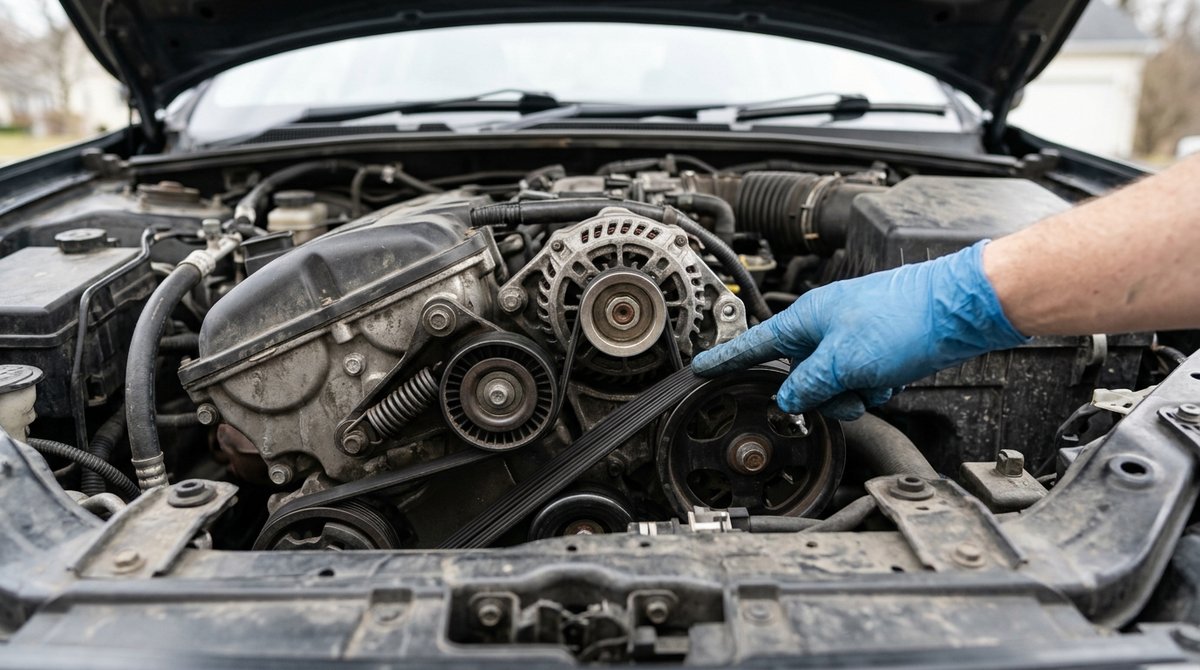
A belt that’s worn, glazed, or loose can slip on the alternator pulley as engine speed rises. The alternator slows for a moment and the light flickers on. A squeal under throttle, especially with the AC on, is the giveaway. That sound overlaps with a squealing noise when accelerating, and a car that squeals when the AC is on often has the same weak belt. A weak automatic tensioner causes the same slip even with a newer belt. Most belts last somewhere around 60,000 to 100,000 miles, so an original belt on a high-mileage car is a prime suspect.
2. A failing alternator
Worn brushes, a failing diode, or a dying voltage regulator inside the alternator can cut output at higher RPM or under heavy load. You may notice dim or flickering headlights, a whining sound, or electrical accessories acting oddly. Over time the battery runs down, which is a common reason a car battery keeps dying. If yours does the opposite, glowing while you’re stopped and going out when you press the gas, see our guide to the battery light on at idle.
3. A regulator that overcharges
The light can also come on when voltage goes too high. If the regulator lets the voltage climb as the engine revs, the warning appears under throttle. Watch for very bright lights, bulbs burning out, or a car battery that smells like rotten eggs, which means the battery is being boiled.
4. A loose or corroded connection
The heavy output wire on the back of the alternator, the battery terminals, and the engine ground strap all carry charging current. Engine movement under acceleration can break a poor connection for a split second, so the light flickers. Corrosion on the terminals makes it worse.
5. A worn alternator pulley or bearing
Some alternators use a one-way clutch pulley. When it wears, it can slip during quick throttle changes. A worn bearing can also cause noise and uneven output.
How to check it
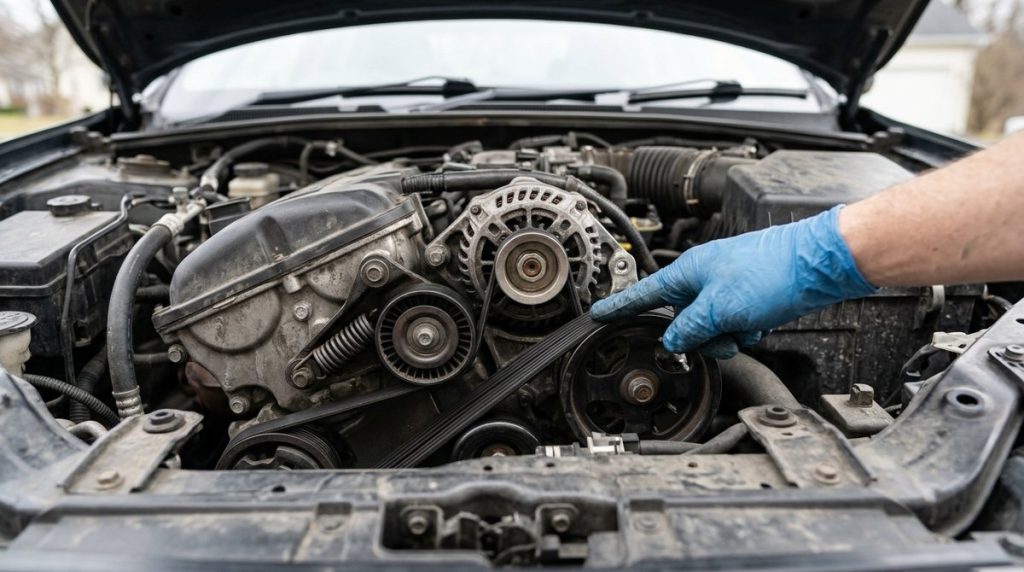
- With the engine off, inspect the belt. Look for cracks, a shiny glazed surface, fraying, or missing chunks. Press on the longest run of belt. It should feel firm, not floppy.
- Check that the battery terminals and the alternator’s output cable are clean and tight.
- With a multimeter on the battery, read the voltage with the engine idling and again at about 2,000 RPM. Between 13.7 and 14.7 volts is normal. Below about 13.2 volts means undercharging, and above about 15 volts means overcharging.
- Many auto parts stores test the alternator, battery, and starter for free.
If the check engine light is also on, look up the code in our OBD2 code lookup. Our guide to the battery light on while driving covers a light that stays on all the time, and the car symptom checker helps if you have other symptoms.
How much does it cost to fix?
| Repair | Typical cost (parts and labor) |
|---|---|
| Charging system test | Free at many parts stores |
| Cleaning and tightening connections | $0–$50 |
| Serpentine belt | $100–$250 |
| Belt tensioner | $150–$350 |
| Alternator pulley | $100–$250 |
| Alternator replacement | $400–$900 |
Is it safe to drive?
For a short distance, usually yes, but don’t push it. With the alternator not charging properly, the car runs on battery power and can stall once the battery is drained. Turn off unneeded electrical loads such as the rear defroster and heated seats, and head to a shop. On many engines the same belt also drives the water pump and power steering. If the belt breaks, you’ll lose power steering, and the engine can overheat quickly. Stop if the temperature gauge rises or the steering suddenly gets heavy. Charging-system recalls do happen, so check the NHTSA recall lookup.
FAQ
Can a bad battery cause the battery light to come on?
Rarely. The light monitors the charging system. A badly failing battery can upset charging voltage, but the alternator, belt, or wiring is the usual cause.
Why does the light come on when accelerating but not at idle?
Acceleration puts the most strain on the belt and alternator, so a marginal part fails there first. A light that’s on at idle and goes out when you rev is the opposite pattern, which usually points to a weak alternator at low RPM.
Should I replace the battery?
Not before testing. Replacing a good battery won’t fix a slipping belt or a failing alternator, and the new battery will run down too.
Can a bad ground wire cause the battery light to flicker?
Yes. A corroded or loose ground strap between the engine and the body can interrupt charging current as the engine rocks under acceleration, which makes the light flicker.
Is it the belt or the alternator?
If the light comes with a squeal and the belt looks worn, start with the belt. If the belt is in good shape and voltage drops at higher RPM, the alternator is the likely cause.