
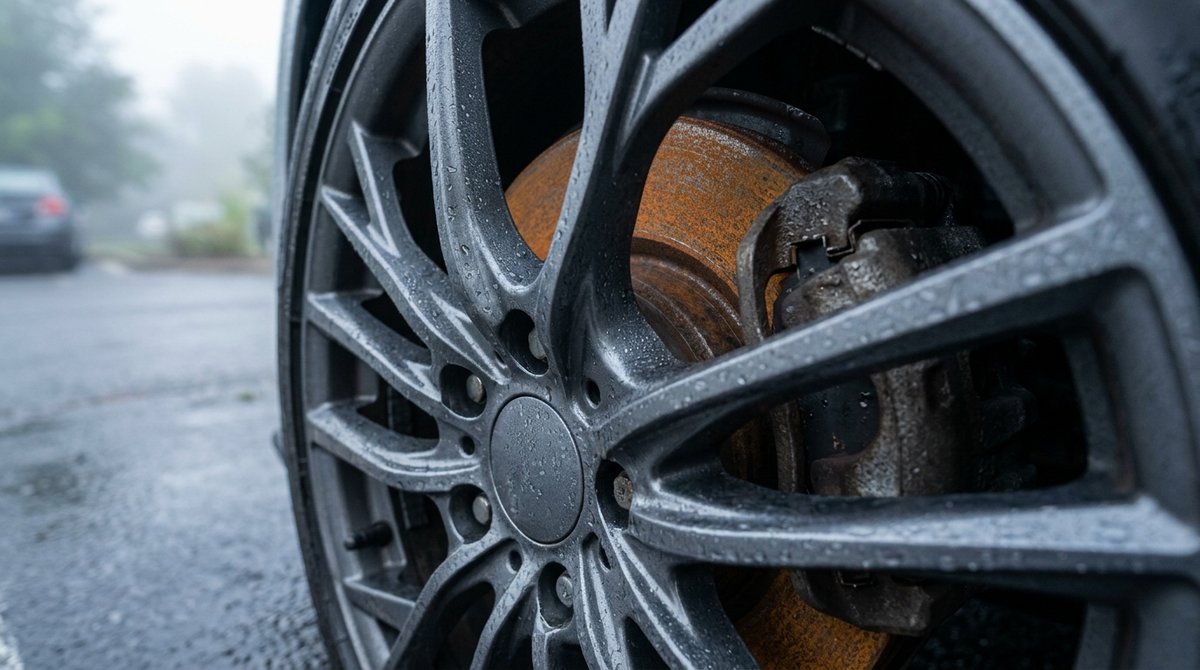
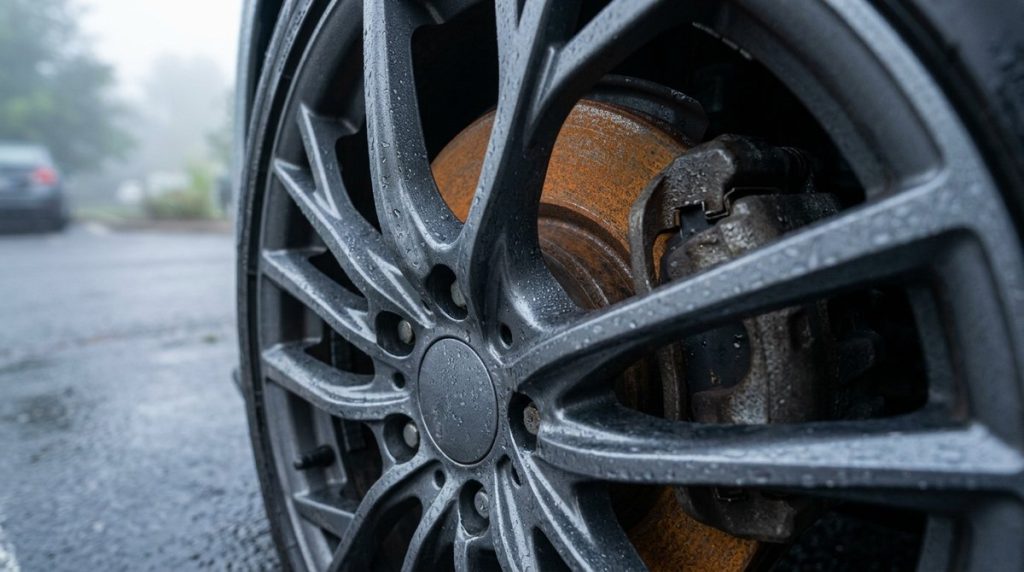
If your brakes squeak in the morning and then go quiet after the first few stops, you can usually relax. Overnight, moisture from rain, dew, or humid air leaves a thin layer of rust on the brake rotors. The first few times you brake, the pads scrape it off, and that’s the squeak or light grinding you hear. It’s normal. The trick is knowing when a morning noise is something more.
In this guide
Quick answer: normal or not?
| What you hear | What it means |
|---|---|
| Squeak or light grind for the first few stops, then quiet | Surface rust, normal |
| Squeal that continues all day | Pad wear indicator: pads are getting thin |
| Grinding that doesn’t go away | Pads worn to metal: get it fixed now |
| Squeak every morning that’s getting louder | Glazed pads or dry brake hardware |
| Squeak plus pulling to one side when braking | Sticking caliper |
| Heavy grinding after the car sat for a week or more | Thicker rust on the rotors, usually clears with careful driving |
Why brakes squeak in the morning
Brake rotors are bare cast iron, and iron rusts quickly when it’s wet. Overnight, a thin orange film of rust forms on the rotor faces, especially in humid weather, after rain or a car wash, or when temperatures drop and dew forms. When you first brake, the pads scrub that rust off, which makes a squeak, scrape, or light grinding sound. After a few stops the rotors are clean and the noise disappears.
Some brake pads, especially semi-metallic ones, are naturally noisier on cold, damp mornings too. That’s a characteristic of the pad material, not a fault.
When the morning squeak means something else
Worn pads
Most pads have a small metal wear indicator that squeals when the pad gets thin. If the squeal continues long after the car has warmed up, the pads are due. Our guide to brake pads vs rotors explains how to tell what needs replacing. If the squeal lasts all day and shows up in slow, gentle stops, see why brakes squeal when stopping slowly.
Grinding that doesn’t stop
Grinding all day long is metal on metal, not rust. Read grinding noise when braking and get it checked soon.
Glazed pads
Hard braking or riding the brakes can overheat the pads and leave a hard, shiny surface that squeaks more easily. Glazed pads are often replaced, or the pads and rotors resurfaced.
Dry hardware or missing shims
Anti-squeal shims and lubricated contact points on the pads and caliper keep vibration down. If they’re dry, missing, or weren’t installed at the last brake job, squeaking gets worse, especially when cold.
A sticking caliper
If one caliper’s slide pins are dry or corroded, the pad can drag on the rotor. You might notice a squeak, uneven pad wear, or the car pulling when you brake.
A car that sits for days
If the car sits for a week or more, especially outside in wet weather, the rust layer gets thicker and the first stops can grind noticeably. Brake gently a few times at low speed to clean the rotors. If the car sits for long periods often, deeper rust can leave rough patches that cause vibration when braking.
Why new brakes sometimes squeak
New pads and rotors often squeak or feel a little grabby for the first few hundred miles. During that time, the pads lay down an even layer of pad material on the rotors, a process called bedding in. Many pad makers recommend a series of moderate stops from around 30 to 40 mph to speed this up. If new brakes still squeak after the first few hundred miles, ask the shop to check that the shims and hardware were installed and lubricated correctly. If the noise lasts all day and started after a pad change, check the causes of brakes grinding after new pads.
Front or rear?
It can help to work out where the sound is coming from. Front brakes do most of the work, so they’re the most common source of squeaks and wear. If the noise seems to come from the back, and especially if your car has rear drum brakes or has been parked with the parking brake on in wet weather, the rear brakes may simply be shedding rust or dust. Rolling slowly past a wall with the window down often makes it easier to tell.
Tips to reduce morning brake noise
- Park in a garage or under cover when you can.
- After washing the car or driving through heavy rain, brake gently a few times before parking, so the rotors dry.
- Ask for anti-squeal shims and lubricated hardware at your next brake job.
- Choose quieter ceramic pads next time if noise bothers you, as long as they suit your vehicle.
Brakes squeak in the morning: repair costs
| Fix | Typical cost |
|---|---|
| Normal surface rust | $0 |
| Brake hardware clean and lube service | $100–$200 |
| Caliper slide pin service | $80–$150 |
| Brake pads (per axle) | $150–$300 |
| Pads and rotors (per axle) | $300–$700 |
| Caliper replacement (pair) | $250–$600 |
If you’re having brake work done, it only takes a minute to check your VIN in the NHTSA recall lookup as well.
Can I keep driving?
If the squeak only lasts for the first few stops and the brakes feel normal, yes. That’s just surface rust. If the squeal continues all day, plan a brake check within the next few weeks. If you hear constant grinding, feel the pedal sinking, or the car pulls when you brake, get it inspected right away.
Brake noise doesn’t set a check engine code, but our OBD2 code lookup can decode ABS-related chassis codes if a warning light comes on. For other symptoms, try the free car symptom checker.