
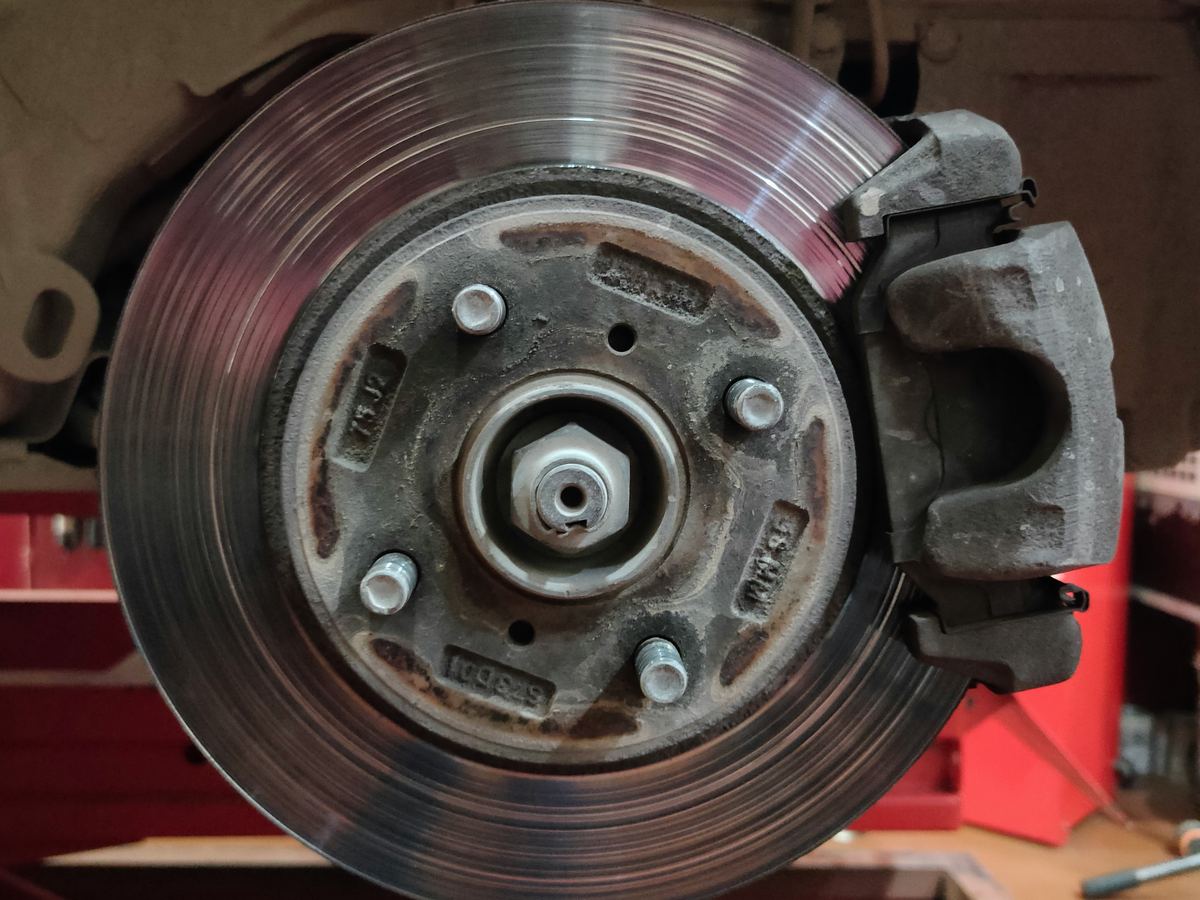
A grinding noise when braking most often means your brake pads are worn down to the metal, so the metal backing plate is grinding against the rotor. Other causes include damaged rotors, a stone or debris caught in the brakes, rust after the car has sat, a sticking caliper, worn rear drum brakes, or a bad wheel bearing.
Metal-on-metal grinding is a warning. Your brakes are weaker, and every stop damages the rotors further. Get it checked right away.
Grinding vs. Squealing
- High-pitched squeal: often the pads’ built-in wear indicator, an early warning that pads are getting thin.
- Grinding: usually means the pads are already worn out, or something is stuck in the brakes.
7 Causes of a Grinding Noise When Braking
1. Brake Pads Worn to the Metal (Most Common)
Once the friction material is gone, the steel backing plate rubs directly on the rotor.
Signs: loud grinding or scraping when braking, longer stopping distances, sometimes a vibration.
Fix: replace the pads immediately. The rotors usually need resurfacing or replacing too.
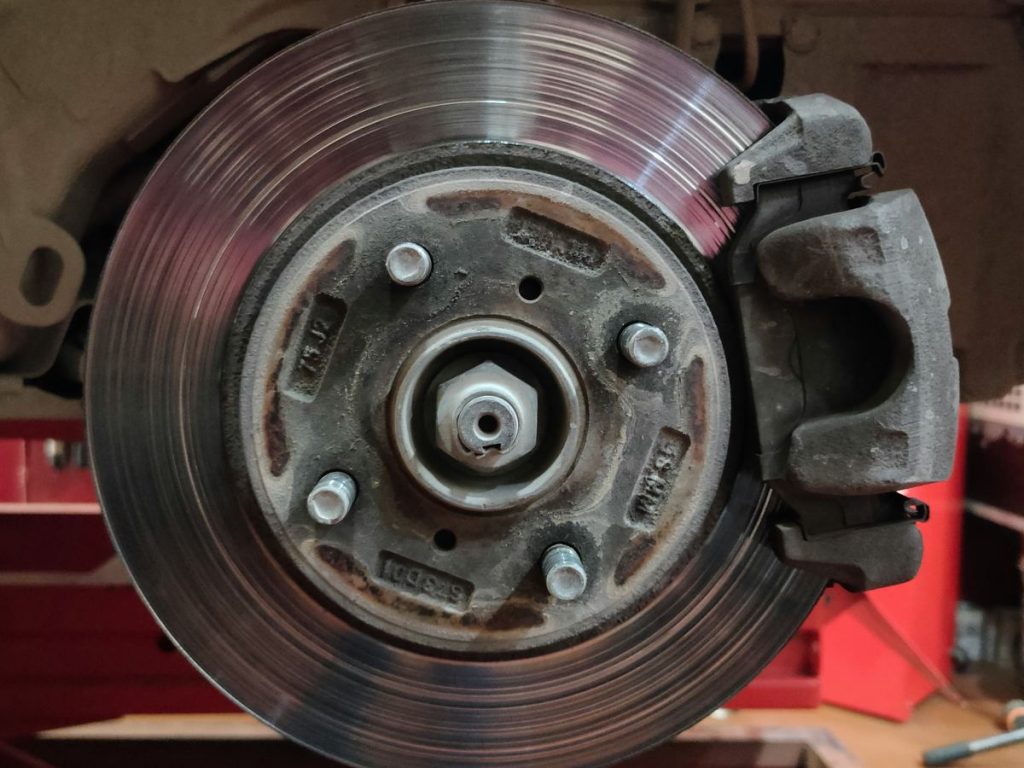
2. Damaged or Scored Rotors
Worn pads, debris, or age can cut grooves into the rotors or leave a raised lip at the edge.
Signs: visible grooves, a rough surface, grinding even with newer pads. Damaged rotors can also cause shaking; see car shakes when braking at high speed.
Fix: resurface the rotors if they’re above minimum thickness, otherwise replace them.
3. Stone or Debris Caught in the Brake
A small stone can get trapped between the rotor and the caliper or the thin metal dust shield behind it.
Signs: a sudden grinding or scraping noise, sometimes constant even when you’re not braking.
Fix: a shop can remove the wheel and clear the debris. It’s often a quick, cheap fix.
4. Surface Rust After Sitting
After rain, a car wash, or a few days parked, a thin layer of rust forms on the rotors.
Signs: light grinding for the first few stops, then it goes away.
Fix: nothing. This is normal. If it lasts beyond a few stops, look for another cause.
5. Sticking Brake Caliper
A caliper or its slide pins can stick, keeping one pad pressed against the rotor. That pad wears out fast and can reach the metal.
Signs: the car pulls to one side, a burning smell, or one wheel much hotter than the others.
Fix: service or replace the caliper, plus the pads and rotor on that side.
6. Worn Rear Drum Brakes
Many cars use drum brakes at the rear. When the shoes wear down, metal can grind against the drum.
Signs: grinding from the rear, a parking brake that feels loose.
Fix: replace the brake shoes, and resurface or replace the drums.
7. Bad Wheel Bearing
A worn wheel bearing makes a grinding or growling noise that changes as you turn, not only when you brake. Bad bearings can also cause vibration at speed; see steering wheel shakes at high speed.
Fix: replace the wheel bearing.
What About ABS Noise?
During a hard, emergency stop, a buzzing or grinding feeling in the pedal is the anti-lock braking system (ABS) working. That’s normal. Grinding during gentle, everyday stops is not.
DIY Checks You Can Do
- Look through the wheel spokes at the brake pad. Less than about 3 mm (1/8 inch) of pad material means replacement.
- Look at the rotor surface for deep grooves or a raised edge.
- Note when it happens: only when braking, while turning, or all the time.
- Check which corner it’s coming from, if you can.
- Check the pedal feel. If it’s soft or sinks, see brake pedal goes to the floor and don’t drive.
Is It Safe to Drive?
Light grinding for the first few stops after rain or parking: usually normal.
Constant metal-on-metal grinding: drive only as far as a shop, gently. Your braking is reduced and getting worse.
Grinding plus a soft pedal, pulling, or a burning smell: stop driving and get it towed.
Typical Repair Costs
Rough US estimates; prices vary by vehicle and location:
- Removing debris: often free to about $50
- Brake pads (per axle): about $150–$300
- Rear brake shoes: about $150–$350
- Brake pads and rotors (per axle): about $300–$600
- Caliper (each): about $250–$500
- Wheel bearing: about $200–$600 per wheel
Catching worn pads early is the cheapest option. Once they grind into the rotors, the bill often doubles.
FAQ
Can I drive with grinding brakes?
Only as far as a repair shop, carefully. Grinding usually means the pads are gone, which reduces braking power and damages the rotors with every stop.
Why do my brakes grind after sitting overnight?
Moisture forms a thin layer of rust on the rotors. It usually disappears after a few stops.
Why do my new brakes grind?
New pads may need to bed in, debris may be trapped, or a part may have been installed incorrectly. If it continues after a few days, have the shop check it.
Is grinding worse than squealing?
Usually, yes. Squealing is often an early warning; grinding usually means the pads are already worn through.
Safety note: Brakes are critical safety equipment. If you hear grinding, have your brakes inspected by a certified mechanic as soon as possible.