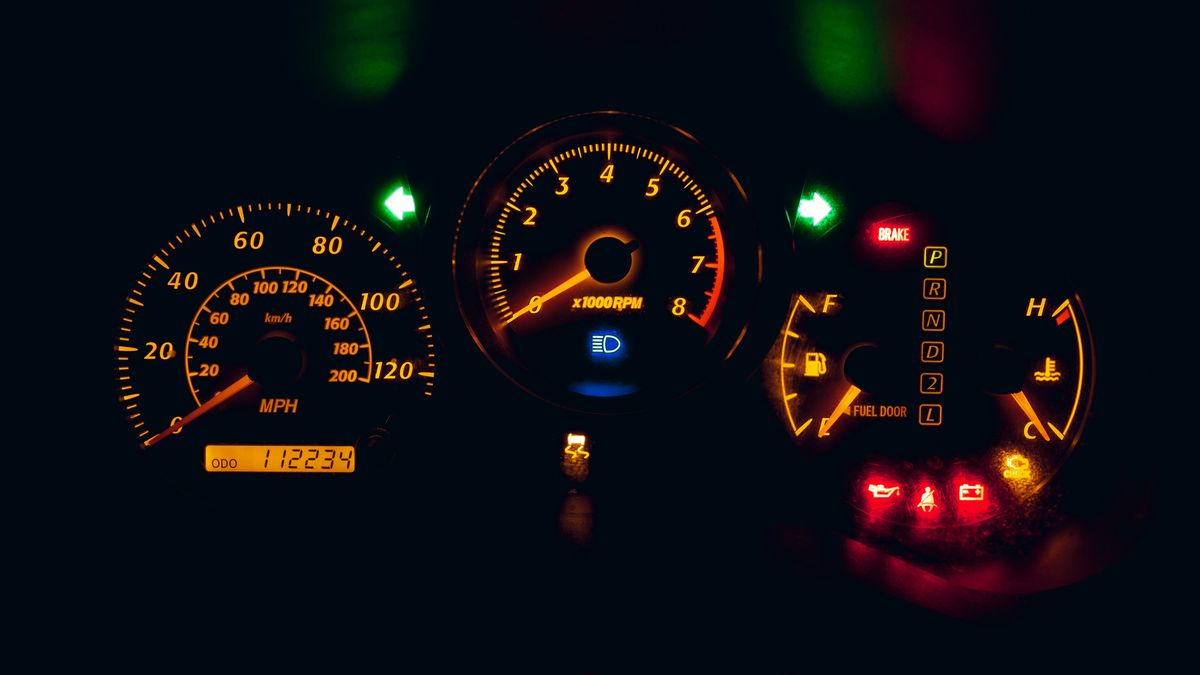
A flashing check engine light almost always means your engine has a severe misfire. Unburned fuel is entering the exhaust, where it can overheat and damage the catalytic converter, one of the most expensive parts on your car. The most common causes are worn spark plugs, a failing ignition coil, or a fuel injector problem.
A flashing light is more urgent than a steady one. Reduce your speed and get the car checked as soon as possible. If the engine is shaking badly or losing power, stop driving.
Steady vs. Flashing Check Engine Light
- Steady (solid) light: the car has detected a problem, such as a loose gas cap or a faulty sensor. Not an emergency, but get it checked soon.
- Flashing light: a serious misfire is happening right now. Treat it as urgent.
- Red oil pressure or temperature light: a different warning. Pull over and turn off the engine immediately.
What to Do Right Now
- Ease off the gas and reduce your speed. Avoid hard acceleration, towing, or climbing steep hills.
- Check your other gauges: engine temperature and oil pressure.
- If the car is shaking badly, losing power, or you smell something burning: pull over safely, turn off the engine, and have it towed.
- If the light stops flashing and stays on steadily, drive gently and get it checked as soon as you can.
- Don’t just clear the code and keep driving. The problem is still there.
Why Is My Check Engine Light Flashing? 7 Common Causes
1. Worn or Fouled Spark Plugs
Spark plugs ignite the fuel in each cylinder. When they wear out or get fouled with oil or carbon, they can’t fire properly, causing a misfire.
Signs: rough idle, hesitation when accelerating, worse fuel economy.
Fix: replace the spark plugs, following the interval in your owner’s manual.
2. Failing Ignition Coil
Most modern cars have one ignition coil per cylinder. A failing coil can’t deliver a strong spark, especially under load.
Signs: the light flashes mainly when accelerating, and the car feels like it’s stumbling.
Fix: replace the bad coil. A common DIY test is to swap the suspected coil with one from another cylinder; if the misfire code moves to the new cylinder, the coil is the problem.
3. Clogged or Failing Fuel Injector
If an injector is clogged or stuck, that cylinder gets too little or too much fuel and misfires.
Signs: a misfire in one cylinder that doesn’t move when you swap coils or plugs.
Fix: clean or replace the injector.
4. Vacuum Leak
A cracked hose or leaking gasket lets extra air into the engine, upsetting the air-fuel mixture.
Signs: a hissing sound, high or rough idle, lean codes (like P0171) along with misfire codes.
Fix: find and replace the leaking hose or gasket.
5. Low Fuel Pressure
A weak fuel pump or clogged fuel filter can starve the engine, especially under acceleration.
Signs: hesitation or stalling, misfires across several cylinders.
Fix: a shop tests the fuel pressure and replaces the pump or filter.
6. Faulty Engine Sensor
Sensors like the crankshaft position sensor, camshaft sensor, or mass airflow sensor help control fuel and spark. A faulty one can cause misfires or stalling. A bad crankshaft sensor can even prevent the car from starting; see car won’t start but lights work.
Fix: diagnose with a scan tool and replace the faulty sensor.
7. Mechanical Engine Problem
Less commonly, a misfire comes from low compression, caused by a burnt valve, worn piston rings, or a failing head gasket.
Signs: a persistent misfire in one cylinder, white exhaust smoke, or losing coolant.
Fix: a mechanic runs a compression test to confirm the problem.
How to Find the Cause: Read the Codes
Every car sold in the US since 1996 has an OBD2 port, usually under the dashboard near the steering wheel. Plug in an OBD2 scanner to read the trouble codes. Many auto parts stores also read codes for free.
Common misfire codes:
- P0300: random or multiple-cylinder misfire
- P0301–P0308: misfire in a specific cylinder (P0301 = cylinder 1, P0302 = cylinder 2, and so on)
A specific cylinder code is great news for diagnosis: it tells you exactly where to look.
Why You Shouldn’t Ignore It
A misfire sends unburned fuel into the exhaust, which can overheat the catalytic converter. That can turn a cheap spark plug or coil repair into a much bigger bill. A damaged converter can also cause a rotten-egg smell; see our guide to burning smells after driving.
Typical Repair Costs
Rough US estimates; prices vary by vehicle and location:
- Code reading: often free at auto parts stores
- Spark plugs: about $100–$300 (more on some V6 and V8 engines)
- Ignition coil: about $100–$300 each
- Vacuum leak repair: about $100–$300
- Fuel injector: about $300–$900
- Fuel pump: about $400–$1,000+
- Catalytic converter: about $1,000–$2,500+
- Head gasket: about $1,500–$3,000+
FAQ
Can I drive with a flashing check engine light?
Only if you must, for a short distance, and gently. Continued driving can damage the catalytic converter. If the car is shaking or losing power, stop and tow it.
Can a loose gas cap make the check engine light flash?
Usually not. A loose gas cap typically causes a steady light. A flashing light points to a misfire.
Why does my check engine light flash only when I accelerate?
Misfires often appear under load, when the engine needs the strongest spark. This commonly points to a failing ignition coil or worn spark plugs.
Will the flashing check engine light go away by itself?
It may stop flashing if the misfire stops, but the trouble code stays stored and the problem usually returns. Have the codes read to find the cause.
Safety note: A flashing check engine light signals a problem that can get worse quickly. When in doubt, stop driving and have your car inspected by a certified mechanic.