
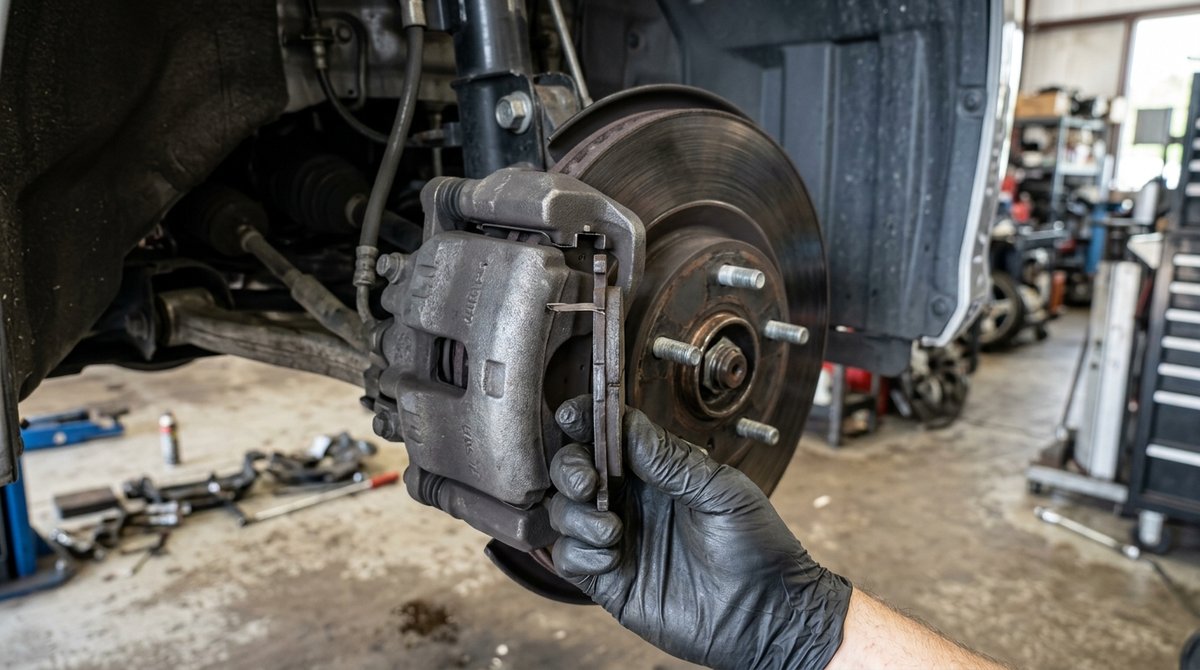
When your brakes squeal when stopping slowly, the noise is usually a vibration problem rather than a safety problem. Light, gentle braking is exactly when pads are most likely to resonate against the rotor, which is why a car can stop quietly from highway speed but squeal as it creeps up to a stop sign. The exception is the pad wear indicator, a small metal tab designed to squeal when the pads are nearly worn out.
In this guide
| What you notice | Most likely cause | What to do |
|---|---|---|
| High-pitched squeal in slow, light stops, stops with firm pressure | Pad vibration | Check shims and lubrication |
| Squeal that also happens while driving and goes quiet when braking | Wear indicator touching the rotor | Measure pad thickness and replace soon |
| Squeal that started after new pads | Missing shims, no lube, or noisy pad material | Have the install checked |
| Squeal plus weaker braking, shiny pad surface | Glazed pads or rotors | Resurface or replace, then bed in |
| Squeal mainly on the first stops of the day | Moisture and surface rust | Usually normal |
| Squeal plus grinding | Pads worn to metal | Replace now |
Why brakes squeal when stopping slowly: 6 causes
1. Pad vibration
The squeal is a high-frequency vibration between the pad and the rotor, a bit like a wet finger on a wine glass. It’s most likely at low speed with light pedal pressure, and pressing harder often stops it. Worn slide pins and loose pad clips make it worse, because the pad can move and chatter. Thin shims, a dab of brake grease on the back of the pads and contact points, and properly fitted clips are designed to damp it.
2. The wear indicator
Many pads have a small spring-steel tab that touches the rotor when the friction material is down to about 2–3 mm. It makes a steady squeal, often while driving, which may change or stop when you press the brakes. It’s a built-in warning to replace the pads soon. Our guide to brake pads vs rotors explains what usually needs replacing.
3. Missing shims or lubrication after a pad change
If the old shims were thrown away, the hardware wasn’t replaced, or the contact points weren’t greased, new pads can squeal from the first day. It’s an easy fix for whoever did the job, and the same installation issues can cause brakes grinding after new pads.
4. Hard or semi-metallic pad material
Semi-metallic and some cheap pads are noisier than ceramic ones, especially in light braking. If the noise bothers you, quality ceramic pads are usually quieter, and they make less brake dust too.
5. Glazed pads or rotors
Overheating from hard braking or a dragging caliper can glaze the pad surface and the rotor, leaving them shiny and hard. Glazed brakes squeal and grip less. Riding the brakes down long hills is a common way to glaze them. Resurfacing or replacing the rotors and fitting new pads, then bedding them in, usually fixes it.
6. Moisture and surface rust
After rain, a car wash, or a humid night, a thin layer of rust forms on the rotors and the first few slow stops can squeal. That’s normal if it goes away within a few stops, which is the same thing behind brakes that squeak in the morning.
How to narrow it down
- Notice when it squeals: only in slow, light stops, all the time while driving, or only on the first stops of the day.
- Press the pedal a little harder during a slow stop. If the squeal stops, pad vibration is the likely cause.
- Look at the pads through the wheel spokes, if you can see them. Less than about 3 mm of friction material means it’s time to replace them.
- Check whether the noise started right after brake work.
- If you also hear grinding, stop and see our guide to a grinding noise when braking.
If a brake or ABS light is on as well, see our guide to the brake warning light. You can look up any engine code in our OBD2 code lookup, and the car symptom checker helps with other symptoms.
How much does it cost to fix?
| Repair | Typical cost (parts and labor) |
|---|---|
| Cleaning and lubricating brake hardware | $50–$120 per axle |
| New shims and clips | $10–$30 in parts |
| Brake pads (one axle) | $150–$300 |
| Pads and rotors (one axle) | $250–$600 |
| Resurfacing rotors | $20–$40 per rotor |
Is it safe to drive?
A squeal from pad vibration or morning rust is just noise. A wear indicator squeal means the pads are close to the end, so plan to replace them within the next few hundred miles. Don’t ignore it until it turns into grinding, because metal-on-metal ruins the rotors and reduces braking. Stop driving and have the brakes checked if the pedal feels soft, the car pulls when braking, or you hear grinding. Brake recalls do happen, so check the NHTSA recall lookup too.
FAQ
Why do my brakes squeal only at low speed?
Light pedal pressure at low speed is when pads are most likely to vibrate against the rotor. Firmer braking often stops the squeal.
Is it normal for new brakes to squeal?
A little noise during the first few hundred miles can be normal while they bed in. Constant squealing suggests missing shims, no lubrication, or noisy pads.
Does brake squeal mean I need new pads?
Not always. If the pads are thick, the cause is usually vibration or glazing. If they’re thin, the wear indicator is telling you to replace them.
Why do my brakes squeal in reverse?
Pads can shift slightly in the caliper when you change direction, which can cause a short squeal. It’s usually harmless if braking feels normal.
Can worn rotors cause squealing?
Yes. Rotors with a raised lip, uneven wear, or a glazed surface can make the pads vibrate. If the rotors are worn, new pads alone may not stop the noise.
Can I spray something on my brakes to stop the squeal?
Don’t spray lubricant on the pads or rotors, because it reduces braking. Anti-squeal products are applied to the back of the pads, not the friction surface.