
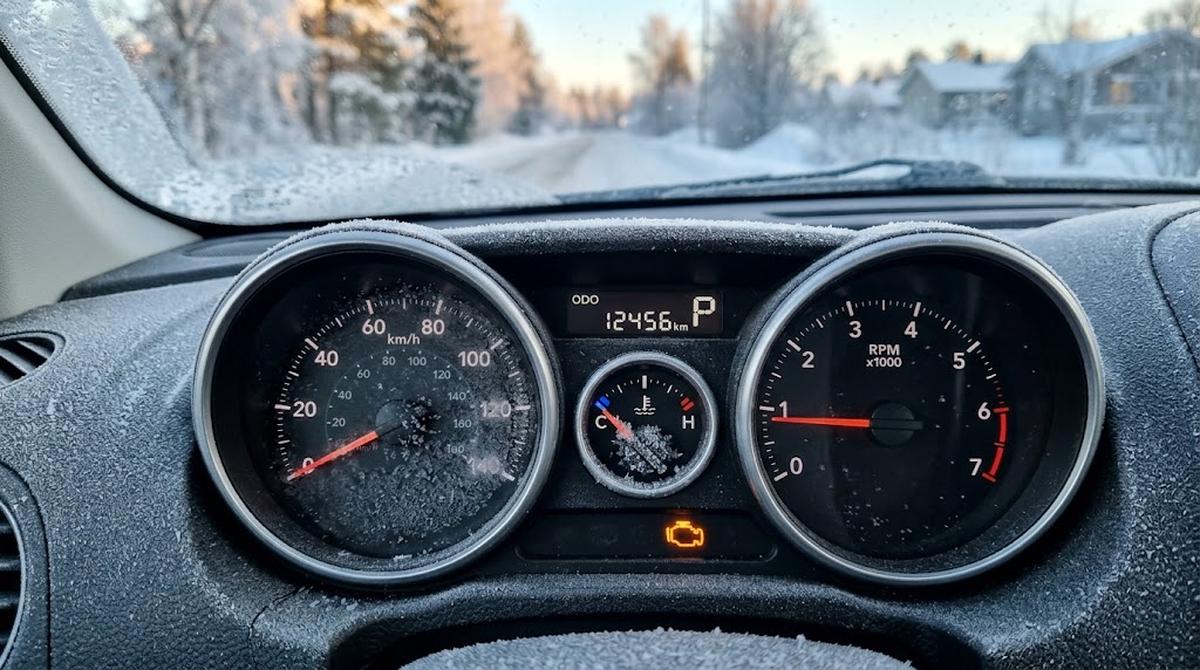
The P0128 code is your engine computer’s way of saying the engine is taking too long to warm up. Most of the time the reason is boring and cheap: a thermostat that’s stuck partly open. It isn’t an emergency, but it’s worth fixing before winter, because the first thing you’ll lose is a properly warm heater.
In this guide
Quick answer
| Question | Short answer |
|---|---|
| Full name | Coolant Thermostat (Coolant Temperature Below Thermostat Regulating Temperature) |
| What it means | The engine didn’t reach normal temperature in the expected time |
| Most common cause | Thermostat stuck open |
| Other causes | Faulty coolant temperature sensor, low coolant, cooling fan running nonstop, wiring |
| Common symptoms | Weak heat, low temperature gauge, worse fuel economy |
| Safe to drive? | Yes, in the short term |
| Typical cost | $150–$400 for a thermostat replacement |
What the thermostat does
The thermostat is a temperature-controlled valve between the engine and the radiator. When the engine is cold, it stays closed so coolant stays in the engine and it warms up quickly. Once the engine reaches operating temperature, it opens to let coolant flow to the radiator. Most engines run somewhere around 195–220°F (90–105°C) once warm. If you’re unsure what’s normal, our guide on how long to warm up a car explains typical warm-up times.
If the thermostat sticks open, coolant flows to the radiator from the moment you start the car. The engine warms up slowly and may never fully reach temperature, especially on cold days or at highway speed. The computer expects the coolant to hit a target temperature within a certain time. When it doesn’t, it sets P0128. If your heat is weak at idle rather than on the highway, the cause is different; see car heater only works when driving. A thermostat stuck open is also the classic reason a heater takes forever to warm up in winter.
Symptoms of a P0128 code
- A lukewarm heater, especially on the highway. If that’s your main complaint, also see car heater blowing cold air.
- A temperature gauge that sits lower than usual, or drops when you’re cruising.
- Worse fuel economy, because the engine adds extra fuel while it thinks it’s still cold.
- It shows up in cold weather first. Many drivers first see the light in autumn.
- Sometimes nothing at all except the check engine light.
Common causes
1. Thermostat stuck open
This is by far the most common cause. Thermostats wear out with age, and a partly open one is enough to set the code.
2. The wrong thermostat
If the thermostat was replaced before, a part with a lower temperature rating than your engine needs can trigger P0128. Always use the rating your manufacturer specifies.
3. A faulty coolant temperature sensor
If the sensor reads colder than the engine really is, the computer sees slow warm-up that isn’t actually happening. Comparing the scan tool reading with an infrared thermometer pointed at the thermostat housing is a quick sanity check.
4. Low coolant
With too little coolant, the sensor can end up in an air pocket and read wrong, and the heater suffers too. Check the reservoir with the engine cold, and never open a hot radiator cap.
5. A cooling fan that runs all the time
A stuck fan relay keeps the fan running even on a cold engine, which slows warm-up. Listen for the fan running right after a cold start.
6. Wiring or connector problems
A corroded or loose connector at the coolant temperature sensor can skew the reading. On some vehicles, the intake air temperature sensor is also part of the check, so a faulty one can set P0128 too.
How to diagnose it
- Check the coolant level with the engine cold.
- Watch the gauge on a 15–20 minute drive. It should reach its normal spot, usually near the middle, and stay there.
- Feel the upper radiator hose carefully during the first few minutes after a cold start. It should stay fairly cool until the engine warms up, then get hot quickly as the thermostat opens. If it warms up gradually from the start, the thermostat is probably stuck open. Keep clear of the fan, and remember the hose gets hot.
- Read live data with a scan tool if you have one. Coolant temperature should rise steadily to the normal range and hold there.
- Check for related codes, like P0125 (insufficient coolant temperature for closed-loop fuel control). You can look up any of them in our OBD2 code lookup.
Replacing the thermostat: DIY or shop?
On many older four-cylinder engines, the thermostat sits right where the upper radiator hose meets the engine, and swapping it is a manageable DIY job with basic tools. On many newer engines it’s buried under other parts or built into a plastic housing, which makes it a shop job.
If you do it yourself, three things matter. Use the exact coolant type your owner’s manual specifies, since mixing types can cause problems. Bleed the air out of the cooling system afterward, following your engine’s procedure, because trapped air can cause overheating. And replace the gasket or O-ring along with the thermostat so it doesn’t leak. Once it’s done, clear the code and drive normally for a few days to confirm it stays off.
How much does it cost to fix a P0128 code?
| Repair | DIY parts | Shop price |
|---|---|---|
| Thermostat (standard) | $15–$60 | $150–$400 |
| Thermostat with built-in housing | $50–$200 | $250–$600 |
| Coolant temperature sensor | $15–$60 | $100–$250 |
| Coolant top-up and leak check | $10–$30 | $50–$150 |
| Cooling fan relay | $10–$40 | $50–$150 |
| Coolant flush (often done with the thermostat) | $20–$40 | $100–$200 |
One tip: don’t let anyone talk you into running without a thermostat. The engine needs it to warm up and to control temperature properly. Before buying parts, it’s also worth entering your VIN in the NHTSA recall lookup in case a recall covers your engine.
Can I keep driving with a P0128 code?
Yes, for now. A stuck-open thermostat makes the engine run cool, not hot, so it won’t cause sudden damage the way overheating does. If your engine runs hot instead of cold, see car running hot but coolant is full.
Don’t leave it for months, though. An engine that runs cold burns extra fuel, which hurts mileage and, over time, can be hard on the catalytic converter (see P0420). In winter, a weak heater also means a weak defroster, and a fogged windshield is a real safety issue. And with the check engine light already on, you won’t notice if another problem appears, like a lean condition from P0171. Cold-weather codes often come together; if you also have a P0135 code, see our guide.
If your temperature gauge is swinging toward hot instead of staying low, that’s a different problem entirely; read car overheating then going back to normal. Working from symptoms rather than a code? Try the free car symptom checker.